

Netrebko, Gergiev and the Kremlin's cultural revenge. Russians back on the billboards of European theatres


When Russia's full-scale invasion of Ukraine began in 2022, the European cultural scene abruptly cut off relations with Russian artists. Performances were cancelled, "The Nutcracker" and "Swan Lake" disappeared from repertoires, and cultural figures who had supported Putin were isolated. But three years later, Moscow is returning its "cultural ambassadors" to the stages of Europe - and doing so with the same vigour, Politico reports.
One of the first returnees was conductor Valery Gergiev, a longtime Kremlin ally who in 2008 conducted a patriotic concert in seized Tskhinvali and later publicly supported the annexation of Crimea. After the war broke out in 2022, he was sacked from Western orchestras and fell under Ukrainian sanctions. But in 2025 he will perform again in Barcelona with the Mariinsky Orchestra, despite political protests and EU concerns.
The Ibercámera festival, which organises the concerts, says it has not received funding from the EU recovery fund, although it has applied for it. The European Commission has launched a probe to make sure European taxpayers' money is not supporting pro-Kremlin artists.
EU Culture Commissioner Glenn Micallef emphasised: "Even private events should not become a platform for war supporters."
The Ukrainian side is also strongly opposed to the return of Russian artists. Culture Minister Mykola Tochitsky calls it a "security issue," because, according to him, "any Russian activity in the cultural sphere is always about disinformation and preparation of aggression."
The situation is aggravated by the return of Anna Netrebko. The prima donna of world stages after the start of the invasion first went into the shadows, but in 2023 she began active touring again. In April 2025, her concert in Bratislava was a full house, despite the protest of the Ukrainian embassy and actions under the theatre. Her participation in Putin's election campaign, photos with Donbass separatists and a million roubles to rebuild a theatre in the DNR raise questions - despite her subsequent attempts to distance herself from politics.
Ukrainian director Eugene Lavrenchuk turned down a production in Jerusalem after learning of the inclusion of Russian singers in the project.
He emphasises: "Today we cannot go on the same stage with Russians. This legitimises the idea of 'brotherly nations' and blurs the boundaries between aggressor and victim."
Against this background, Ukraine offers an alternative: invite Ukrainian and European performers who share democratic values.
"In Poland, in Sweden, in Ukraine - there are enough artists of high level. It is not necessary to call those who justify aggression," Tochytsky believes.
The war has claimed the lives of Ukrainian musicians and destroyed theatres. Opera singer Igor Voronka died at the front, Vasyl Slipak - a baritone at the Paris Opera - was killed by a sniper in Donbass. The theatre in Mariupol, where hundreds of civilians were sheltering, was destroyed by Russian aircraft.
"Russia has killed millions of people over the centuries, but still became known for its brilliant ballet and operas," he said.
"Putin is separate ... missiles and bombs are separate, operas are also separate," Lavrenchuk added. "But in fact ... there is a connection between all this - the most direct connection."
Maria Grynevych, project manager, journalist, co-author of Guidebook Sacred Mountains of the Dnieper Region, Lecture Course: Cult Topography of the Middle Dnieper Region.
Related news

Scientists have discovered a hidden mechanism behind the choice of friends


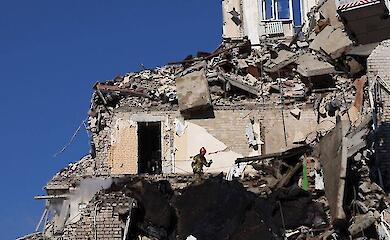
3 July has been declared a day of mourning in Kyiv. The number of dead and injured is rising

Popular news



Scientists have discovered that power among the Scythians was passed down through the family line



Navrotsky has announced a ban on the red-and-black flag in Poland: what will change

News about war

The UN has reported a sharp rise in the number of Ukrainian civilians killed as a result of the war


3 July has been declared a day of mourning in Kyiv. The number of dead and injured is rising