


Scientists have discovered that power among the Scythians was passed down through the family line


Scientists have found new genetic evidence that power and high status amongst the Scythian elite may have been passed down within families. The researchers analysed ancient DNA from individuals buried in richly furnished burial mounds across the Eurasian steppe and found that members of the elite were often related to one another, even if they were buried in different locations.
We are referring to the nomadic societies of the Early Iron Age, which inhabited a vast area stretching from the Black Sea region to the Altai. In historical sources, they are often referred to as Scythians and Saka: the term ‘Scythians’ is more commonly applied to the western groups, whilst ‘Saka’ refers to the eastern and Central Asian groups. These societies left behind large burial mounds, gold jewellery, weapons and the famous ‘animal style’ in art.
Details
New research has been published in the journal *Science Advances*.
An international team of scientists combined archaeology, anthropology and genetics to understand the structure of the Scythian elite and how high status was passed on.
The researchers analysed the DNA of 85 Iron Age individuals from Central Eurasia. Among them were 38 individuals from elite burials and 47 from more modest graves. The study included 46 new genomes, as well as the first whole-genome data from the famous Saka ‘Golden Man’ from the Issyk burial mound in Kazakhstan.
Why is this important? Archaeologists have long observed a huge difference between burials. Some people were buried in large burial mounds, with gold, weapons, richly decorated clothing and sometimes sacrificial animals. Others were buried much more modestly — in small mounds, with almost no grave goods. Such a difference is usually seen as a sign of social inequality: some people had high status, whilst others did not.
But the main question remained: how was this high status attained? Did a person become influential through personal merit — for example, military prowess, wealth or authority? Or was status passed down through the family?
DNA helped to answer this question. Scientists compared the genomes of individuals from both wealthy and humble burials and found close kinship links amongst members of the elite. In some cases, relatives were buried in different necropolises more than 100 km apart. This points to a network of elite families linked not by a single settlement, but across the wider steppe region.
One of the study’s authors, anthropologist Ainash Childebaeva, noted that the team had not expected to see such a clear indication of the transmission of status across generations. According to her, high-status individuals were more closely related to one another – even if buried in different locations – than to lower-status individuals buried alongside them.
Put simply, the rich burial mounds may not have belonged to random ‘successful warriors’ or individual leaders, but to members of interconnected elite clans. This is precisely why the authors refer to a dynastic principle: not necessarily in the sense of kings and succession to the throne as we usually understand it, but in the sense that power and prestige were retained within family networks.
The ‘Golden Man’ from the Issyk burial mound occupies a special place in the study. This is one of Kazakhstan’s most famous archaeological discoveries: the burial is dated to approximately 400–300 BC, and inside the wooden chamber, more than 4,000 gold ornaments, weapons, a richly decorated headdress, objects featuring animal motifs and a silver bowl bearing an unknown inscription.
New genetic data has, for the first time, provided direct information about this man’s origins. The results show that he fitted within the genetic diversity of Iron Age Saka groups. Furthermore, the DNA indicates that the famous ‘Golden Man’ was most likely a man, not a woman.
What we have learnt about the women
The study also revealed that women held a prominent place amongst the elite. Almost half of the individuals from the rich burials in the sample were women. This does not mean that each of them was necessarily a ruler or a military leader, but it does show that high status in these societies was not exclusively male.
Women were buried in richly decorated graves, and genetic data linked them to other high-status individuals. Scientists therefore believe that kinship, power and prestige were closely intertwined in Scythian-Saka societies.
However, the researchers found no clear pattern suggesting that the elite followed strictly patrilineal or matrilineal lines. There was no clear indication that status was linked solely to patrilocality, where women join their husband’s clan, or solely to matrilocality, where men join their wife’s clan. This suggests a more complex social organisation.
What this means in simple terms
Judging by their DNA, the Scythian elite were not simply a group of wealthy individuals. They were interconnected families who were able to maintain power, status and influence across generations.
If an individual was buried with gold, weapons and lavish grave goods, this may have reflected not only their personal achievements but also their membership of an influential kinship line. And if relatives are found in different burial mounds and even in different regions, this points to a wide network of elite connections.
This is precisely why the research is important: it shows that the nomadic societies of the steppe may have had a complex political organisation. They should not be portrayed as disparate groups of horsemen without a stable social structure. They had elites, family alliances, marital ties and mechanisms for the transmission of status.
Why this is important
For a long time, scholars judged the Scythians and Saka mainly on the basis of burial mounds, artefacts and foreign written sources. These societies themselves left no texts of their own, so many questions about their social life remained unanswered.
Ancient DNA allows us to see what is not always apparent from artefacts. Gold and weapons indicate that a person was buried as a member of the elite. But genetics helps us understand whether such people were related, how far these ties extended, and whether power was maintained through family lines.
This is particularly important for studying early social inequality. The research suggests that, among Iron Age nomads, high status may not have been a matter of chance, nor merely a personal achievement. It may have been passed down within extended elite families that linked different burial mounds and regions across the Eurasian steppe.
Background
The Scytho-Siberian archaeological horizon emerged in the first millennium BCE and spanned a vast territory — from the Altai to the Black Sea. These groups are often described as mobile, nomadic horsemen who practised pastoralism, were skilled in the art of warfare, and produced distinctive art featuring animal motifs.
Burial mounds have been one of the main sources of knowledge about these societies. Rich burials contain gold, weapons, jewellery, horse tack and objects bearing depictions of animals. In simpler graves, there are few or almost no such items. Consequently, archaeologists have long assumed that a distinct elite existed within these societies.
New research refines this picture. It demonstrates not only the existence of an elite, but also a possible mechanism for its stability: kinship lines, marital alliances and connections between different elite burials.
Source
Study: Ayshin Ghalichi et al., “Ancient DNA reveals elite dynastic rule among Iron Age Eurasian Steppe nomads”, Science Advances, 2026.
An independent researcher, interested in archaeology and sacred geography. He researches them and writes about them.
Related news
Archaeologists have discovered who actually built Colombia’s ancient canals


Neanderthal bone tools have been discovered in Romania for the first time
Almost 500 blue artefacts have linked Iron Age Iran with ancient Egypt
A Chinese inscription has debunked the legend surrounding the Boston Tea Party relic
Popular news

How to cook sweetcorn properly so that it’s juicy and sweet: the best method revealed

Archaeologists have discovered who actually built Colombia’s ancient canals
Scientists have put forward an explanation as to why there were no tiny dinosaurs


Scientists have discovered how snakes lived during the age of the dinosaurs
News about war

An expert explains how Russia is changing its tactics for strikes on Kyiv


The UN has reported a sharp rise in the number of Ukrainian civilians killed as a result of the war


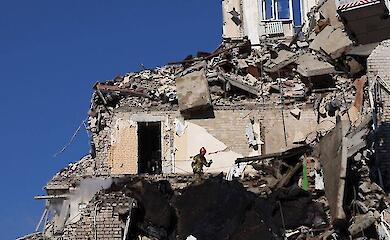
3 July has been declared a day of mourning in Kyiv. The number of dead and injured is rising