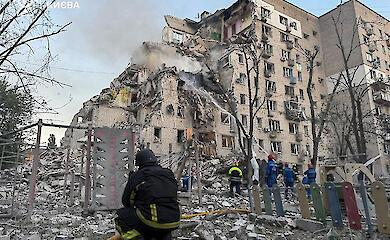
How surviving trauma affects the brain's response to stress
- Home
- Life
- Healthy lifestyle
- How surviving trauma affects the brain's response to stress


A new research project by scientists at Yale University sheds light on how past trauma and stressful events can affect how the brain responds to new challenges.
The work was published in the journal Proceedings of the National Academy of Sciences.
There are two main hypotheses that explain how past experience influences future responses to stress.
According to the first, the "sensitisation hypothesis", a person who has already experienced severe stress becomes more vulnerable and susceptible to new shocks. The other, the "habituation hypothesis", on the other hand, suggests that after severe shocks, the brain learns to cope better with stress and reacts more weakly.
A team led by Professor Elizabeth Goldfarb decided to test both hypotheses.
The scientists surveyed 170 residents of the city of New Haven, looking at their experiences of traumatic events, from psychological shocks to accidents and natural disasters. Using fMRI and machine learning techniques, they identified specific networks in the brain associated with trauma memories.
In two different experiments, participants were subjected to mild stress: in one case by immersing their hands in ice water, in the other by injecting them with hydrocortisone (a stress hormone). The scientists measured how the brain's "traumatic" networks worked at that moment.
The results showed that when a person faces a new, but not too strong stress, the work of trauma-related brain networks weakens - their activity decreases, and communication between different parts of the brain becomes less coherent. This supports the habituation hypothesis: the brain "switches off" memories of past negative experiences so as not to overload itself.
In addition, the study revealed an interesting pattern: in those participants who suffered less depressive symptoms, the decrease in trauma network activity was more pronounced.
That is, people with better mental health are more effective at "silencing" the reactions associated with the stress they have experienced.
Maria Grynevych, project manager, journalist, co-author of Guidebook Sacred Mountains of the Dnieper Region, Lecture Course: Cult Topography of the Middle Dnieper Region.
Related news

Scientists have discovered a hidden mechanism behind the choice of friends


More light during the day means better sleep at night: what scientists have discovered

Scientists have identified psychological traits associated with healthy ageing

Popular news


Scientists have discovered that power among the Scythians was passed down through the family line



Navrotsky has announced a ban on the red-and-black flag in Poland: what will change
News about war
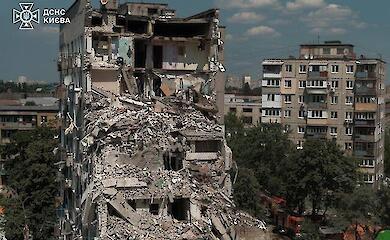
The UN has reported a sharp rise in the number of Ukrainian civilians killed as a result of the war


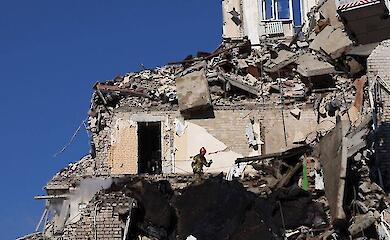
3 July has been declared a day of mourning in Kyiv. The number of dead and injured is rising