


Former Minister of Defense spoke about the timing of the end of the war


A war dragging on for a year or more would be a very negative scenario.
This was stated by the former head of the Ministry of Defense Andrei Zagorodnyuk in an interview with NV .
Because the fatigue factor will be the main one. And in the military plane, and in the political, in the economic, in the social, in the media, etc., he explained.
To a clarifying question whether the war would last until the end of the year, Zagorodniuk replied:
Until the end of this year, if we launch a massive counteroffensive, then, in fact, there will be no protracted war. We will win when we catch this moment and do not give the enemy the opportunity to recover and recover.
Earlier, a respected military expert from Azerbaijan, Agil Rustamzade, said that Russia would have enough ammunition for about 90 days. Further, there will be problems with production due to sanctions.
Therefore, a pause in hostilities may occur as early as mid-August due to problems with ammunition from the invaders.
At the same time, Rustamzade noted that it is very difficult to predict the end of the war, since it "has become a classic long war of the third generation, when countries are fighting with the involvement of a large contingent of military personnel, on a long front line, they are fighting with artillery, they have the motivation to fight for a long time" and "its result is already is not determined solely by successful military campaigns."
Expert on women's rights, persons with disabilities, motherhood in the modern context, health care reform, education and social welfare.
Related news
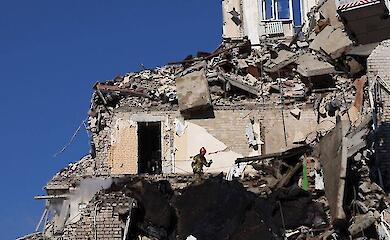
3 July has been declared a day of mourning in Kyiv. The number of dead and injured is rising


Why migration policy in Ukraine is becoming a matter of rebuilding the country

Strikes on both sides of the Crimean Bridge: Zelenskyy announced that Russia’s key logistics and air defence systems had been destroyed

Popular news



Scientists have discovered that power among the Scythians was passed down through the family line



Navrotsky has announced a ban on the red-and-black flag in Poland: what will change
News about war

The UN has reported a sharp rise in the number of Ukrainian civilians killed as a result of the war


3 July has been declared a day of mourning in Kyiv. The number of dead and injured is rising