
15 reasons why the world needs a Ukraine victory, by Timothy Snyder


Snyder's main point is that a Ukrainian victory would weaken the prestige of dictatorship and level out the danger of war in Europe and Asia.
The renowned writer and historian shared his thoughts on Ukraine's victory in his Substack newsletter "Thinking about...".
In 15 points he described why the world needs Ukraine to win the war with Russia and what might happen if it doesn't.
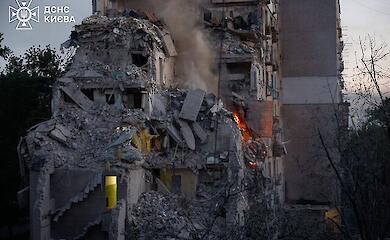
1. To stop atrocities. The Russian occupation is genocide. Where Ukrainians reclaim territory, they save lives and restore the principle that people have the right not to be tortured, deported or killed.
2. Preserving the international legal order. Its basis is that one country cannot invade another and annex its territory, as Russia seeks to do. Russia's aggressive war is certainly illegal, but the legal order does not defend itself.
3. To end the era of empire. This may be the last war fought according to the colonial logic that no other state or nation exists. But this tipping point will only be reached if Russia loses.
4. Defend the peace project of the European Union. Russia's war is not just against Ukraine, but against the wider idea that European states can cooperate peacefully. If empire prevails, integration will fail.
5. Give the rule of law a chance in Russia. As long as Russia wages imperial wars, it is trapped in repressive domestic politics. Future generations of Russians will be able to live better and freer lives, but only if Russia loses this war.
6. Weaken the prestige of tyrants. The trend this century has been towards authoritarianism, with Putinism being a force and a model. Its defeat of democracy will reverse this trend. Fascism is a force, and it is discredited by defeat.
7. Remind us that democracy is the best system. Ukrainians have internalised the idea that they choose their own leaders. By taking risks to protect their democracy, they remind us that we must all act to protect ours.
8. Eliminate the threat of a major war in Europe. For decades, confrontation with the USSR and then Russia has been a regional war scenario. A Ukrainian victory eliminates this scenario, making a new Russian offensive implausible.
9. Eliminate the threat of a major war in Asia. In recent years, a Chinese invasion of Taiwan has been a leading global war scenario. A Ukrainian victory would teach Beijing that such an offensive would be costly and likely to fail.
10. Prevent the spread of nuclear weapons. Ukraine gave up nuclear weapons. Then Russia, a nuclear power, invaded. If Ukraine loses, countries that can build nuclear weapons will feel they need to do so to protect themselves.
11. To reduce the risk of nuclear war. A Ukrainian victory makes two major war scenarios involving nuclear powers less likely and generally works against the spread of nuclear weapons. Nothing will reduce the risk of nuclear war like a Ukrainian victory.
12. To prevent future wars over resources. In addition to committing war crimes all the time, Russia's Wagner group seizes mineral resources violently wherever it can, which is why it is fighting in Bakhmut.
13. To guarantee food supplies and prevent future famine. Ukraine feeds much of the world. Russia threatens to use this food as a weapon. As one Russian propagandist said, "famine is our only hope".
14. Accelerate the transition away from fossil fuels. Putin shows what a threat the hydrocarbon oligarchy poses to the future. His arming of energy supply has accelerated the turn to renewable energy. This will continue if Russia loses.
15. Assert the value of freedom. Even with every reason to define freedom as a fight against something - the Russian occupation - Ukrainians remind us that freedom is really about something - the right to be the people they want to be, in a future they can help shape.
snyder is convinced that Ukraine must be helped in every way possible. Because we have a chance to give society back its freedom and security.
Artur Zayonts specialises in news from the frontline. A historian by education, Arthur has always sought to bring depth and context to his journalistic work.
Related news

Germany has urged its citizens to avoid travelling to Ukraine ahead of Independence Day


Why Ukrainians may not return home after the war: it's not just about security

An expert explains how Russia is changing its tactics for strikes on Kyiv

Popular news

How to cook sweetcorn properly so that it’s juicy and sweet: the best method revealed

Archaeologists have discovered who actually built Colombia’s ancient canals


Scientists have uncovered the ‘true curse of the mummy’—and it turns out it’s not mystical at all
An expert explains how Russia is changing its tactics for strikes on Kyiv
News about war
An expert explains how Russia is changing its tactics for strikes on Kyiv
The UN has reported a sharp rise in the number of Ukrainian civilians killed as a result of the war