
The Ukrainian opera *Creon*, which had been lost for 250 years, is to be staged on European stages

Dmitri Bortniansky’s 18th-century Ukrainian opera *Creon*, the score of which was thought to have been lost for almost 250 years, is set to be staged across Europe.
The creators of this international project aim to use music to highlight Ukraine’s cultural heritage and present it as an integral part of European culture.
In Ukraine, Dmitri Bortniansky’s opera *Creon*, written in the 18th century and lost for almost 250 years, is being revived. The score was found in the Ajuda Library in Lisbon.
The project involves a premiere in Kyiv, followed by performances of the opera on European stages, notably in Warsaw and Kraków, according to Polish Radio.
The project’s conductor and director, Herman Makarenko, emphasised that *Creon* forms part not only of Ukrainian but also of European cultural heritage. He said the opera addresses themes of freedom, democracy and the accountability of those in power that remain relevant today.
The project’s creators also plan to collaborate with Polish performers to introduce Ukrainian classical music to a wider European audience.
This was discussed on ‘Polish Radio for Ukraine’ by the conductor, director and creator of the project, German Makarenko – a UNESCO ‘For Peace’ Artist – and Maksym Tymoshenko, Rector of the National Music Academy of Ukraine and Academician of the Ukrainian Academy of Arts.
The opera *Creon* was Dmitry Bortniansky’s first major operatic work. It premiered on 26 November 1776 in Venice, at the Teatro San Benedetto. Following its successful premiere, the score disappeared and was considered lost for almost 250 years.
The manuscript was found in the Ajuda Library in Lisbon. In 2023, the score was returned to Ukraine, after which work began on the restoration and staging of the opera.
‘Creon’ is based on Sophocles’ tragedy ‘Antigone’. However, Bortniansky altered the ending of the work: Antigone survives, whilst the people rise up against Creon and depose him.
It is precisely this plot twist that the project’s creators consider particularly relevant today.
According to Herman Makarenko, the opera tells not only of an ancient story, but also of freedom, the strength of society and resistance to tyranny.
‘This is a work about freedom and the strength of spirit of a people who overthrow a tyrant,’ Makarenko remarked during the project’s presentation.
One of the project’s aims is to change the global perception of Bortniansky. According to Makarenko, for a long time his work was primarily presented as part of the Russian musical tradition.
Instead, the project’s creators emphasise the composer’s Ukrainian origins and his connection to the European musical tradition.
Bortniansky was born in Hlukhiv and studied in Italy, where he worked with leading musicians of his time. His work was shaped by the European musical milieu of the 18th century.
“We want not only to introduce Bortniansky to Europe, but also to collaborate on a joint project with Polish performers,” Makarenko said on air.
The international project ‘The Return of Dmitry Bortniansky’s First Opera “Creon” to the World’ began in 2024. Following a concert performance in Kyiv in November 2024, the opera returned to the theatre stage — the premiere took place in Chernivtsi in October 2025.
The organisers now plan to continue the European leg of the project. Among the cities where they wish to stage ‘Creon’ are Warsaw and Kraków.
Makarenko emphasises that particular attention will be paid to collaboration with Polish musicians and performers. In this way, the project is intended to be not only a showcase for Ukrainian music, but also a joint cultural initiative between Ukraine and European countries.
The participants in the discussion emphasised that the emergence of ‘Creon’ in the 18th century was no coincidence. A professional music school already existed in Ukraine, specifically in Hlukhiv, where a singing school was in operation.
It was from this tradition that Dmytro Bortniansky, Maksym Berezovsky and Artemiy Vedel emerged.
“The Ukrainian school of music did not spring up out of nowhere,” Makarenko emphasised, speaking about the musical tradition of the Hetmanate and Bortniansky’s studies in Italy.
Maksym Tymoshenko also emphasised that such projects provide young Ukrainian musicians with the opportunity to work alongside leading performers and represent Ukrainian culture abroad.
A separate part of the project was the complete studio recording of *Creon*, which was released on international streaming platforms.
The project’s creators believe that the opera’s return to European stages will help introduce an international audience not only to Bortniansky, but also to Ukraine’s centuries-old musical tradition.
We need to strengthen our ties, first and foremost through culture. And, despite the challenges, fake news and so on, we need to focus on what unites us. ‘Creon’ is precisely such a project,’ emphasised Herman Makarenko.
The organisers plan to continue presenting the opera across Europe, in particular with the participation of Ukrainian and Polish performers. The project is being carried out under the patronage of UNESCO.
Journalist, publicist, and expert on European integration and Ukrainian-Polish dialogue. Author for several Polish media outlets, including the weekly Polityka, the online platform Oko.press, and others.
Related news
How many Ukrainians have been granted protection in Poland since 2022: data from the Ministry of Foreign Affairs

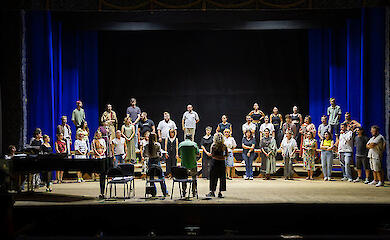
UNESCO Artist Makarenko’s ambitious project: to bring Bortnyansky’s *Creon* back to European stages

Zoomers and the return of “metal” in the 2020s: what happened to the first “digital generation”?

Two Ukrainian children were beaten up in Poland for speaking Ukrainian: the police are searching for the attackers
Popular news

Russia has received new weapons from North Korea: which regions of Ukraine could be at risk
Henry VIII’s long-lost castle has been found inside another castle

Bones of ancient humans found on the seabed of the Taiwan Strait suggest they were up to 190 cm tall


News about war
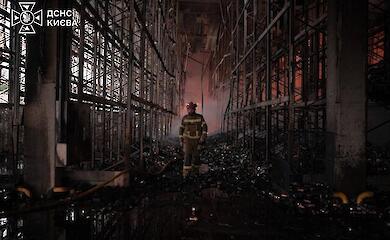
An expert explains how Russia is changing its tactics for strikes on Kyiv

The UN has reported a sharp rise in the number of Ukrainian civilians killed as a result of the war

