

Scientists have discovered that dinosaurs incubated eggs worse than birds


Scientists have found that dinosaurs incubated eggs less efficiently than modern birds. The study showed that they could not warm the clutch evenly and were largely dependent on solar heat.
The results were published in the journal Frontiers in Ecology and Evolution.
At the centre of the study were oviraptors - dinosaurs that looked like birds and lived about 70-66 million years ago.
They built nests in the form of rings of eggs, leaving the centre empty. Scientists recreated such a life-size clutch and conducted a series of experiments.
Details
It turned out that the adult dinosaur could not completely cover all the eggs with its body. As a result, the temperature in the clutch was unevenly distributed - the difference could reach up to 6°C.
This meant that some eggs developed faster and some slower, and the chicks could hatch at different times.
Unlike modern birds, which warm their eggs with their body heat, dinosaurs appear to have used a combined method.
They partially warmed the clutch, but sunlight and ambient temperature played a significant role.
Therefore, eggs warmed more evenly in warm climates, while they warmed worse in colder conditions.
Why it matters
The study helps to better understand how the transition from dinosaurs to birds occurred.
Modern birds have developed a more efficient way of incubating - they have complete control over the temperature of the clutch.
In dinosaurs, on the other hand, this system was less precise, which could have affected the survival rate of the offspring.
Background
Oviraptors are a group of dinosaurs closely related to the ancestors of birds. Their nests with eggs have been found in China for many years, and they are considered one of the most well-studied among dinosaurs.
The new study is based on modelling the clutch and experiments with heating it.
Source
Chun-Yu Su et al, Frontiers in Ecology and Evolution (2026), DOI: 10.3389/fevo.2026.1351288
Maria Grynevych, project manager, journalist, co-author of Guidebook Sacred Mountains of the Dnieper Region, Lecture Course: Cult Topography of the Middle Dnieper Region.
Related news
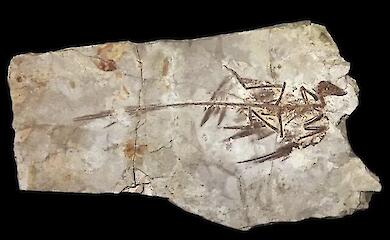
Scientists have put forward an explanation as to why there were no tiny dinosaurs



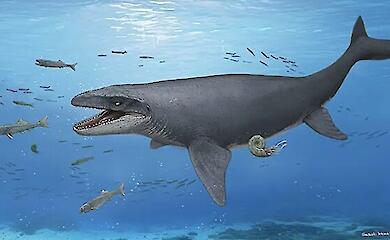
The rock had been kept in the museum for 30 years — it turned out to contain the bones of a mosasaur
Popular news

How to cook sweetcorn properly so that it’s juicy and sweet: the best method revealed


Archaeologists have discovered who actually built Colombia’s ancient canals


Russia has received new weapons from North Korea: which regions of Ukraine could be at risk
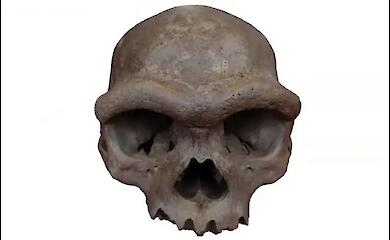
Bones of ancient humans found on the seabed of the Taiwan Strait suggest they were up to 190 cm tall
News about war

An expert explains how Russia is changing its tactics for strikes on Kyiv


The UN has reported a sharp rise in the number of Ukrainian civilians killed as a result of the war