
A study has revealed how dinosaurs’ stomachs worked


An international team of scientists has put forward a new hypothesis on how the digestive system of dinosaurs worked. Having studied the shape and degree of wear on so-called gastroliths — stones found in the stomach region of fossilised animals — the researchers concluded that different groups of dinosaurs digested their food in completely different ways.
The study was published in the journal *Paleobiology*.
Soft tissues, including the stomach and intestines, are almost never preserved as fossils. Scientists therefore have to look for indirect evidence of how the digestive system worked.
One such indication is gastroliths – stones that some dinosaurs swallowed along with their food.
Details
The researchers compared dinosaur gastroliths with the stomach stones of modern birds and crocodiles and discovered a pattern: the more worn down the stones were, the more effectively they ground up food in the powerful muscular stomach.
- Some dinosaurs ‘ground’ their food in their stomachs
Analysis showed that many toothless theropods had well-rounded and smooth gastroliths.
This suggests that such dinosaurs probably ground plant matter directly in their stomachs using powerful muscles — much as chickens and other birds do today, using their muscular stomachs.
- Others managed without such a mechanism
The gastroliths of some large herbivorous dinosaurs, including giant sauropods and members of the group to which Triceratops belongs, looked quite different.
Their gastroliths have retained sharp edges, indicating minimal mechanical action within the stomach.
According to the authors, these animals may have relied on well-developed teeth and jaws, as well as on prolonged digestion of food in the gut through fermentation, much like modern large herbivores.
- Dinosaurs did not have a single, unified digestive system
The authors of the study believe that different lineages of dinosaurs independently developed their own strategies for processing food.
Some relied on a powerful muscular stomach and gastroliths, others on efficient chewing, and others still on prolonged intestinal fermentation. This suggests that the evolution of the dinosaur digestive system followed several different paths.
Why this is important
The research helps us understand not only the diet of these ancient animals, but also the characteristics of their lifestyle, metabolism and evolution.
In future, the scientists plan to combine data on gastroliths with an analysis of the structure of teeth and jaws in order to reconstruct the feeding habits of various groups of dinosaurs even more accurately.
Source
Study: Ryuji Takasaki et al. ‘Gastrolith shape as an indicator of digestive function and its implications for dinosaurian digestive strategies’.
Journal: *Paleobiology* (2026).
Mykola Potyka has a wide range of knowledge and skills in several fields. Mykola writes interestingly about things that interest him.
Related news
Scientists have put forward an explanation as to why there were no tiny dinosaurs

The rock had been kept in the museum for 30 years — it turned out to contain the bones of a mosasaur
A reptile that lived before the dinosaurs appeared has been discovered in Brazil
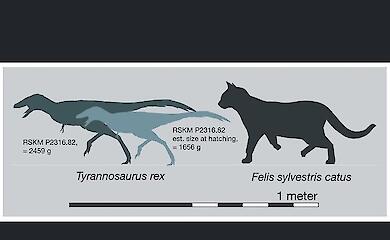
Scientists have discovered how Tyrannosaurus rex hatchlings were born
Popular news

How to cook sweetcorn properly so that it’s juicy and sweet: the best method revealed

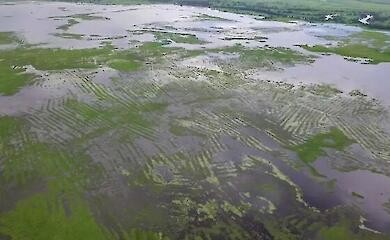
Archaeologists have discovered who actually built Colombia’s ancient canals


Russia has received new weapons from North Korea: which regions of Ukraine could be at risk
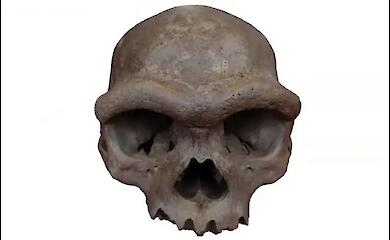
Bones of ancient humans found on the seabed of the Taiwan Strait suggest they were up to 190 cm tall
News about war

An expert explains how Russia is changing its tactics for strikes on Kyiv


The UN has reported a sharp rise in the number of Ukrainian civilians killed as a result of the war