
Kidnapped from her own flat: a medic from Kherson region told what she had to endure at the beginning of the invasion


1.2 million civilian Ukrainians were taken away by the invaders at the beginning of the invasion, the Russian news agency itself published such data. Among the abducted people was Svitlana, a medic from Kherson, who was stolen by the occupants from her own home. The woman's name has been changed for security reasons.
A woman who spent several months in a Russian pre-trial detention centre decided to tell her story as part of the "Unbreakable Mother" psycho-emotional stabilisation programme from the Masha Foundation.
Svetlana lived with her husband and young son in a town near Kherson. At the beginning of a full-scale invasion, the town was quickly occupied. Therefore, the family decided to take their son to their parents in the village, while they themselves stayed in their flat.
The invaders drove around the city in tanks and killed anyone who tried to resist. A woman saw with her own eyes how the Russians shot a pensioner who had survived the Second World War with a machine gun. The victim shouted at the invaders, asked why they had come, and swung a stick.
My husband is a father, I am a military medic. This was quickly reported to the occupants. And on the night of 25-26 February, the door to our flat was broken down, our hands were sealed and our eyes taped, we were put into different cars and taken away. Since that night I have never seen my husband again," said Svetlana.
She recalls that she and other women were taken to an unknown destination for a long time, not even allowed to go to the toilet. The abducted women were brought to the pre-trial detention centre in Sevastopol, where Svetlana spent the next four days. The woman recalls her stay in the Russian pre-trial detention centre:
'We were treated like animals. They took us out of the car bent over, with our heads down, and separated us into different cells. Probably women from the same locality could not communicate with each other. I lived in cell number five. There were nine other women there besides me. However, sometimes after interrogation the girls did not return, so the number was constantly changing.
The women slept on the floor - there were no beds, mattresses or blankets. At first they were not allowed to go to the toilet. The food was also poor - in the first weeks they gave everyone one ration for three days, without devices. And a one and a half litre bottle of water.
For the first few days Svetlana and the other women were in a stupor, not communicating with each other. From time to time people were taken out of the cell for interrogation, after which no one returned. On the second day of detention Svetlana was taken for interrogation - the woman did not share this with her relatives and wants very much to forget what happened.
But these images are still in front of my eyes. I was beaten, raped, drowned, electrocuted. Girls with tattoos were cut off live. I don't think the Russians really cared if we knew anything about the Ukrainian military positions, because everyone there was a civilian. They just liked to bully, you could hear us screaming. They were calling us names, saying, "You're nothing. You're not a woman. You will not give birth to freaks anymore,'" she says.
Three months later, the Russians rotated in and the abducted women's commander changed. The abuse stopped and nutrition improved slightly. However, the torture continued if any of the occupants pissed themselves and wanted to have fun.
After another month Svetlana was told that her husband had "taken all the blame" so she was being released.
I don't know if this is true. I don't know if my husband was anywhere near me. I don't know if he's alive. But not long after these words, they wrapped my hands in duct tape again, put a sack over my head, and took me for another long drive. They dumped me in the middle of a field and drove off. For two and a half days, without water or food, I looked for a road or any village. I just kept walking forward. Finally I found a carriageway. And after a while I stopped the car there," the woman recalls.
Svetlana managed to reach the village where her godmother lived. The woman, who was exhausted physically and mentally, came to herself for a week. After that she went to the village to her parents, where her child lived.
However, someone told the occupants about the woman's arrival, and they came to the house, saying that Svetlana should leave within a week, otherwise she would be killed.
But in order to leave, they had to pay $6500. She was allowed to take her son, who was 2 years old, and her younger underage brother with her. Also for money. The parents were forbidden to leave. On the way to Ukraine we passed 42 checkpoints. From post to post we were accompanied by a convoy. Apparently, they shared our money, which my father borrowed from the whole village," Svetlana said.
Once in Ukraine, the woman immediately went to the SBU and told them everything she knew.
Volunteers helped Svetlana to move to the western regions of Ukraine. At the moment, the woman has formalised guardianship over her younger brother and works three jobs to provide for her children. In addition, she volunteers a lot to do her best for her native Kherson region.
The woman admits that she is incredibly tired and really wants to go home and find out any information about her husband. Therefore, she turned to the project "Unbreakable Mum" for psychological help.
You know, they say that every person has a nation code in his blood, my nation code is southern. My chest breathes full by the sea and under the sun. I want to go home. I believe in a happy ending to my story. And it will surely come when I return to my family. There I dream of founding a farm, and with it - a rehabilitation centre for the military and children affected by the war, - says the woman.
Synopsis
The Enduring Mama programme is implemented with technical support from UN Women, with funding from the UN Women Peace and Humanitarian Fund (WPHF), a flexible and operational funding instrument that supports quality interventions to empower local women to prevent conflict, respond to crises, emergencies and seize key peacebuilding opportunities.


Over 10 years in journalism. Media analyst from Volyn.
Related news
Irina Levchenko, the abducted Ukrainian journalist, has been transferred to the Donetsk remand centre: what is known

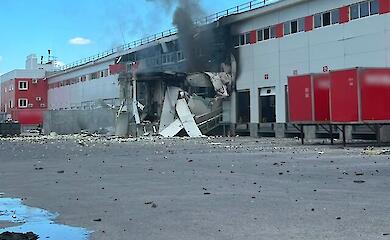
Russia struck a "Nova Poshta" terminal near Kharkiv: staff members were killed and more than 20 people were injured

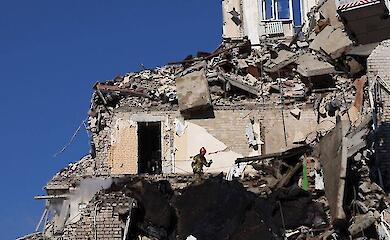
3 July has been declared a day of mourning in Kyiv. The number of dead and injured is rising

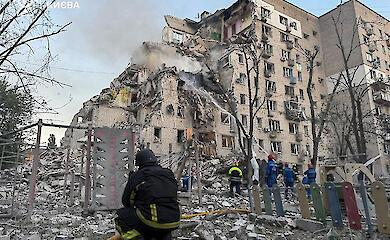
Popular news
Ukrainian security services have been recognised as among the best intelligence services in Europe – L'Express
Irina Levchenko, the abducted Ukrainian journalist, has been transferred to the Donetsk remand centre: what is known
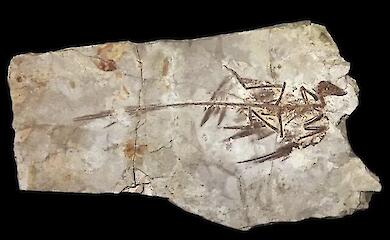
Scientists have put forward an explanation as to why there were no tiny dinosaurs

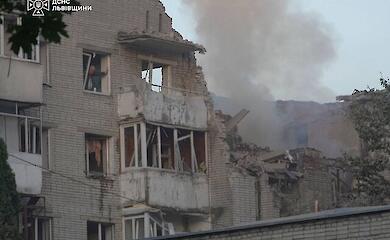
Russia has attacked Lviv with drones and missiles: dozens of residential buildings have been damaged and there are casualties
News about war
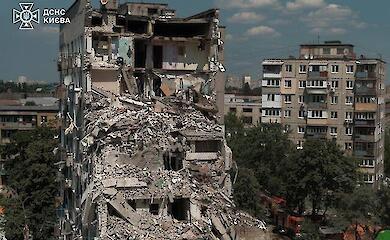
The UN has reported a sharp rise in the number of Ukrainian civilians killed as a result of the war
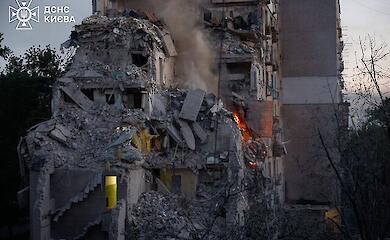
3 July has been declared a day of mourning in Kyiv. The number of dead and injured is rising