
A scientist has challenged the myth about the origin of money. Here's what he found out


Ancient artefacts found in England, China and the Maya prove: money was from the beginning an instrument of state power, not the result of market development.
A new research paper by American anthropologist Robert M. Rosenswig from the University of Albany suggests rethinking the very origin of money. His study, published in the Journal of Economic Issues, argues that the popular theory that money emerged as a universal exchange equivalent that replaced barter is a myth. The real historical evidence tells a different story.
The scientist's focus is on ancient counting sticks, which were used to record taxes and obligations in different parts of the world, independently of each other. They have been found in England, China and the ancient Maya, and everywhere their function was similar: the sticks were used by government officials to record taxes, taxes or debts.
"Barter was never a precursor to money," Rosenswig argues. - "It arose only as an exception - when there was a shortage of currency or in transactions between strangers. And money itself emerged as a system of accounting backed by political power."
Three examples of counting sticks:
In England from the 12th century onwards, sheriffs used hazel sticks to keep track of taxes in favour of the treasury. Some of these were later circulated as debentures. One surviving specimen, 2.4 metres long, recorded a loan of £1.2 million to King William III.
In China from the 3rd century BC, officials cut bamboo sticks to keep track of grain, silk and coin receipts. Even the traveller Marco Polo mentioned it in the 13th century. Their durability and uniqueness made them a convenient and reliable way to keep track.
Among the Maya (600-900 AD), bones with images of rituals and rulers also played the role of counting sticks - they indicated offerings of maize, cloth or labour rather than market transactions.
Rosenswig emphasises: all these examples speak to the political nature of money. Money has been a way of mobilising resources and managing the economy from the beginning - not just a convenient substitute for barter.
The monetary system is a choice
According to Rosenswig, recognising the political nature of money should also influence modern economic views. The idea that a state should "live within its means" like a household lacks historical justification.
"States do not simply spend what they collect. They spend first and then use taxes to regulate demand and inflation," says the scholar.
He also notes that understanding money as a political instrument makes it obvious that it is linked to social justice and the ability to support citizens, especially in times of economic crises.
An independent researcher, interested in archaeology and sacred geography. He researches them and writes about them.
Related news

Traces of a vast ancient civilisation have been found beneath the Amazon rainforest

Traces of an unknown ancient group of people have been discovered in the Himalayas
The bones of people from ancient villages have revealed the secret of the Maya’s diet
Angola’s oldest burial sites were excavated a few months before the flooding
Popular news
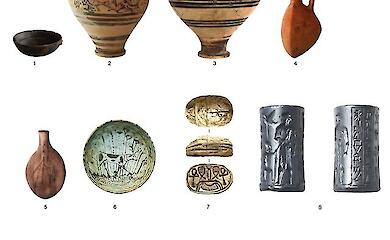
A gold tiara found in a woman’s tomb has astonished archaeologists



Irina Levchenko, the abducted Ukrainian journalist, has been transferred to the Donetsk remand centre: what is known


How much coffee can you drink without harming your heart: the cardiologists’ answer

News about war

The UN has reported a sharp rise in the number of Ukrainian civilians killed as a result of the war

3 July has been declared a day of mourning in Kyiv. The number of dead and injured is rising