

The Untold Stories: Letters from Ukrainian Women to the Free World
- Home
- Overseas
- Refugees. How to survive
- The Untold Stories: Letters from Ukrainian Women to the Free World


Amidst the chaos of war, the voices of Ukrainian women resonate with strength, resilience, and hope. In a heartfelt compilation, these letters shed light on their experiences, struggles, and the indomitable spirit of a nation under siege.
The book (WIE EIN LICHTSTRAHL IN DER FINSTERNIS. BRIEFE VON FRAUEN AUS DER UKRAINE AN DIE FREIE WELT (in English: Like a Ray of Light in The Darkness), by Aurélie Bros) is a collection of letters from Ukrainian women, detailing their experiences during the Russian invasion. It was presented on September 11, 2023, in Germany, Austria and Switzerland. The Ukrainian version will be published by the end of 2023. The inspiration to compile these letters came from the author's deep connection with Ukrainian journalists and the stories they shared. These narratives, filled with raw emotion, paint a vivid picture of life in a war-torn country. Socportal talked to Dr. Aurélie Bros (the author), Jerry Heil (the Ukrainian singer who dedicated the song to the book) and Kristina Parioti (the photographer who contributed to the book).
The article in a glimpse
Inspiration Behind the Book: The author was deeply moved by the harrowing situation in Ukraine and felt compelled to give a voice to the many women affected by the conflict. Inspired by works like Svetlana Alexievich's "The Unwomanly Face of War," the author decided to collect letters rather than conduct interviews.
Geopolitical Perspective: The author's background in geopolitics provides a unique lens through which the war is viewed. The book emphasises the importance of continued Western support for Ukraine and warns against the dangers of "war-weariness."
Personal Struggles of Ukrainian Women: The letters highlight the agonising choices many women had to make, from deciding whether to fight or flee to grappling with the separation from loved ones. These deeply personal accounts serve as a testament to their resilience and strength.
Ideological Struggle: The book underscores the ideological battle at the heart of the Ukraine war. It aims to help Western readers to get a better understanding of Ukraine's distinct identity and the importance of supporting its fight for freedom.
Photographic Narratives: Portraits by Ukrainian photographers Kristina Parioti, Daria Biliak, and Anastasia Potapova add depth to the book's narrative, humanising the stories and making them even more impactful.
Collaboration with Jerry Heil: Ukrainian star and singer Jerry Heil, one of the book's protagonists, has composed a song titled "Freedom" for the project, encapsulating the spirit of resistance and hope.
Future Endeavors: The author plans to focus on writing, particularly in screenplays and books. There's also a keen interest in addressing the growing influence of Russian propaganda in the EU.
The book serves as a poignant reminder of the human cost of war and the indomitable spirit of those who endure it. Through these letters, readers are offered a glimpse into the hearts and minds of Ukrainian women whose stories of courage, sacrifice, and resilience are both inspiring and heart-wrenching.
Dr Aurelie Bros: I believe that this book helps readers understand what Ukraine is and that Ukraine is not a cultural and social extension of Russia but, indeed, its own nation.

What inspired you to compile the letters of Ukrainian women into a book?
At the start of the Russian invasion of Ukraine, I—like many—felt overwhelmed by the nightmarish situation Ukrainians had to face. This sickening circle of violence was destroying me and triggered an outpouring of anger. On the eleventh day, the newspaper Handelsblatt asked me to run a program to help Ukrainian journalists in distress. I immediately accepted.
For months, I was in daily contact with journalists. In less than 20 minutes, they could tell me what they really needed, e.g. Starlink connection or bullet proof vests. All of them also felt a strong desire share their fears, doubts, personal difficulties and hopes with me. They needed someone to confide in. So I listened.
Many of the stories were unexpected and mind-blowing. Sometimes, I wondered what had made people do the things they did. One morning, a young woman I was talking to on the phone, told me that she recently went to feed her neighbour’s cat when suddenly, while she was petting the animal, whose owner was certainly dead, air raid sirens started to roar. She panicked because her old mother was alone with her young children. Would she have the strength to carry them down to the basement? She grabbed the cat and ran as fast as she could to join her family. She told me that the Russians should not take any more lives, even those of animals, if she could help it.
I discovered a new face of these amazingly resilient people. Zoom discussions were held from cellars or shelters, but despite their daily struggles they surprisingly had smiles on their faces.
Each evening, I told these stories to my husband. One day, he challenged me that it would be up to me what to do with these stories. That they either disappear or be collected in order to have an impact on others.
At the beginning of June 2022, I started to assemble these stories. My inspiration was Svetlana Alexievich and her books: The Unwomanly Face of War; Voices from Chernobyl; Secondhand Time: The Last of The Soviets. In these complex situations where identity is at stake, you have to give a voice to the people and not just to the experts. In the end, I decided that my mission would be to bring Ukrainian voices to the world. But since I wasn't trained as a journalist, I decided to collect letters rather than doing interviews.
Gisele Halimi’s (a Tunisian-French lawyer, politician, essayist and feminist activist) famous phrase has never had more meaning than at this moment: "my freedom only has meaning if it serves to free others".
How does your background in geopolitics and your work with Ukrainian journalists influence your perspective and approach in compiling this book?
I am a geopolitician by training, however during my studies, I also took classes in war studies and warfare. In France it is common sense: if you want peace, study war. It is the kind of university education that helps you to have a better understanding of how armed conflicts are likely to evolve.
So when the full-scale invasion of Ukraine began, I asked myself the questions that I am sure all NATO members were asking themselves. Unfortunately, I was never able to find clear answers to my questions. I was one of those who feared that Kyiv would not be able to resist for more than a few days, and one of those who were filled with joy to discover a few months later that the struggle was possible. At this moment, I realised that this war would become a war of attrition, that Moscow will try to wear down Ukraine the point of collapse.
As in any war of attrition, the risk is that Western support would wane and interest in Ukraine would vanish in an international context where there is no shortage of problems - climate change and tensions between the USA and China, to name but a few. That is why wake-up calls are regularly needed not only for governments, but also for civilians, who ultimately elect their political leaders.
Since February 24, 2022, the West has offered Ukraine unwavering support, while at the same time displaying a unity not seen in decades. But time is unfortunately beginning to take its toll and for all the solidarity on show, cracks may be starting to emerge back in the USA and inside the European Union. A poll from early 2023 revealed that the share of US citizens who say Washington is providing too much support to Kyiv has grown from 7% in March 2022 to 26% in January 2023.*
The same trends can be seen in Europe, where one can observe some degree of “war-weariness” – even in Germany (one of Ukraine’s loudest defenders despite the slowness in providing military support to Kyiv at the very beginning of the invasion).
Let's face it, this decline in support and the so-called “war-weariness” is a godsend for Vladimir Putin, who is just waiting for it to strike the fatal blow on Kyiv and perhaps subsequently attack other states that he believes should be part of the “Russian world”.
I hope this book will remind readers of the need to support Kyiv at a time where the country has been torn in shreds by the Russian Federation. The fate of Ukraine – and that of its people – is pinned on the decisions that are taken in Washington, Brussels, Berlin, Paris, Warsaw, etc.
The worst thing we can do would be to trivialize the horror. In doing so, we would not only let Ukraine teetering on the brink of collapse, but also betray our ancestors who fought against the worst dictatorships and tried to make the European continent a better place.
How does the book " Like a Ray of Light in the Darkness" Letters from Ukrainian Women to the Free World shed light on the personal experiences and struggles of Ukrainian women during the war?
My impression is that the greatest difficulty for Ukrainian women was to choose and to assume the consequences of these choices. Under the Martial Law, men between the ages of 18 and 60 are not allowed to leave the country, so the range of choices for men is very limited. They can join the army or support it from afar, but they have to stay.
On the contrary, women are faced with multiple choices. To fight or not? To leave the country or not? How can you find a job in your host country if there is no kindergarten place for your little child? Some of these choices are cruel. Sending the kids to school in a war-torn country without knowing if there will be another shelling during the day. Leaving your parents and grandparents behind to bring your children abroad to a safe place. Separating a father from their children for an indefinite period. More than once, I asked myself what I would do in these circumstances. I still don't have a clear answer.
These women speak of an everyday life that seems in all its ups and downs familiar to us: taking the children to school, going on a date, passing exams at the university, or having a miscarriage. All of this though is a completely different story under the fire of bombs and the risk of dying at any moment.
My hope is that this book will awaken empathy in readers - the key element against the trivialization of horror. Perhaps through the stories of these Ukrainian women, the reader will understand the nature of their suffering.
What are some of the tough decisions that the women featured in the book had to make? What is your reflection, as an author? How do these decisions reflect on human nature and the concept of good and evil?
I think a philosopher could answer the question much better. As a geopolitician, I would say this book reminds us that every individual has a choice. Some have decided to be hand in glove with the regime of Vladimir Putin. Some turned a blind eye on the situation and went on living a so-called normal life without recognizing that this is a form of collaboration. Many decided to speak up their minds and put up a fierce resistance. Other offered a shelter for those seeking refuge. This range of decisions speaks volumes about human nature. I believe that from Vladivostok to Lisbon, we all had to make a choice on February 24, 2022.
Ultimately, this gives each of us a certain responsibility in this war as individuals. Of course, there are personal decisions that are heroic and worthy of a Hollywood film, like Olena Bilozerska (her letter is in the book) , the Ukrainian sniper who has been fighting on the Eastern Front with her husband since 2014.* Nevertheless, there are also less glorious stories that make you think about the darker sides of human nature. A Russian soldier who decides to shoot a grandfather on a bicycle in cold blood without being ordered to do so. All those Russian families who have broken ties with their relatives in Ukraine on February 24th. A German politician who decided to organise a demonstration for 'peace' (in other words, to call a halt to arms deliveries to Ukraine) in front of the Brandenburg Gate a few months ago, with some members of the public wearing armbands bearing the letter Z. All these people are making individual decisions and they all share responsibility for the drama that is currently unfolding.
To make a long story short, we are not hogtied. I am infinitely grateful to the publishers Elisabeth Sandmann and Suhrkamp for having had the courage to bring these stories to the world.
What was the most challenging aspect of collecting these deeply personal letters from Ukrainian women during the war?
Of course my personal struggles were nothing compared to the horrors my protagonists endured. Still, sometimes it was quite emotionally challenging to deal with the daily terrible accounts of war which popped up in my messages and eMails from all these women that grew so close to me. I don’t have the training of a psychologist, so sometimes I just did not know how to react correctly to the death and carnage that played out in the lives of all these women. What do you do when people break down crying in front of you? What do you say when they tell you that mom hasn’t been heard from in over a week, and she lives in a region frequently bombed by the Russian army? Does hugging really help to comfort? What do you say to that person who has lost everything while you still have it all, by sheer luck? Can the warmth of the body soothe the soul? So many questions that kept colliding in my head – still today.
How does the book contribute to understanding the ideological struggle as a core of the Ukraine war, as Stephen Fry mentioned in his text thoughts about your book?
I believe that this book helps readers understand what Ukraine is, and that Ukraine is not a cultural and social extension of Russia, but indeed its own nation. This is obvious to Ukrainians, but not so clear to Westerners who know little or nothing about this country.
I was born in France, and at school Ukraine was maybe mentioned only twice. Once during a geography lesson (Europe's grain basket) and once in a history lesson (the famine of 1932-1933). When I began my thesis on Gazprom's gas exports to Europe via Ukraine, I also realized that Europeans knew much more about Russia than Ukraine. My hope is that this book will help people understand what Ukraine is. Without it, it is impossible to understand the ideological struggle between Moscow and Kyiv, and more broadly between the West and Russia.
How do the portraits taken by Ukrainian photographers Kristina Parioti, Daria Biliak, and Anastasia Potapova contribute to the book’s narrative?
Each photographer, in her own way, has brought an additional touch of humanity to this book through powerful portraits. When you see these faces, you can't ignore the words. You can't close the book and move on. These images stay with you and stick to your mind. These faces could be those of my mother, my best friend, my daughter or even myself, should the EU ever come under attack.
I have also noticed that these images have an influence on the way we, Westerners, perceive refugees. I remember a German woman's comment. She was surprised to see how strong the Ukrainian women in exile were that she had met. She explained to me that, until now, her image of refugees had been one of weak, weeping, ragged people. Another hope is that this book will influence the debate on immigration and refugees in a positive way. These are people with potential, knowledge and willpower that should not be underestimated.
What are your future plans or projects following the release of this book?
I decided to stop doing research and teaching on February 24, 2022. A professor must be neutral in order not to manipulate his/her students. Today, I cannot remain neutral any longer.
I will continue to help my colleagues at Handelsblatt, but I am going to concentrate on writing screenplays and books in fiction and non-fiction.
Of course, I will continue to talk about the war. I am wondering whether I am going to write a book about Russia, so that the West can understand what that country has become and clamp down the Kremlin propaganda in the EU which worries me more and more. When I saw the video made by Russia Today entitled “Heil Zelensky”, I thought it would be an egregious error for us to remain silent. The more the months go by, the more I see Russian propaganda growing, especially in Germany and France, which is not a coincidence because it is the powerhouse of the EU. The Kremlin has clearly understood that in order to weaken the EU substantially, it needs to divide the French and Germans but also to flatter the most radical and least democratic political parties in these two countries, which have always had a certain fascination for the Kremlin. I see that some citizens are not indifferent to Moscow's “bombastic words”. Perhaps the next step in helping Ukraine is to deconstruct this ideology, which is damaging the whole continent – if not the world.
One of your protagonists of the book is the Ukrainian star and singer Jerry Heil. Besides providing a letter to your book she now also has composed the song “Call me Freedom” for your project. How did the collaboration with Jerry Heil come about, and what can readers and listeners expect from the song?
I first met Jerry in Berlin in the summer of 2022, and it was love at first sight - if I can put it that way. We became friends and confidants. In her letter for my book she talks about Ukrainian music and the desire to make it heard around the world. In March 2023, we discussed the music "Call me Freedom" for the first time.
It was clear that the music couldn't have any other title, especially as the word freedom is often feminine in other languages (la liberté, die Freiheit, la Libertad).
Today, Jerry's voice has become for me the voice of resistance, carrying the stories of the book's protagonists, but also of all those who fight for freedom.
Jerry Heil: While writing this track, I learned that the word WILL, which became the second name of Ukraine, is feminine in many languages! Think about it: it's so symbolic! That's why the track is called "CALL ME FREEDOM".

The video for the song cites the letters from Aurelie’s book:
Imagine your country is invaded. What would you do?
Flee abroad? Leave your relatives behind? Or stay with them in the war? Maybe even go to the front and fight?
Answers to these questions were given by 38 Ukrainian women in very personal, moving letters for the book: "Like a ray of Light in The Darkness. Letters from Ukraine to The Free World"
"Today, Russia is not fighting against Ukraine. It is fighting against the entire civilised world", - Olha
"I don’t want us to build our future under the noise of air raid sirens", - Sofia
"When it got dark, I saw a glow in the sky. They were rockets", - Maryana
"The wheat fields have been set on fire by missile strikes and the harvest cannot be harvested", - Iryna
"Sometimes I feel guilty for leaving my family behind in a country where there is war", - Maria
"We feel that we are in a reality show right now. The world is watching us. And we are competing in the game of “who got hit the hardest in this war?" - Olha
"Our unity - this is not a slogan from television! Our unity is in our genes and has been passed down to us from our grandparents", - Jerry
"I don't understand why Putin started the war. He is an idiot", - Ira
"My biggest dream is that the war will end, that all Ukrainians will be alive, healthy and happy!", - Sofia
"When all our colleagues were more or less safe, we launched an operation to rescue the animals", - Olha
"At the beginning of March, new shells hit Mariupol, leaving the city without water, gas, electricity, light and grid connection", - Kristina
"It was hell ... There was hardly anything to eat, soup was cooked over the fire from the water drained from the radiators", - Anastasia
Tell us about the song "Freedom" by Jerry Heil and its connection to the book. How did the collaboration with Aurelie come about, and what can listeners expect from the song?
Aurelie and I met at the beginning of the full-scale invasion. She sheltered me, and before that and after that she sheltered several other Ukrainian women in her apartment in Berlin.
It turned out that Aurélie was a French writer who had previously taught at Harvard. I shared my worries about moving to the United States to study at Berkeley, and she told me stories about the magical autumn in Boston because she taught at Harvard.
At that time, Aurelie began working on a book inspired by the stories of strong Ukrainian women who were forced to become refugees under various circumstances since the beginning of the full-scale war. It contains stories written by these women and girls themselves (among the stories is mine; however, it is probably the most personal among all the memoirs).
But my main involvement in the life of the book, which brings together dozens of stories of unbreakable women, which the whole world will now know about, because the book is published by the most famous German publishing house and will be translated into many languages, is the track that I created at the writer's request to support the book's release.
This promotional move - to combine a book and music - is rarely used, but it has a powerful impact. I believe that this will happen. I believe that the support of Europe and the whole world will not only not fade away but increase as we fall in love with Ukrainian culture and the Ukrainian people who created it.
While writing this track, I learned that the word FREEDOM, which became the second name of Ukraine, is feminine in many languages! Think about it: it's so symbolic!
That's why the track is called "CALL ME FREEDOM". In the climax, I list this "name" in several languages: Portuguese, German, and French. And, of course, in Ukrainian.
The book will, of course, be published in Ukrainian translation, where the women's stories can be read in the original in a few months!
Kristina Parioti: Writing the book’s text helped me rethink and relive those moments and times in Mariupol and realise that it is all over, or almost over.

Tell us about your participation in Aurélie's project.
Initially, my participation in the project started with writing my own story. One day, my friend sent me a story on Instagram asking who would like to tell their experiences during the war. At that moment, I felt that I wanted to do it. I felt that with my story, I could inspire someone not to give up in difficult times, even when there seems to be no way out.
Writing the book’s text helped me rethink and relive those moments and time in Mariupol and realise that it is all over, or almost. That's how we met Aurélie. We can say that we found each other. Later, we met, and I learned even more about the project, the book, and its characters, and I was pleasantly surprised by the great support. While the project was in progress, Aurélie and I always stayed in touch and talked from time to time.
One morning, I received a call from Aurélie with an offer to take photos of the heroines for the book. I had just finished my photography studies and thought that this was an opportunity to prove myself, and my abilities and be part of the project not only as a participant but also as a photographer. Of course, I agreed, not knowing what an interesting path awaited me.
Before each shoot and meeting with the characters, I read their stories to understand what they had been through and how their experience could be conveyed through the photographs. I wanted the reader to feel the personality’s strength, resilience, and indestructibility through the photos. It was important for me to make people feel comfortable, so sometimes it was difficult to find the right words, taking into account and respecting the story of each participant.
Once again, I was convinced that despite all the challenging circumstances, human nature can be strong, and the characters in this book are proof of that.
Working on a project of this format requires special attention, especially to the context. This experience inspired me to continue developing in the field of photography. For me, photography is about more than just pressing the shutter button. That's why I want to continue to be part of something bigger in other projects.
From the editor:
The heartfelt letters from Ukrainian women, as presented in this compilation, offer a window into the souls of those who have faced the ravages of war. Their stories, filled with courage, hope, and resistance, stand as a testament to the indomitable spirit of the Ukrainian people. Dr. Aurelie Bros's insight further underscores the importance of recognizing Ukraine's distinct cultural and national identity, separate from any perceived extensions of neighboring nations. As we reflect on these letters, it becomes evident that amidst the chaos and despair, the voices of these women resonate with a message of strength, resilience, and hope for a better future.
Maria Grynevych, project manager, journalist, co-author of Guidebook Sacred Mountains of the Dnieper Region, Lecture Course: Cult Topography of the Middle Dnieper Region.
Related news
Poland is changing the rules for Ukrainians: what will happen to free accommodation and medical care?

Russia struck a "Nova Poshta" terminal near Kharkiv: staff members were killed and more than 20 people were injured

3 July has been declared a day of mourning in Kyiv. The number of dead and injured is rising

Popular news
Ukrainian security services have been recognised as among the best intelligence services in Europe – L'Express
Irina Levchenko, the abducted Ukrainian journalist, has been transferred to the Donetsk remand centre: what is known

Scientists have put forward an explanation as to why there were no tiny dinosaurs

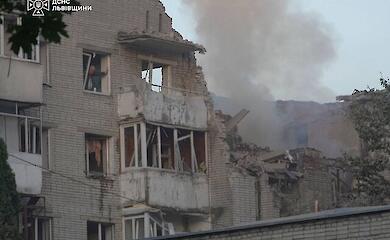
Russia has attacked Lviv with drones and missiles: dozens of residential buildings have been damaged and there are casualties
News about war

The UN has reported a sharp rise in the number of Ukrainian civilians killed as a result of the war

3 July has been declared a day of mourning in Kyiv. The number of dead and injured is rising