


The end of the era of drone dominance. Have drones stopped changing the course of war?

Former U.S. Army Brigadier General Mark T. Kimmitt argues in an article for Politico that the era of battlefield drone dominance is coming to an end.
In his view, the turning point was new air defence technologies.
For example, in May 2025, Israel's Rafael Advanced Defence Systems officially confirmed for the first time the use of high-powered combat lasers in combat: such systems have reportedly already shot down "dozens of enemy targets".
Kimmitt notes that the lasers' effectiveness at a much lower cost and the ability to produce them on a large scale, along with dozens of other anti-drone weapons under development, disprove the notion of the drone as a "revolutionary" weapon.
"There has been no revolution, and the brief era of drone dominance has come to an end," the author concludes.
In 2022, drones became a symbol of Ukrainian defence: dozens of video footage of small drones destroying Russian tanks and armoured vehicles appeared.
"Drones are cheap, numerous and difficult to destroy," Kimmitt quoted Kimmitt as saying of the findings from those years.
However, according to Kimmitt, drones, "while seeming like a near-perfect weapon, are no longer invincible," because industry has joined the fight against drones.
All major defence companies are responding to the growing demand for C-UAS systems by developing counter-drone systems, from electronic traps to experimental laser systems. The author notes, however, that the next stage of defence is AI and "drone vs. drone".
A swarm of drones regrouped under the control of AI can cover any traditional air defence system, as a human simply does not have time to process dozens of targets simultaneously.
Therefore, according to Kimmitt, the most promising will be "cheap counterdrones with artificial intelligence," which are produced in large numbers and are capable of autonomously intercepting massive attacks.
Such drone battles will resemble the air warfare of the future, where crewless "fighters" and "interceptors" defend against enemy drone "bombers."
AI-based automated complexes will become the new "air fleet of the XXI century", much cheaper and more accessible than any manned aircraft, the expert believes.
Kimmitt emphasises that mass drone attacks already demonstrate that it is not each individual drone that matters, but their number. Modern clashes "have shown that success is ensured by the mass of attacks rather than by the 'invulnerability' of the technology," the author quotes a World War II slogan ("Quantity is quality in itself").
And indeed, it was the numerical superiority of drones that allowed to hold the defence in recent wars.
Kimmitt recalls that drones played a critical role in Ukraine's defence in 2022: they became the "most important weapon" of an army outnumbered, destroying "a surprising number of Russian tanks and combat vehicles". Without these drones, the author writes, the course of the war could have turned out very differently.
Kimmitt clarifies that drones are not disappearing from the battlefield. They remain a key component of modern warfare. But like any "miracle weapon," they are no longer capable of changing the nature of warfare on their own.
"As General Patton wrote, it is not technology that wins, but the 'musicians of Mars' - commanders who are able to skilfully combine all types of weapons," the author reminds us. Drones are just one of the "notes" in this "symphony": important, but not decisive.

Journalist and editor of informational and analytical programs.
Related news
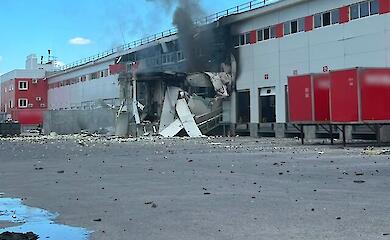
Russia struck a "Nova Poshta" terminal near Kharkiv: staff members were killed and more than 20 people were injured


The death of Lindsey Graham: Zelenskyy and Trump react to the senator’s death
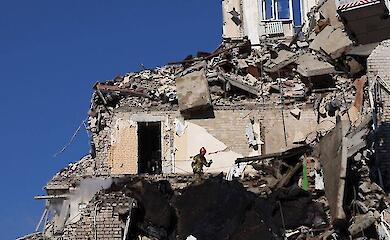
3 July has been declared a day of mourning in Kyiv. The number of dead and injured is rising

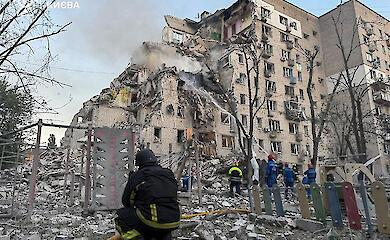
Popular news

A gold tiara found in a woman’s tomb has astonished archaeologists




Irina Levchenko, the abducted Ukrainian journalist, has been transferred to the Donetsk remand centre: what is known


How much coffee can you drink without harming your heart: the cardiologists’ answer
News about war
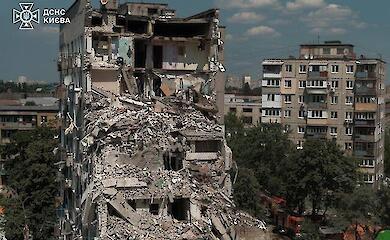
The UN has reported a sharp rise in the number of Ukrainian civilians killed as a result of the war
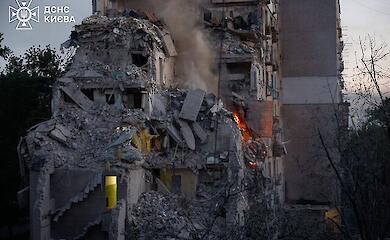
3 July has been declared a day of mourning in Kyiv. The number of dead and injured is rising