



A recent discovery by experts from the State University of New York at Buffalo (USA) has shown that these rodents have hidden abilities: they are able to move microparticles at a distance using ultrasound.
It has long been thought that ultrasonic signals produced by rodents serve solely for social communication. However, a team led by psychology professor Eduardo Mercado III, who published their work in the journal Neuroscience & Biobehavioral Reviews, suggested that ultrasound may also improve the mice's sense of smell.
The researchers noticed that after issuing ultrasonic signals, the rodents begin to actively sniff their surroundings. This led them to believe that there was a functional link between sonic vocalisation and olfaction.
The scientists came up with a revolutionary hypothesis: mice use ultrasound to move molecules in the air without touching them. Ultrasonic vibrations are able to set airborne particles in motion, grouping them together and promoting more efficient deposition of molecules on olfactory receptors in the nasal cavity. Thus, ultrasonic vocalisation helps mice better capture pheromones, which are important for recognising friends, strangers and competitors.
In addition , if the hypothesis is confirmed, scientists will be able to develop new technologies to control microparticles using ultrasound. Although the mechanisms of how sound waves affect nanoparticles are not yet fully understood, nature may have already provided us with a solution to this problem.
This discovery goes beyond anything we knew before. It's like magic. It's like we're watching the Jedi rodents," Professor Mercado concluded.
Maria Grynevych, project manager, journalist, co-author of Guidebook Sacred Mountains of the Dnieper Region, Lecture Course: Cult Topography of the Middle Dnieper Region.
Related news

Scientists have discovered a potential antidote to snake bites in the blood of snakes themselves

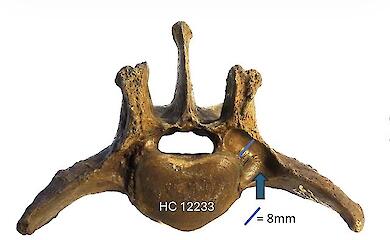
Traces of inbreeding have been found in the bones of sabre-toothed tigers
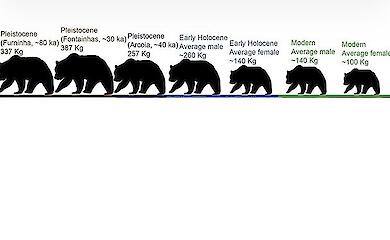
Why did Portugal’s giant bears gradually shrink to almost half their original size?

Scientists have uncovered the secret behind the dominance of female hyenas
Popular news

A gold tiara found in a woman’s tomb has astonished archaeologists



Irina Levchenko, the abducted Ukrainian journalist, has been transferred to the Donetsk remand centre: what is known


How much coffee can you drink without harming your heart: the cardiologists’ answer

News about war

The UN has reported a sharp rise in the number of Ukrainian civilians killed as a result of the war


3 July has been declared a day of mourning in Kyiv. The number of dead and injured is rising