Entry-Exit System (EES) - how the border crossing will take place

The EU is preparing to introduce a new Entry-Exit System (EES).
As of July 2025, the Entry-Exit System (EES) is not yet operational in the EU, but its launch is expected very soon - tentatively in October 2025.
What does it mean now?
While crossing the Schengen borders for Ukrainians is still carried out - on a foreign passport with mandatory marks of border guards.
After activation of the EES system at entry and exit will begin:
- collection of biometric data (including facial scan and fingerprints);
- automatic calculation of the number of days of stay in the Schengen area (rule 90 out of 180).
If you have a valid residence permit, for example in Germany (whether under §24 or another type of Aufenthaltstitel), nothing will change significantly for you with the introduction of the EES. The system will not prevent travelling abroad and returning for holders of such permits.
However, it is important to bear in mind that all border crossings will now be recorded in a pan-European database and it will be easier for border guards to track the total time foreigners spend in the Schengen area.
Do not confuse EES and ETIAS
Some people mistakenly identify EES with another system, ETIAS.
EES is a free border control tool designed to record entries and exits.
ETIAS is a planned innovation: an electronic travel permit, the analogue of the American ESTA. Its cost will be around €7. However, the launch of ETIAS has also been postponed - tentatively to the end of 2025 or early 2026.

Journalist and editor of informational and analytical programs.
Related news

Germany's new rules for Ukrainian refugees: what will change this spring

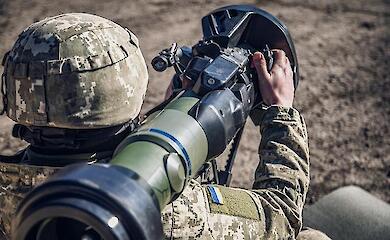
AFU put on high alert amid Belarus' activity near the border - Forbes

Zelensky explained his attitude to men who travelled outside Ukraine


Popular news

Ukrainian security services have been recognised as among the best intelligence services in Europe – L'Express

Irina Levchenko, the abducted Ukrainian journalist, has been transferred to the Donetsk remand centre: what is known


Scientists have put forward an explanation as to why there were no tiny dinosaurs

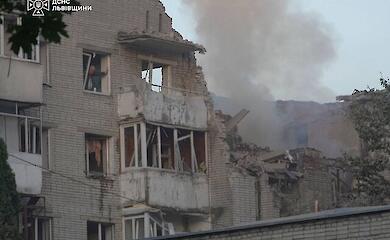
Russia has attacked Lviv with drones and missiles: dozens of residential buildings have been damaged and there are casualties
News about war

The UN has reported a sharp rise in the number of Ukrainian civilians killed as a result of the war

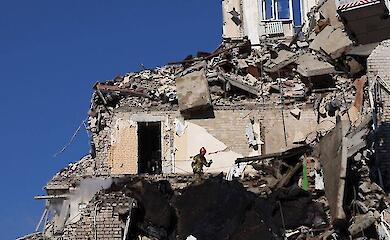
3 July has been declared a day of mourning in Kyiv. The number of dead and injured is rising