


US accelerates nuclear programme on the moon

Acting NASA chief and U.S. Transportation Secretary Sean Duffy will this week announce accelerated plans to build a nuclear reactor on the moon. According to Politico, this will be the first major step in a new role for the former Fox News host.
While NASA had already been considering placing a reactor on the surface of the moon, the new order sets a clear timeline for implementation - despite significant cuts to the agency's budget. The move also underscores Duffy's desire to take an active role in shaping NASA's space policy, despite criticism for combining the two positions.
"This is about winning the second space race," a senior NASA official said on condition of anonymity.
President Donald Trump appointed Duffy as acting head of NASA in July after he unexpectedly withdrew billionaire Jared Isaacman's nomination amid conflict with Isaacman's ally Ilon Musk.
Among Duffy's other initiatives is the accelerated replacement of the International Space Station (ISS). Both initiatives could accelerate US progress toward lunar and Mars exploration, destinations that China is also actively pursuing.
NASA's plans are in line with the Trump administration's policy of focusing on manned space development. The White House has proposed to increase funding for such programmes in 2026, while drastically cutting spending on other areas - including by almost 50% for science missions.
Under the new order, NASA is instructed to solicit proposals from industry soon to build a 100-kilowatt nuclear reactor with launch by 2030. This is an important step to ensure a sustainable astronaut presence on the moon. NASA has previously funded research on a 40-kilowatt reactor, but without a specific timeline.
The document emphasises that the country first to put a nuclear reactor on the Moon will be able to "declare an exclusion zone", which could significantly limit US action. This reflects NASA's concerns over the joint lunar programme between China and Russia.
NASA is also tasked with appointing a project manager and gathering industry input within 60 days. The goal is to have the reactor up and running by 2030, as China is planning its first astronaut landing on the moon by then.
The new nuclear initiative allows NASA to remain among the leaders in nuclear technology development despite the recent closure of a joint nuclear rocket engine programme with the Pentagon.
"The budget cuts do not mean that nuclear technology has lost importance," said an agency spokesman.
The second part of the order deals with replacing the aging and frequently leaking International Space Station. NASA plans to change its approach to awarding contracts to speed the transition to commercially operated orbital stations. The agency aims to award at least two contracts within six months of issuing the request for proposals, with the goal of launching the new station by 2030. Otherwise, China could remain the only country with a permanent crew in orbit.
Among the potential contractors are Axiom Space, Vast and Blue Origin. However, Congress expresses concern that NASA is not acting fast enough and does not allocate the necessary funding for these projects.

Journalist and editor of informational and analytical programs.
Related news

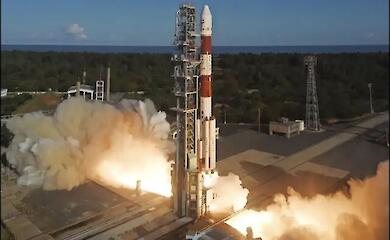
Lost satellite 'brought back to life' after a month - scientists talk of a miracle


These microbes survive boiling water and acid - and could help save the Earth

Astronomers have discovered a mysterious source of signals in space
Popular news

Orban announces "results" of Hungarian mission on Druzhba oil pipeline

Will maternity leave be shortened in Ukraine? Changes for workers with children


Zelensky said that Russia was preparing a new offensive and pointed out the direction of it


Kellogg named the ceasefire condition today and compared Putin to Nicholas II

News about war
Orban announces "results" of Hungarian mission on Druzhba oil pipeline
Kellogg named the ceasefire condition today and compared Putin to Nicholas II
Zelensky said that Russia was preparing a new offensive and pointed out the direction of it
Russia is destroying Ukraine twice as fast as at the start of the war - international report