

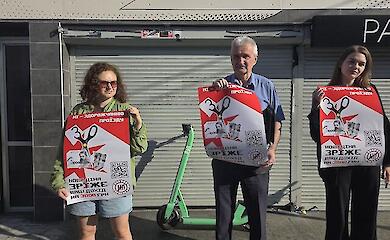
‘Subsidise, don’t rip us off’: Protesters outside the Kyiv City State Administration demanded the abolition of the 30 UAH fare


Participants in the latest protest outside the Kyiv City State Administration called for the cost of travel on Kyiv’s public transport to be reduced to 8 hryvnias. Dozens of Kyiv residents attended the rally on 11 August.
The protesters claimed that the new fare is unaffordable for people on low incomes, and that the financial problems facing public transport should not be resolved at the expense of passengers, according to Sotsportal.
Activists chanted: ‘Transport is a right, not a commodity. We won’t let this blow go unchallenged”, “Subsidise, don’t rob us”, “The metro is for everyone, not just the elite”, “We want to eat, not feed the monopolists”, “Raise wages, not fares”.
“I can’t afford a 30-hryvnia fare”
Since 15 July, a single journey on Kyiv’s public transport has cost 30 hryvnias. The authorities have justified the increase by citing rising costs for electricity, fuel, rolling stock maintenance, infrastructure and transport workers’ wages, whilst also pointing out that the average wage in the capital has risen to 50,000 hryvnias. But for people on low incomes, the new fare represents a significant increase in daily expenses.
Ivan, an 18-year-old student taking part in the protest, said that as he is currently unemployed, he cannot afford to pay 30 hryvnias every day.
“I only turned eighteen this week; I’ve got no money and no job. I can’t afford to travel for those thirty hryvnias,” he said.
Nadezhda, a 17-year-old student, said that she works five days a week and earns less than the minimum wage.
‘I couldn’t even get to work on time on this trolleybus because the “antennae” keep falling off,’ she remarked.
The organisers of the protest point out that the biggest price rises will hit low-paid workers hardest — in particular, healthcare workers, librarians and those working in the cultural sector.
“The mayor has no moral grounds to shift this burden onto us”
Vitaliy Dudin from the organisation “Social Movement” stated that the city authorities must fulfil their own promises and not pass on the financial problems of public transport to passengers.
“The mayor has no moral grounds whatsoever to shift a greater financial burden onto us. He must go to great lengths to fulfil what he himself promised — not to increase fares until the end of martial law,” said Dudin.
He called for the capital to be made a model of affordable public transport, social housing and decent working conditions, rather than a city with high prices for basic services.
For her part, Natalya Zemlyanskaya, chair of the All-Ukrainian Trade Union of Industrial Workers and Entrepreneurs, pointed out that the cost of building the metro line to Vinogradar had risen by 250 per cent.
“That’s billions too. We could make demands as well. We have the right to demand not just that fares be reduced to eight hryvnias or a reasonable level, but we are entitled to demand free travel. There are reserves set aside for this,” Zemlyanskaya stated.
She also mentioned the Kyiv Metro’s debt to ‘Ukrrosleasing’, which, as a result of court rulings, had ballooned to billions and subsequently came under the control of Pavlo Fuks.
“I would like to recall the two billion gifted to the pro-Russian oligarch Fuks. Who will be held accountable for this? That money could have funded six months of free travel. No one will be held accountable for this,” she said.
USL activist Tyler, who also took part in the protests against the felling of trees in Teremki, described the current demonstration as merely the first step towards building a city community that will hold the authorities to account.
“This rally is just the first step. The first step towards building a community that can take charge of this city, take responsibility for the well-being of its residents, and exercise not only its duties but also its rights,” he said.
The protesters stated that they plan to continue their campaign for a review of the fares.
How much of the minimum wage goes on transport
In 2026, the minimum wage in Ukraine is 8,647 hryvnias. If a person makes just two journeys a day — for example, travelling to work and back home — over 22 working days this amounts to 1,320 hryvnias a month, or more than 15 per cent of the minimum wage. If, however, four journeys are required daily, the cost will amount to a third of the minimum wage.
By way of comparison, in Prague, a monthly travel pass for an adult costs 550 koruna, which is around 2.5 per cent of the minimum wage in the Czech Republic. In Poland, the minimum wage in 2026 is 4,806 zlotys, and monthly travel passes in major cities also amount to just a few per cent of the minimum wage.
On 16 July, the Public Council attached to the Kyiv City State Administration called for the fare increase to be cancelled and for the previous fare of 8 hryvnias to be reinstated. The issue was discussed following protests, and on the eve of the increase, the Public Council also held a round-table discussion involving representatives of the Kyiv City State Administration, transport companies, civil society organisations and students.

The protesters point out that the authorities had previously promised to take the views of the public and the trade unions into account before raising tariffs. At the same time, representatives of the city authorities have not once come out to speak to the protesters.
“A fare increase is not the only option.
The question being raised more and more frequently during the protests is why passengers should have to bear the brunt of public transport’s financial problems.
In a preliminary analysis for Socportal, Vitaliy Dudin drew attention to the Kyiv authorities’ decision regarding tax and property concessions for businesses, losses to the city budget and problems in the management of municipal enterprises. In his view, Kyiv has the resources to increase budget revenue, which means that a fare increase cannot be seen as the only possible solution to public transport’s problems.
Expert on women's rights, persons with disabilities, motherhood in the modern context, health care reform, education and social welfare.
Related news

An expert explains how Russia is changing its tactics for strikes on Kyiv

A new protest against the 30-hryvnia fare has been announced in Kyiv

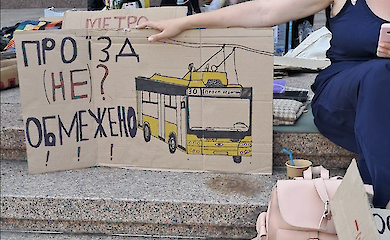
The Public Council at Kyiv City Hall has called for the fare increase to be cancelled

Court allows construction of Osokorky Ecopark in Kyiv. Environmental activists say fight will continue
Popular news

How to cook sweetcorn properly so that it’s juicy and sweet: the best method revealed


Archaeologists have discovered who actually built Colombia’s ancient canals


Scientists have put forward an explanation as to why there were no tiny dinosaurs


Scientists have discovered how snakes lived during the age of the dinosaurs
News about war
An expert explains how Russia is changing its tactics for strikes on Kyiv
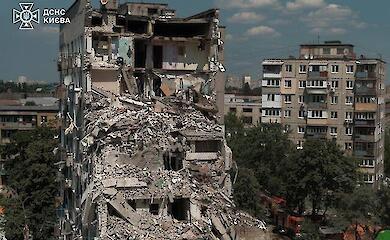
The UN has reported a sharp rise in the number of Ukrainian civilians killed as a result of the war


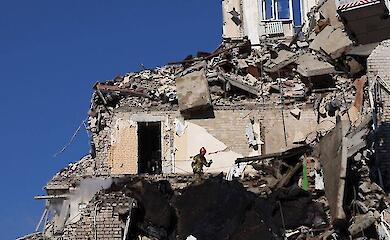
3 July has been declared a day of mourning in Kyiv. The number of dead and injured is rising