


Scientists have recorded the longest lightning in the history of observations


Modern satellite technology has dramatically changed the way we think about lightning.
In 2017, scientists recorded a real record - a lightning bolt that swept across the Great Plains of the United States for 515 miles (about 830 kilometres) from east Texas almost to Kansas City. However, only in 2025 it was possible to accurately measure its length. This is reported by Arizona State University.
Such a unique atmospheric phenomenon experts call "mega-flare". According to Randy Cerveny, a professor at Arizona State University, only now scientists are beginning to understand exactly how and why there are so long thunderstorm discharges.
Data from space satellites equipped with special sensors were used to record the record-breaking outbreak, which occurred in October 2017. Interestingly, the new record is 61 kilometres longer than the previous record (477 miles), recorded in April 2020. The record-breaking flare itself was only discovered after re-analysing the satellite data.
"There are likely to be more extreme cases, and we will be able to capture them when more accurate satellite observations accumulate," said Cerveny, of the UN's World Meteorological Organisation.
For a long time, the study of lightning was based on ground-based networks of antennas that picked up radio signals from discharges and calculated their coordinates from the time the signals travelled. However, the real breakthrough was provided by lightning observation instruments installed on geostationary satellites and operating since 2017.
"Modern satellites are able to record with millisecond accuracy the onset and extent of each lightning discharge," notes Cerveny.
The first such equipment was acquired by the American satellite GOES-16. Now it and its "colleagues" from Europe and China provide almost continuous monitoring of lightning on most of the planet, recording up to a million discharges per day.
As Michael Peterson of the Georgia Institute of Technology explains, thanks to the constant stream of data from the satellites, it is now possible to analyse mega-flashes around the world. His publication in the Bulletin of the American Meteorological Society also describes a new world record.
Normally, most lightning is limited to less than 10 miles (16 kilometres). If the discharge exceeds 100 kilometres, it is considered a mega-flash. According to analysis of satellite data, less than 1% of thunderstorms can produce such lightning - this requires particularly long (more than 14 hours) and massive in area storms.
On average, a mega-flash forms five to seven branches reaching the ground, spreading horizontally across the sky. Despite the rarity of such discharges, scientists warn: lightning can also strike 10-15 miles (16-24 kilometres) away from a thundercloud, increasing the danger to humans.
Lightning claims the lives of several hundred people around the world every year. More often than not, accidents occur before the peak of a thunderstorm or immediately after, rather than during the storm itself.
"This is why it is recommended to wait at least half an hour after a thunderstorm passes before returning to normal activities," advises Cerveny. - "The thunderstorm may be gone, but dangerous discharges do occur even after it has passed."
Mykola Potyka has a wide range of knowledge and skills in several fields. Mykola writes interestingly about things that interest him.
Related news

Scientists have discovered how cockroaches recognise ‘their own’


Scientists have explored the glacier on the summit of Mount Ararat for the first time



A parasite turned worker ants into ‘queens’ and extended their lives
Popular news

How to cook sweetcorn properly so that it’s juicy and sweet: the best method revealed


Archaeologists have discovered who actually built Colombia’s ancient canals


Scientists have put forward an explanation as to why there were no tiny dinosaurs

Scientists have discovered how snakes lived during the age of the dinosaurs
News about war

An expert explains how Russia is changing its tactics for strikes on Kyiv


The UN has reported a sharp rise in the number of Ukrainian civilians killed as a result of the war

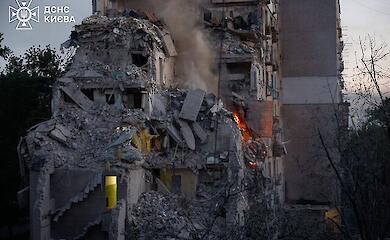
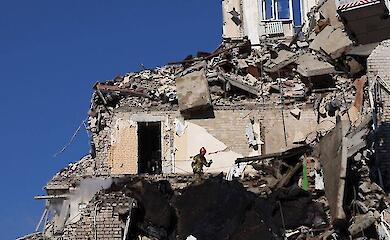
3 July has been declared a day of mourning in Kyiv. The number of dead and injured is rising