


Scientists have discovered an ancient relative of crocodiles that walked on two legs


Scientists have discovered an unusual ancient relative of crocodiles, which moved on four legs when young and switched to two legs as an adult. The reptile lived more than 200 million years ago during the Late Triassic period.
The study was published in the Journal of Vertebrate Paleontology.
The new species was named Sonselasuchus cedrus. Its remains were found in the Petrified Forest National Park in Arizona (USA).
Details
Paleontologists studied hundreds of bones found at the excavation site. In total, the researchers found about 950 fossils related to this animal.
Scientists estimate that an adult Sonselasuchus was about the size of a poodle - about 60 centimetres tall.
Analyses of the skeleton revealed an unusual feature. In young individuals, the front and hind limbs were about the same length, so they travelled on four legs.
However, as they grew, the hind limbs became longer and stronger. As a result, adult animals could walk on two legs.
What it means
According to the researchers, the find helps to better understand the evolution of ancient reptiles.
Despite the similarities to some dinosaurs, this species belongs to the line of ancient relatives of crocodiles. This means that features such as:
- bipedal locomotion
- beak without teeth
- hollow bones
could have appeared independently in different groups of ancient animals.
Scientists believe this is an example of convergent evolution, where similar traits develop in different species living in similar environments.
Background
Sonselasuchus belonged to the Shuvosauridae, a group of ancient archosaurs that lived during the age of the dinosaurs about 225-201 million years ago.
At the excavation site, scientists found not only the bones of this animal, but also the remains of fish, amphibians, dinosaurs and other ancient reptiles.
Source
Osteology and relationships of a new shuvosaurid (Pseudosuchia, Poposauroidea) from the Upper Triassic Chinle Formation of Petrified Forest National Park, Arizona, U.S.A., Journal of Vertebrate Paleontology(2026).
An independent researcher, interested in archaeology and sacred geography. He researches them and writes about them.
Related news
Archaeologists have found children's fingerprints in 15,000-year-old clay

Traces of an "ancient machine gun" have been found in Pompeii
Scientists have discovered that dinosaurs incubated eggs worse than birds

Scientists have found a huge bone from a possible ancestor of T. rex
Popular news
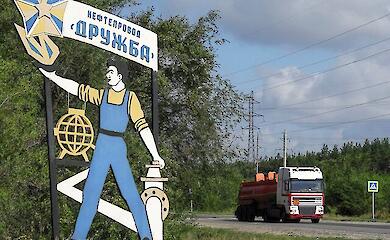
Orban announces "results" of Hungarian mission on Druzhba oil pipeline


Will maternity leave be shortened in Ukraine? Changes for workers with children


Zelensky said that Russia was preparing a new offensive and pointed out the direction of it


Kellogg named the ceasefire condition today and compared Putin to Nicholas II

News about war
Orban announces "results" of Hungarian mission on Druzhba oil pipeline
Kellogg named the ceasefire condition today and compared Putin to Nicholas II
Zelensky said that Russia was preparing a new offensive and pointed out the direction of it

Russia is destroying Ukraine twice as fast as at the start of the war - international report