
Why dogs hide food and toys, scientists explain


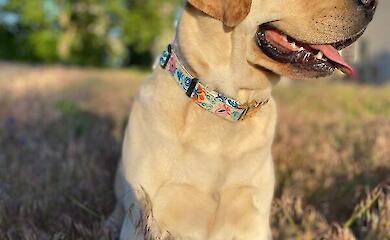
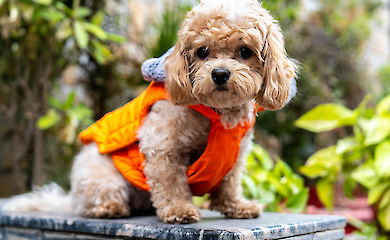
You may have watched your dog carefully bury a treat in the garden, hide a bone under a pillow, or "cover" a treat with a blanket.
As researcher Mia Cobb explains, this is how they manifest an ancient evolutionary mechanism inherited from wild ancestors. And understanding this instinct helps us to take better care of our pets.
Why dogs hide food, treats and toys
This behaviour is called "caching" - the delayed storage of food in hiding places. It is widespread in nature: squirrels, crows, foxes and wolves do it.
Scientists distinguish two types of caching:
Larding - large stores in one or two places (as squirrels do in winter).
Scattered c aching - lots of small caches so you don't lose everything at once. This is what many wild dogs do, including wolves.
Domestic dogs inherited exactly this second type. It reflects the competitive lifestyle of their ancestors, for whom food was a rare and hard-to-find resource.
Dogs use a combination of scent and spatial memory to find hidden items later.
Should we worry that a dog is afraid of going hungry?
No. A pet dog doesn't think about "what if there's no food tomorrow". He's just making sure that a valuable treat "doesn't go to someone else".
However, animals that have experienced stress, hunger or life on the streets may hide food more often, as a reaction shaped by experience.
This behaviour is also more common in breeds selected for hunting behaviour: terriers, hounds, etc.
Do I need to do something if my dog is always hiding something?
Hiding in itself is normal canine behaviour. It is only a problem if it leads to destruction or conflict.
It's important to remember:
behaviour is a dog's communication language. Often what we perceive as "bad" is actually just a natural instinct that needs a safe space.
To help your pet fulfil their natural needs, it's worth providing:
daily walks and physical activity;
social contact;
regular mental stimulation.
Sniffing mats and interactive puzzle feeders are great - you can hide food in them and the dog will search for it, fulfilling the same "search need" that drives him to dig in the yard.
If the dog growls in defence of food
The protective behaviour ("resource guarding") can be reduced:
provide more toys and treats than there are dogs in the house;
feed animals separately, behind doors or partitions;
eliminate competition at mealtimes.
If the behaviour is worrying, it's worth contacting your vet or an animal behaviourist.
When your dog buries a bone or hides a toy again, you can rest assured that this is normal, natural behaviour, reminiscent of dogs' wild past.
Maria Grynevych, project manager, journalist, co-author of Guidebook Sacred Mountains of the Dnieper Region, Lecture Course: Cult Topography of the Middle Dnieper Region.
Related news
More than 50,000 seals killed by bird flu - scientists sound the alarm

Popular news
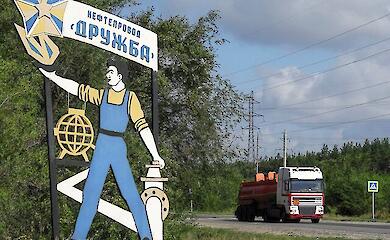
Orban announces "results" of Hungarian mission on Druzhba oil pipeline


Will maternity leave be shortened in Ukraine? Changes for workers with children


Zelensky said that Russia was preparing a new offensive and pointed out the direction of it


Kellogg named the ceasefire condition today and compared Putin to Nicholas II

News about war
Orban announces "results" of Hungarian mission on Druzhba oil pipeline
Kellogg named the ceasefire condition today and compared Putin to Nicholas II
Zelensky said that Russia was preparing a new offensive and pointed out the direction of it
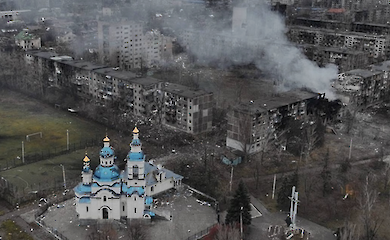
Russia is destroying Ukraine twice as fast as at the start of the war - international report