



Pysanka remains one of the strongest traditions that support Ukrainians abroad.
*The article uses photos of pysanky created by masters of the Pysanky No Tabi プサンキの旅 Pysanky Mandras project.
Continuing our field research on the life of Ukrainians in Japan, we will go to visit a master of pysanky, the painting of pysanky, who lives in the Japanese city of Kawasaki. Tetyana Solotska has devoted more than 20 years to creating masterpieces of miniature painting, as Ukrainian pysanky are called, during which she has been living in Japan.
During the interview we considered several interesting questions about the history of pysanky. For example, what was earlier: a chicken or an egg? I mean, of course, we're talking about something else: pysanky or the traditions of Christian Easter? Of course, pysanky is much older. Do the Japanese really write pysanky? Yes, they do! Even the famous NHK TV channel filmed lessons of pysanky with Tatiana Solotska.
Tatyana Solotska, a native of Kiev by birth, conducts charity workshops on painting pysanky in Japan. The workshops are attended by Ukrainians from among the evacuees, families of Ukrainians living in Japan, as well as Japanese of different ages. I would like to note that, in addition, at the events there is fundraising, which will then be transferred to support Ukraine by volunteers from Stand with Ukraine Japan.
The motto of the master-classes is sincere and clear: "together we create an amulet, deepen the sense of beauty, support our traditions and help Ukraine". It turns out, how many meanings can be sewn into one event not to boast against the background of dramatic events in the Motherland, but really for the sake of helping and enlightening.
Tetyana begins her meetings with a heartfelt phrase: "According to an old Ukrainian legend, as long as pysanky is being made, evil in the world will not triumph over good." So, now we will find out how it is: to create peace and goodness with a pysanky (a tool for wax painting). Of course, you, dear readers, should join the good deeds.

Tatiana and her family arrived in faraway Japan more than 20 years ago. Her two daughters grew up here, and the woman herself did not even know about painting pysanky or what "it is eaten with" before that. The obruzovanie Ukrainians got the wrong side of the whole nation for several generations to come. So in the military family, in which little Tatyana was born, although they had parental roots from the Kozaks, but lived in constant movement and at a great distance from everything that should have provided national education. Even the Ukrainian language Tatyana had mastered already in Japan.
- I knew that I was Ukrainian, and I always answered the question about belonging in this way. But I knew and could speak only one word in Ukrainian: palyanytsya. There was no place to learn the language, we moved constantly from border to border. Already in Japan, two years after my arrival, a friend from Lviv came to me and gave me a pysanky. I was delighted by the unknown to me work of folk art. I didn't even know such a word. It is a wonderful pysanka and I still have it. From that moment I started to look for where to read about it. I found a site in Ukrainian, where there was an explanation, printed out everything that was there, and according to those samples I started to write at home. But that was for next year, because I didn't have any tools. Oksana then brought me a scribe, a church candle and some colours. That's how it all started. Then I found a place to buy paints. Far away, but in a Ukrainian shop in America via the Internet. It turns out that it was founded by emigrants from Ukraine from the first wave. The whole family is engaged in pisankarstvo, so they can order everything for this business. But I take aniline paints, it's more convenient for me.
- What is a pysanky for you? What do you think there is more in this art object: folk or religious traditions?
For me, first of all, a pysanka is an amulet. I associate it with an Easter egg. This is my own association. It is an amulet and tradition, when in Ukraine they used to write such magical signs to protect a child, a family, to ask God to make it rain on time, to give birth to the earth. For me it is very clear. That is, of course, our ancestors used very simple symbols. Elementary, but they were in the form of a prayer. And why on the egg? Because we are drawn to Europe. In Europe, the sun has been worshipped for a very long time. The rooster and the hen are the birds that have a direct relation to the sun according to this tradition. The rooster calls the sun every morning, so in spring these testicles, as soon as they appeared, they were collected and eaten. On these spring testicles they wrote pysanky. And religion, in my opinion, carries a certain culture. If it is not expressed, it contributes to the development of society simply due to the fact that this is how our history was formed. Our own history.
So, out of more than 23 years that Tatiana has been living in Japan, she has been doing pysankar art for more than 17 years. And for more than 10 years she has been teaching Japanese people this art. How did pysanky come into Japanese reality? Why did you decide to develop the activity of teaching the painting of pysanky, and even more so for the Japanese, - I asked the craftswoman?
- The first patterns that I made, I thought, came out gorgeous. When I look at them now, they were children's pysanky, but nevertheless, I loved them very much. We used to make them every year with the kids. And then, when I worked in a school in Yokohama, I started inviting Japanese teachers to my home. They liked it, then they came from different schools. Someone even asked me, why don't you teach? I said, I never thought about it. It just happened. Then I was encouraged to write an email to the cultural centre. I got an invitation right away. A week later I had an interview and signed a contract for six months of teaching writing.
Then after the 2011 Fukushima earthquake I was depressed. I quit my job and did nothing but pisankar for a couple of years. Then, over time, women who were masters of their industry started coming to me to study: web designers, artists. People who were directly familiar with art. And when I saw how they could do it 1-2 times, I began to prepare more thoroughly for each lesson. I learnt new techniques, I read, I found everything I could find. All the groups that were on Facebook at the time were English-speaking. In Canada, in America I found ours. I could already recognise by the hand of the pysanky who wrote it, whether it was a Ukrainian craftswoman or a master, or in Canada.
- What is your favourite region and pattern, what colours do you choose?
I like traditional and author's patterns, but sometimes I just want to discover something new. I like Hutsul pysanky most of all, because there are a lot of small elements. I copy such pysanky that are specific to certain regions. It helps me to get a good hand. And for myself I like to use author's ones. Most of all I like elements and colours that are closer to my heart. I love stars. A star is a symbol of the sun, of life. I love family trees or trees of life. Birds, deer, infinity, meaning wave, I use most often. Yellow colour, orange, red bright, bordeaux and black. So this is the one so that it's like a flame when you put one after the other. And traditionally, pisankar women used to create their colours from herbs.
- Do Japanese and other foreign developments somehow influence the tradition?
The roots of pysanky, of course, are in Ukraine. And these are the roots, what nature, land and our traditions have given us. And people who went abroad with our traditions, to Canada, America, Asia, and here in Japan. And when these people introduced our traditions to the local population, a completely new phenomenon takes place here. The evolution of this culture. Now I can say that it is like brunch, an offshoot of pisanok, which went to Japan, and where it was already born. It has its own nuance, quite different. Of course, I introduce exactly with Ukrainian traditions. But I am very happy when something new is born. When my Japanese masters see an opportunity to unite, then something new is born. That's what gives strength to the continuation of traditions. It gives strength to the friendship of our two countries and our cultures. And I see this as very important," Tatiana Solotskaya shares her thoughts.

In March, the Japanese media resource NHK broadcast three programmes of the series "Suteki ni Handmade" with lessons on painting pryanoks. This is not the first time NHK has asked Tatiana Solotskaya to film the lessons of painting pryanoks. In fact, in 2022, the artist and her students and colleagues held exhibitions in Tokyo, Yokohama and Saitama. There was a collection of more than 350 scripts in different sizes. And many photographs taken during the exhibitions were printed.
- Even then, there were already film crews from NHK news, TBS and other resources, and they showed stories about us. But we agreed to proposals where everything that was aired was in favour of Ukraine. Mrs Ino Natsumi-san, who has been writing pysanky since she was 13 years old, helped us. She also teaches pysanky, and knows pottery. She paints Ukrainian horses and trees of life on plates and cups. She has put a lot of effort into this programme. A magazine on how to create pysanky was published in parallel with the programme. The point of the programme is that people can read in the magazine everything they were shown, step by step. And create the same things," says Tatiana.

Now the master has several projects in the works. To go with Japanese exhibitions to Ukraine and show them to us. He also plans to finish work on a book. And all this for the sake of Ukraine's victory over Russia.
- What would be your pysanky about the Victory?
For me it is a tree of life. A symbol of the sun and birds, a tree of family. It is a combination of all the clans, which would be the roots. It is a connection to our past, present and future. Birds represent happiness and will. Also Phoenixes are about rebirth. I give that meaning there as well and also to the sun. It is vitality, blossoming, development.

Full version of the interview on the author's YouTube channel.
Related news
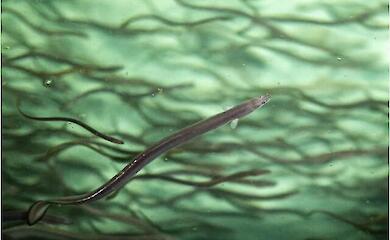
Japan's favourite delicacy is in the crosshairs of conservationists


Beaten RF eggs: "violation" of customs on Easter shown by border guards (video)


Popular news
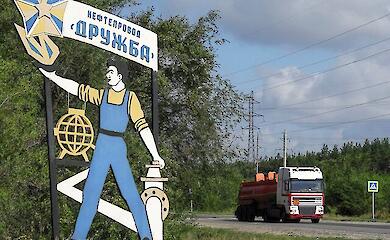
Orban announces "results" of Hungarian mission on Druzhba oil pipeline


Will maternity leave be shortened in Ukraine? Changes for workers with children


Zelensky said that Russia was preparing a new offensive and pointed out the direction of it


Kellogg named the ceasefire condition today and compared Putin to Nicholas II

News about war
Orban announces "results" of Hungarian mission on Druzhba oil pipeline
Kellogg named the ceasefire condition today and compared Putin to Nicholas II
Zelensky said that Russia was preparing a new offensive and pointed out the direction of it
Russia is destroying Ukraine twice as fast as at the start of the war - international report