



Scientists have studied an unusual fish, the Amazon mollie, which reproduces by clones. All individuals of this species are female and produce offspring without the participation of males. A new study has shown how this fish manages to avoid genetic problems and exist for more than 100,000 years.
The work was published in the journal Nature.
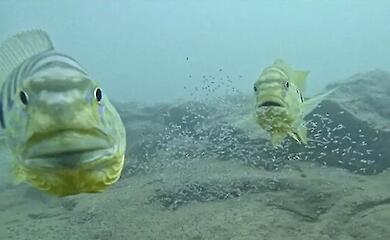
The Amazon mollie (Poecilia formosa) is a small freshwater fish found in Mexico and the southern United States. This species consists exclusively of females.
To reproduce, the fish needs a male of another closely related species, but its genetic material is not used. The male only triggers the development of the eggs, and the offspring turn out to be a genetic copy of the mother.
Details
Essentially every new fish is a clone of the previous fish.
From an evolutionary perspective, this should be a problem. Cloning accumulates harmful mutations over time, which usually leads to the extinction of the species.
But the Amazon mollie has been around for about 100,000 years, which has long surprised biologists.
Researchers have created a detailed map of the genome of this fish and found that its DNA has an unusual mechanism of "self-healing".
If a harmful mutation appears in the genes, the organism can copy a healthy piece of DNA and replace it with damaged. This process is called gene conversion.
Thanks to this mechanism, fish can get rid of harmful mutations even without normal sexual reproduction.
Why it matters
The discovery helps scientists better understand how some species can survive without genetic diversity.
In addition, such DNA repair mechanisms may provide new insights for research:
- evolution
- the genetic stability of species
- aging processes and genome repair.
Background
The Amazon mollie evolved about 100,000 years ago from the accidental crossbreeding of two other fish species. All modern members of the species are descended from that same ancient hybrid line.
Source
Edward Ricemeyer et al, Gene conversion empowers natural selection in a clonal fish species, Nature (2026), DOI: 10.1038/s41586-026-10180-9
Maria Grynevych, project manager, journalist, co-author of Guidebook Sacred Mountains of the Dnieper Region, Lecture Course: Cult Topography of the Middle Dnieper Region.
Related news

More than 50,000 seals killed by bird flu - scientists sound the alarm



Popular news

Orban announces "results" of Hungarian mission on Druzhba oil pipeline


Will maternity leave be shortened in Ukraine? Changes for workers with children


Zelensky said that Russia was preparing a new offensive and pointed out the direction of it


Kellogg named the ceasefire condition today and compared Putin to Nicholas II

News about war
Orban announces "results" of Hungarian mission on Druzhba oil pipeline
Kellogg named the ceasefire condition today and compared Putin to Nicholas II
Zelensky said that Russia was preparing a new offensive and pointed out the direction of it

Russia is destroying Ukraine twice as fast as at the start of the war - international report