
The Times: Trump is scaling back aid to Ukraine

If Trump withdraws his support for Ukraine, the UK and Europe will be obliged to take that responsibility.
President Trump recently said he might "suspend participation" in negotiations to end the war in Ukraine if either side "creates difficulties." With Putin determined to continue the war by dividing the West, and the short-term Easter truce proving to be little more than a PR tactic, the Trump team's threats to back off only encourage the Kremlin chief to escalate. Such an approach, according to William Hague, chancellor of Oxford University and former British foreign secretary, is counterproductive and contradicts the recent experience of successful peace talks, The Times writes.
Peace does not come at a convenient time. In the case of the Korean War, peace talks that began in 1951 involved dozens of meetings over two years before an armistice was signed in July 1953 that is still in force today," Hague said.
Speaking of the Korean Peninsula, he noted that the armistice there has been in place for 72 years thanks to the deployment of U.S. troops in South Korea, which helped prevent a new conflict.
Thus, maintaining peace in Korea required both patience and strength - something Washington has not yet offered Ukraine. Peace cannot simply be bought like a commodity in a shop. It requires trust that both sides will act in good faith, as well as beliefs that continued fighting will not lead to a better outcome - and it usually takes time and external pressure to build those beliefs," Hague emphasised.
He pointed out that the tragic mistake is that if the US had taken enough time and used the necessary leverage, it might have been able to end the war in Ukraine.
That leverage would have included providing Ukraine with the necessary amount of restored military aid that could have convinced Putin that he could not be further strengthened," Hague said.
Without this, Hague believes, peace could prove temporary and war could resume with renewed vigour.
Today, however, there is a worrying rush to sign an agreement as soon as possible - with no real pressure on Russia, but with a clear US interest in access to Ukrainian natural resources. The Trump administration's approach to peace talks seems to be completely devoid of historical understanding, as is its tariff policy. Trump probably believes that he needs a personal connection with Putin, or that he already has one. At best, he may negotiate a flimsy agreement that not only humiliates Ukraine but also threatens Europe's security. But it is far more likely that, unless a result is reached quickly, Trump will simply walk away, leaving Ukraine to fend for itself," argues the former British foreign secretary.
The consequences of such a move for Europe, including the UK, would be serious.
A scenario is now looming in which the war will continue, but with reduced American aid - placing ever greater demands on Britain's and Europe's industries, budgets, military and political leadership," Hague said.
He added that British ministers and their European allies in this situation will have to make a strategic decision and commit a significant portion of their military resources to Ukraine, even if it weakens their own defences.
The cost and risks of a Ukrainian defeat in the future would be much higher. In addition, cooperation with the Ukrainian defence industry, which is fast becoming one of the most modern in the world, must be strengthened," the former British foreign secretary said.
Hague concludes that with Trump's patience running out, Britain and Europe must take radical decisions to strengthen their power today.

Journalist and editor of informational and analytical programs.
Related news
Kellogg named the ceasefire condition today and compared Putin to Nicholas II

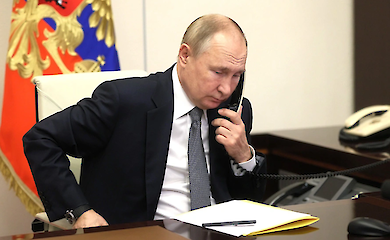
Britain says under what circumstances Putin will start a war in Europe

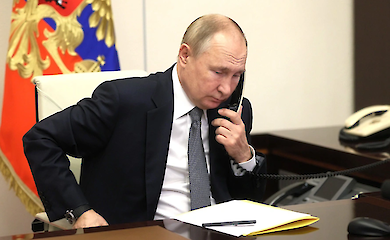
Popular news
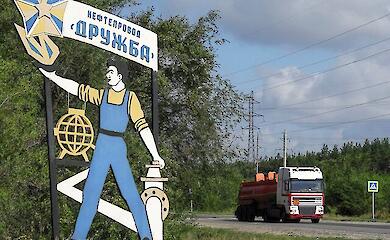
Orban announces "results" of Hungarian mission on Druzhba oil pipeline


Will maternity leave be shortened in Ukraine? Changes for workers with children


Zelensky said that Russia was preparing a new offensive and pointed out the direction of it
Kellogg named the ceasefire condition today and compared Putin to Nicholas II
News about war
Orban announces "results" of Hungarian mission on Druzhba oil pipeline
Kellogg named the ceasefire condition today and compared Putin to Nicholas II
Zelensky said that Russia was preparing a new offensive and pointed out the direction of it
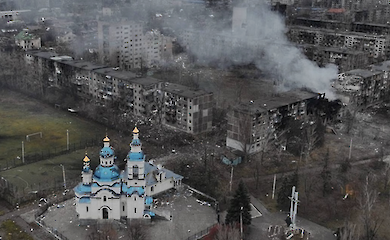
Russia is destroying Ukraine twice as fast as at the start of the war - international report