

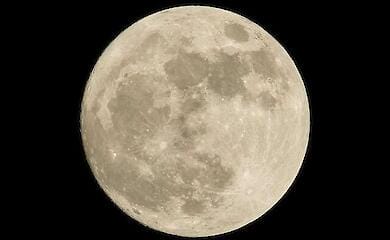
The claim of life on K2-18b proved to be premature


Scientists doubt 'traces of life' on planet K2-18b
Not so long ago, the world froze in anticipation: astronomers announced that signs of life might have been found on the distant planet K2-18b, 124 light-years away. But just a month later, hopes began to fade: new research has cast doubt on these ambitious conclusions.
It's all about the mysterious chemicals dimethyl sulphide (DMS) and dimethyl disulphide (DMDS), which have been detected in the atmosphere of K2-18b by the James Webb Telescope. On Earth, they are only produced by living organisms, such as seaweed. They are therefore considered potential "biosignatures" - signs of life.
However, the group led by Nikku Madhusudhan from Cambridge immediately warned: no loud statements, these are just "hints". The probability of error - 0.3%.
When all substances are "in the bull's-eye"
But here are colleagues of Madhusudhan's former student, Louis Welbanks from the University of Arizona, decided to double-check the data. And, alas, the miracle was not confirmed.
Their team used a different statistical approach and expanded the list of possible substances in the planet's atmosphere from 20 to 90. More than 50 of them coincided with the received data. It turns out that the telescope "caught" everything, and therefore - nothing specific.
Welbanks reasonably remarked, "If you've found everything, you've found nothing."
Later, Madhusudhan's group responded with their own analysis, testing as many as 650 chemical compounds. They found DMS again, but not DMDS. Instead, two other substances surfaced, one of which was toxic. These compounds are hardly realistic for a planet like this.
Scientists argue, and that's a good thing
It's all part of the normal scientific process. Madhusudhan said he was happy to be criticised: "Such arguments are normal and necessary." But other experts have criticised: in a month without new data, Madhusudhan's team radically changed their conclusions. This has raised questions among colleagues about the methodology and the rush to loud conclusions.
New papers, including work by astrophysicist Rafael Luecke of the University of Chicago, no longer see statistically significant traces of DMS or DMDS. And a study from Oxford found no signs of life at all.
Is there definitely life out there?
Even if DMS is on the planet, it doesn't guarantee the presence of life. This substance, for example, has been found on lifeless asteroids. Nevertheless, scientists continue to hope that with the help of powerful telescopes, mankind will still one day find convincing evidence of life beyond Earth.
"We're closer than ever to that moment," says Welbanks. But, as his colleague Nixon adds, "it's important to follow a proven path and not jump to conclusions - as happened in this case."
So for now, humanity will have to wait a little longer before saying, "We are not alone"
Mykola Potyka has a wide range of knowledge and skills in several fields. Mykola writes interestingly about things that interest him.
Related news


These microbes survive boiling water and acid - and could help save the Earth


100 years ago, the first rocket was launched - this was the beginning of the space age

Popular news

Orban announces "results" of Hungarian mission on Druzhba oil pipeline

Will maternity leave be shortened in Ukraine? Changes for workers with children


Zelensky said that Russia was preparing a new offensive and pointed out the direction of it


Kellogg named the ceasefire condition today and compared Putin to Nicholas II

News about war
Orban announces "results" of Hungarian mission on Druzhba oil pipeline
Kellogg named the ceasefire condition today and compared Putin to Nicholas II
Zelensky said that Russia was preparing a new offensive and pointed out the direction of it

Russia is destroying Ukraine twice as fast as at the start of the war - international report