

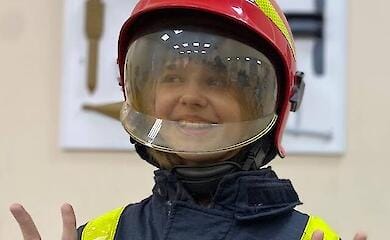
"The children kissed the ground." Why do some Ukrainians stay in the EU while others return home?
- Home
- Society
- War in Ukraine. The storybook
- "The children kissed the ground." Why do some Ukrainians stay in the EU while others return home?

The topic of the return of Ukrainian refugees has been repeatedly raised in government circles. Despite the hostilities, the country needs to be rebuilt, and people are needed for that.
According to the UN, today the number of Ukrainians who have left the country because of the war is more than six million people.
And most of them, according to sociological surveys, are not ready to return to Ukraine until the fighting is over. The reasons are not only new rocket attacks and other military threats, but also the high probability of accidents at energy facilities this winter. In addition, for many citizens, difficulties in finding a job in their home country and issues of social support remain topical.
A partial picture of the mood of Ukrainian refugees can be drawn from the results of a study by the Laboratory of Legislative Initiatives (LLI) presented on 15 September. Over the course of six months, analysts conducted a survey of over a thousand forced Ukrainian migrants. Thus, 80% of respondents believe that the war will end not earlier than autumn 2024, or even spring 2025, and therefore they are in no hurry to return. However, if the hostilities end in the near future, 67 per cent of refugees would consider returning home soon.
The most important aspect of refugees' stay abroad, according to LZI, is the quality of life in the country of asylum. It should be reminded that the status of temporary protection in the EU countries gives Ukrainian refugees access to social housing, health care, and the labour market. And for more than a year and a half of being in another country our compatriots have been able to adapt well there. Over 62% of respondents admitted that their current living conditions are even better than they were before in Ukraine.
According to LZI analyst Volodymyr Skrypets, two thirds of Ukrainian refugees live in separate housing, with up to 44 per cent saying they can afford rent. Surveys have also shown that 68 per cent of respondents have received and continue to receive assistance from the country they are in. Therefore, for more than half of Ukrainian citizens seeking protection abroad, the material and social support of the recipient country is decisive in their decision to stay. At the same time, Oleksiy Poznyak, Head of the M.V. Ptukha Institute of Demography and Social Research of the National Academy of Sciences of Ukraine, notes that many people who receive social assistance think that it will last forever.
Accordingly, people want to stay forever. But when the war is over and they are faced with the fact that assistance from recipient states will stop, they will behave quite differently," he said.
An important aspect for most refugees is not only the conditions of social and material assistance, but also social magnets: relatives, friends. They are often the main ones in a person's decision to stay abroad or return to Ukraine.
If a wife and husband leave, there is a big chance that they will stay abroad. And vice versa. If one of the family members stayed in Ukraine, the others will try to go back, - Volodymyr Skrypets told Socialportal.
To get a clearer picture of why some Ukrainians stay outside the country, while others seek to return home, we offer six stories.
"The children kissed the ground"
Victoria Dvoretska, who is raising seven children (all of them native) on her own, left her native Mykolaiv in August last year. The family was reluctant to leave until the last minute, but was forced to do so, as it was becoming increasingly difficult and dangerous to stay in the city due to increased shelling and water problems. Two days after the family left the country, there was an attack in the courtyard of the apartment building where the family lived. There were no fatalities, but many of the windows in the house were broken.

The Butlers decided to leave for Poland, to the town of Zielona Góra. The move was difficult. In the first days, Victoria, her children and her friend faced a housing problem. The family was going to rent a flat, which they had agreed on in advance, but when they arrived they were asked to wait indefinitely. Since they had to live somewhere, they had to move into a hostel, for which the owner demanded as much as 27 thousand UAH for two days. The family had to agree.
We realised that if we had to live in the hostel for a few more days, we would lose all our savings. Then we decided to live in the forest. We bought a two-room tent. Inflatable mattresses and toys served as beds. We made a washbasin out of bottles and cooked our food on the fire," Victoria told Socialportal.
The family lived in the forest for 10 days, until a local forester named Mairosh put them in touch with a woman who helped them find a place to live.
Victoria says that in terms of child development, Poland was a good choice. The sons and daughters attended the local school, they were even placed in a sports school where they did gymnastics. The children sang well and were asked to perform at a town day. However, the desire to return home was very great. And the last straw in the decision to leave Poland was a negative experience with medicine.
Victoria's eleven-year-old daughter Margarita received a head concussion with a dissection. The blood could not be stopped for three hours.
In the morning we arrived at the emergency room. A nurse came out and told us to come back in the evening when the paediatrician would be there. We arrive in the evening. We wait in a queue for four to five hours. And then we are told that we will not accept you, we have to go to the hospital. It's already night. We went to the hospital, where we were also not accepted. As a result, my daughter had to stay at home for a week, I treated her myself. In principle, I have experience in this, but there were difficulties in understanding the names of medicines in Polish, - said Victoria.
Another negative experience the family had was searching for a paediatric dentist, which took more than two months. It was only with the help of their eldest 19-year-old son, who was working in Poland at the time and used his connections, that the issue was resolved.
Victoria recalls that coming home was a big event for her sons and daughters.
The children were kissing the ground, they couldn't believe that they were finally home. Yes, when there are explosions all around, it is very scary. Recently, there was another incoming near our yard. But no matter how hard it is, we are still better off at home," she said.
Another year of waiting
Kiev psychologist Svetlana Panina, who together with her husband and four children lives in the south of France in the small town of Bandol on the Mediterranean coast, told her story. Svetlana is a resident of Crimea. She left the peninsula with her family in 2014, when Russian troops seized Crimea. The family settled in the village of Gorenka near Kiev in a rented house. Svetlana had more children there.

The first days of the full-scale war in February last year, the Panins survived in the basement. It was cold there, but safer than in the house. However, the constant threat to their lives forced the parents to look for ways to leave the village. In the end, a family friend who had a car helped.
Initially Svetlana and her children and husband planned to go to Slovakia. Svetlana told our publication that even before the war they considered this country as a possible temporary residence.
But there was no place for me and my children, our cats and dogs in Slovakia. We were offered to move to France, where a family took us in," Svetlana said.
The young mother liked France in terms of social support. She says she felt constant support not only from the local authorities, but also from ordinary French people. In Svetlana's opinion, even if a person has no money, they will still be helped with housing, food and minimum payments. The only serious difficulty she sees for herself is the compulsory knowledge of French, which is necessary for employment. But, says Svetlana, there are free language courses for Ukrainian refugees.
As for her plans for the future, the mum of many children is thinking of living in France for another year. Although she admits that she misses her home very much.
We really miss the cultural and linguistic environment: theatres, book exhibitions, fairs - everything she is used to while in Kiev. But even more than that, I miss Ukrainian society. What I love Ukraine for is the horizontal support, public, volunteer organisations - all this movement of people who care!
Svitlana wonders how Ukraine with its hard-working people does not manage to achieve the same prosperity as France. That is why she is now paying much attention to studying the social mechanisms of French society, so that when she returns to Ukraine, she will try to bring the experience gained to the people around her as much as possible.
"We had a place to come back to."
Our next heroine is Yulia Kusakova, a resident of Zaporozhye. Together with her three-year-old daughter Anya, she also went to France in search of protection. But despite the universal support of volunteers and the French government, after 13 months she decided to return back to her hometown.

Yulia travelled to France to visit her godmother, who lives in Paris. She later helped her to contact Ukrainian and French volunteers, who provided free accommodation and meals for the mother and her daughter near the small town of Sans in Burgundy.
If I had not been sure that we would be supported, I would not have travelled abroad. But I knew my godmother would help. So we weren't travelling for nothing. It was easier for us than for other refugees," Yulia told Socialportal.
The mother and her daughter lived in the house together with its owners, as well as another Ukrainian mother with a child. Everyone's relations were friendly. But soon the second family decided to leave, as it was difficult without knowledge of French. Yulia Kusakova knew French, so she decided to stay. Although, she says, she really wanted to leave already in September, because she was sure that the war in Ukraine was about to end.
Finally, in April this year, Yulia decided to go home. She says that it was difficult for her to live alone in the village with her child.
In the hinterland where we lived, there was no public transport. And to get to the doctor, for example, we had to carry our daughter in a pram for a long time, sometimes in the rain. It would be easier if I had a car. But I don't have a licence, and I don't know how to drive. In the end I decided to leave. After all, at that time Zaporizhzhya was calm and we had a place to go back to, - summed up the young mother.
Confidence in the future
Lyudmyla Shikota from Kiev and her 5-year-old daughter Olivia have been living in Canada for over a year in the 750-thousand city of Winnipeg. Ludmila planned to move to another continent eight years ago, but hesitated. The outbreak of war in Ukraine changed the plans, and Ludmila sees the immediate future of her family in the North American country.

According to Lyudmila, the Canadian government provides Ukrainians with comprehensive support. Visitors are provided with health insurance, the right to work, as well as one-time financial assistance in the amount of 3 thousand Canadian dollars per adult (the exchange rate to the hryvnia is 1:27) and 1.5 thousand per child. Those who cannot find employment will be helped with food, as there is a free system of food banks in the country - Food Banks.
Ludmila likes the Canadians' approach to preschool education, where maximum time is given to the child's development. Children do all kinds of crafts, dance a lot, learn songs and poems.
My daughter is already telling fairy tales in English. On the last day of summer the carers organised a pizza party for the children. They regularly organise free trips to the zoo and picnics," the young mother told Socialportal.
In Canada, public kindergartens are paid. Last year a monthly visit cost $380, but this year the amount was reduced to $210. Changes in financial matters in Canada, says Ludmila, are often downward. A pleasant surprise for many parents was a letter from the administration of the kindergarten, which said that there was extra money left in the educational institution's fund, so for a month and a half parents are exempt from paying.
You feel that they care about you, and it's very nice," Ludmila shares her impression.
If parents are unable to pay for kindergarten, they apply for a subsidy. For the first six months, says Lyudmila, her daughter was able to attend kindergarten for free. But then the young mum got a job and they did not apply for a subsidy anymore.
She describes Canadians as kind and friendly people.
Canada is a very stable country. There is such a social approach here that they will not let you die of hunger, they will cure you of illnesses. You are sure of tomorrow," she said.
Starting life from scratch
Yulia Svyatenko , a candidate of psychological sciences and psychologist from Kiev, shared her impression of life in Scotland. The woman says that in Ukraine she had an absolutely wonderful life: a flat, a car, which she earned on her own. But the war changed everything.

At the age of 39, I realise that I am starting my life from scratch. Because the degree, your statuses - it all goes to zero," Yulia told our publication.
Yulia moved to the northern part of the Kingdom of Great Britain together with her 16-year-old son, and later moved her parents here. Despite the objective difficulties associated with the arrangement in a new country and average command of English, Yulia after two months managed to get a job in her speciality: she provides psychological support to the British and Ukrainians, working in a large organisation. And today the woman is seriously considering the future of her family in the UK.
The Ukrainian woman respects the social support system of Western countries.
Scotland provides people with social housing with appliances, washing machine, furniture. If a person has no possibility to pay "communal services" - the state does it for him. People suffering from alcohol and drug addiction are provided with financial aid so that they do not go to the street to rob passers-by because of lack of money. If people with addictions have a pet, they are given money for food. There is also a system of "food banks"," Yulia said.
Our interlocutor says that she was pleasantly surprised by the support that the school provides to pupils in the UK. For example, the school provides children with clothes and a laptop. In order to encourage children to study better, there is a scholarship for those who excel, which is very decent.
Desire to help the motherland
Talking about the desire to return to Ukraine, some Ukrainians, in addition to sadness for their relatives and home, give more global reasons. For example, no matter how pathetic it sounds, the desire to participate in the life of the country.
Alla Voloshina, a resident of Kropyvnytskyi, chairwoman of the regional branch of the all-Ukrainian public organisation "Association for Assistance to Self-Organisation of the Population", told us her story.

With the outbreak of the war, she and her two children, aged 9 and 15, and a friend of her eldest daughter moved to Romania. Unlike many other Ukrainian migrants, the move and settling in in a foreign country went almost without complications. According to Alla, Romanian volunteers provided her family with maximum assistance, free accommodation, food, clothes, helped them to draw up the necessary documents, and helped to put the children in school. Three days after her arrival, she says, she was able to start working and volunteering, and her children went to Transylvaniacollege.
However, homesickness overpowered the feeling of fear of the "arrivals". After seven months, Alla and her children returned home. Before leaving, the woman left most of the things given to them by the Romanians to help Ukrainians and Ukrainians.
Our heroine recalls that her relatives tried to dissuade her in every possible way to return. Romanian volunteers also tried to do so. But Alla and her children saw that the situation in their native Kirovohrad region had more or less normalised after the invasion. Therefore, she was not going to stay abroad when there was an opportunity to support her country.
If everyone leaves, then who will rebuild the country? You need people for that. That is why I decided to do my best to help my native country. To make efforts to integrate people who, fleeing the hostilities, have settled in our host community. To spend as much time as possible on the introduction of instruments of co-operation between the authorities and the community, such as "social order", "social entrepreneurship", "volunteering", - Alla told Socialportal.
These stories show that in addition to security and material benefits, social magnets and the banal desire to live and work in one's own country are no less important for refugees.
The LZI surveys mentioned above indicate that for half of the refugees the most important incentive for return is the improvement of the social and economic situation in Ukraine.
Unfortunately, there have been few serious social transformations in the state so far. The Government has not taken cardinal steps in the fight against corruption. The issue of social support remains acute. And in the field of labour legislation the authorities have taken the side of the employer, significantly reducing labour rights. If the government's task is to bring citizens back home, then decisive actions are needed to improve the quality of life of the population.

A journalist since 2005. Expert in social issues.
Related news
The loss of the middle class: what a new study on Ukrainian refugees showed


Berlin suggested that Ukraine reduce the number of men leaving the country for the EU


Kellogg named the ceasefire condition today and compared Putin to Nicholas II


Politico: EU has effectively abandoned the idea of Ukraine's accelerated accession
Popular news
Orban announces "results" of Hungarian mission on Druzhba oil pipeline


Will maternity leave be shortened in Ukraine? Changes for workers with children

Zelensky said that Russia was preparing a new offensive and pointed out the direction of it
Kellogg named the ceasefire condition today and compared Putin to Nicholas II
News about war
Orban announces "results" of Hungarian mission on Druzhba oil pipeline
Kellogg named the ceasefire condition today and compared Putin to Nicholas II
Zelensky said that Russia was preparing a new offensive and pointed out the direction of it
Russia is destroying Ukraine twice as fast as at the start of the war - international report