

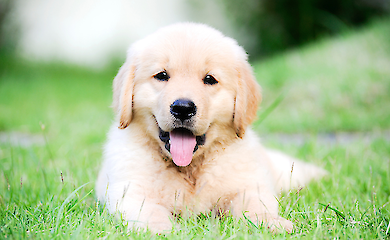
Scientists work on AI translator for dogs: first 'words' already deciphered


Is it possible to decode a dog's barking and turn it into words?
Researchers at the University of Texas at Arlington believe this is quite possible, Phys.org reports.
Computer science professor Kenny Zhu and his team have compiled the world's largest catalogue of dog sounds and videos and have already identified the first "phonemes" and sound-words that could form the basis for translating dog speech into human language.
According to Zhu, the ultimate goal of the project is to create a complete translator that will allow people to understand their pets:
"We already know how to instantly translate from one human language to another. Why not do the same with animals?" - he says.
How does the "dog translator" work?
Zhu started with the idea of testing whether the sounds made by shiba inu in Japan and in the US are different. YouTube videos were used for analysis, but no significant "dialect" differences were found. The team then focused on more in-depth analysis: deciphering barks, squeals and howls by breaking them down into elementary sound units - phonemes.
The key to understanding dog speech lies not only in the sound, but also in the context: if a certain sound is constantly repeated during the same action, it can indicate the meaning.
Researchers have already decoded about 50 hours of audio recordings and identified words similar in sound to "cat", "cage" and "leash". And the sounds can vary depending on the breed of dog.
It was also found that as a dog grows older, its "speech" becomes more complex. For example, a husky's bark becomes longer and more expressive, which may indicate a change in the level of "language complexity".
Not just communication, but also health
The development of an interpreter could become useful not only for communication, but also for tracking a pet's health. An AI app on a smartphone will be able to notice changes in sounds that indicate a pet's physical or mental problems.
Zhu already has similar projects underway involving cats and cattle. Together with Texas A&M University, scientists are recording the sounds of dozens of cows around the clock to compare the animals' "speech" with their veterinary parameters. The goal is to learn how to detect diseases by changes in voice even before external symptoms appear.
Other teams are working on similar developments: for example, the University of Michigan has used an AI model trained on human speech to analyse dog barking, and the Virginia Tech University is creating an AI to decipher cow sounds.
Meanwhile, commercial products - from smart collars to AI-based "cat translators" - are already appearing on the market.
As Zhu notes, the importance of the project goes beyond scientific curiosity:
"It's not just trying to talk to a dog as a neighbour. It's a step towards better understanding and caring for animals on a new level."
Maria Grynevych, project manager, journalist, co-author of Guidebook Sacred Mountains of the Dnieper Region, Lecture Course: Cult Topography of the Middle Dnieper Region.
Related news

More than 50,000 seals killed by bird flu - scientists sound the alarm



Popular news

Orban announces "results" of Hungarian mission on Druzhba oil pipeline


Will maternity leave be shortened in Ukraine? Changes for workers with children


Zelensky said that Russia was preparing a new offensive and pointed out the direction of it


Kellogg named the ceasefire condition today and compared Putin to Nicholas II

News about war
Orban announces "results" of Hungarian mission on Druzhba oil pipeline
Kellogg named the ceasefire condition today and compared Putin to Nicholas II
Zelensky said that Russia was preparing a new offensive and pointed out the direction of it

Russia is destroying Ukraine twice as fast as at the start of the war - international report