
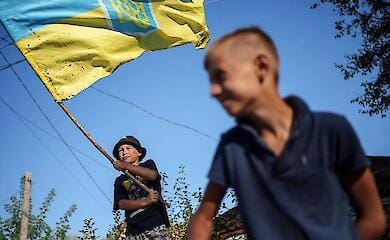

"Safety classes" will be introduced in Ukrainian schools. Will they correct the sad statistics of child injuries


Since the beginning of 2023, special safety classes have been opened in general education institutions in different regions of Ukraine.
Such classes are arranged in schools, according to the order of the Ministry of Education and Science of Ukraine dated 10 February 2023, which, in turn, was issued in pursuance of paragraph 22 of the Plan of basic measures of civil protection for 2022, approved by the order of the Cabinet of Ministers of Ukraine dated 28 December 2021. >
The main purpose of arrangement of safety classes - "to create conditions for the formation of students health-saving competences, knowledge of the rules of fire, mine safety and civil protection, the algorithm of actions in case of emergencies, pre-medical assistance", - noted in the Order of the Ministry of Education and Science.
Administrations report on the opening of safety classes
As of May 2023 only in Kyivshchyna on the basis of secondary schools are already functioning 42 classes a> safety. They have "appropriate equipment and the necessary content".
In the annex-recommendations to the Order of the MES noted that "the functioning of safety classes will be involved in the educational and educational process and is aimed at learning the basic requirements of fire safety and life safety in general".
The annex also includes an indicative list of equipment and facilities for safety classes - it contains 19 items. Among them: furniture, flooring, equipment, visual materials, toys and board games.
According to the Order of the Ministry of Education and Science of Ukraine, the responsible persons for equipping such classes are jointly with the State Emergency Service of Ukraine and local authorities.
On the website of the State Emergency Situations Service of Ukraine in the test mode already works a map of search for safety classes in different regions. The main task of the project is also specified there.
In these classes classes on fire and mine safety rules are held, algorithms of actions during the signal "Air Alarm", as well as other emergencies are studied with the involvement of employees of the State Emergency Service, National Police, the Red Cross Society of Ukraine, medics, UN Unicef Ukraine and others - report on the website of the State Emergency Service.
There you can also see photos from already open safety classes.
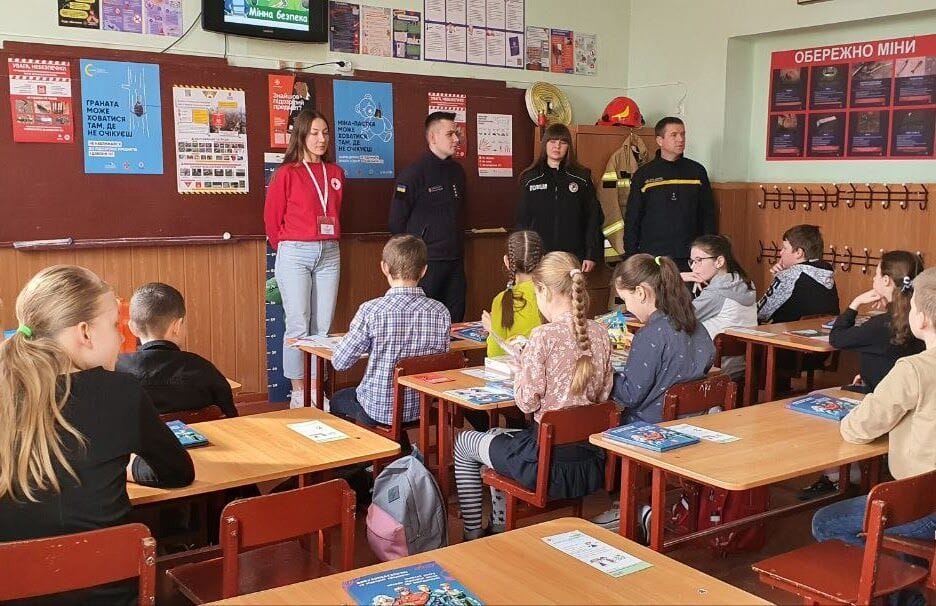


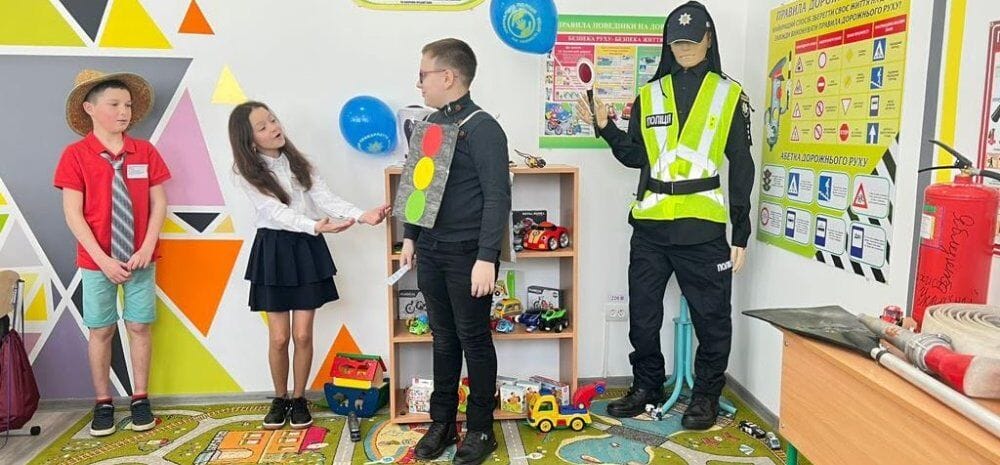
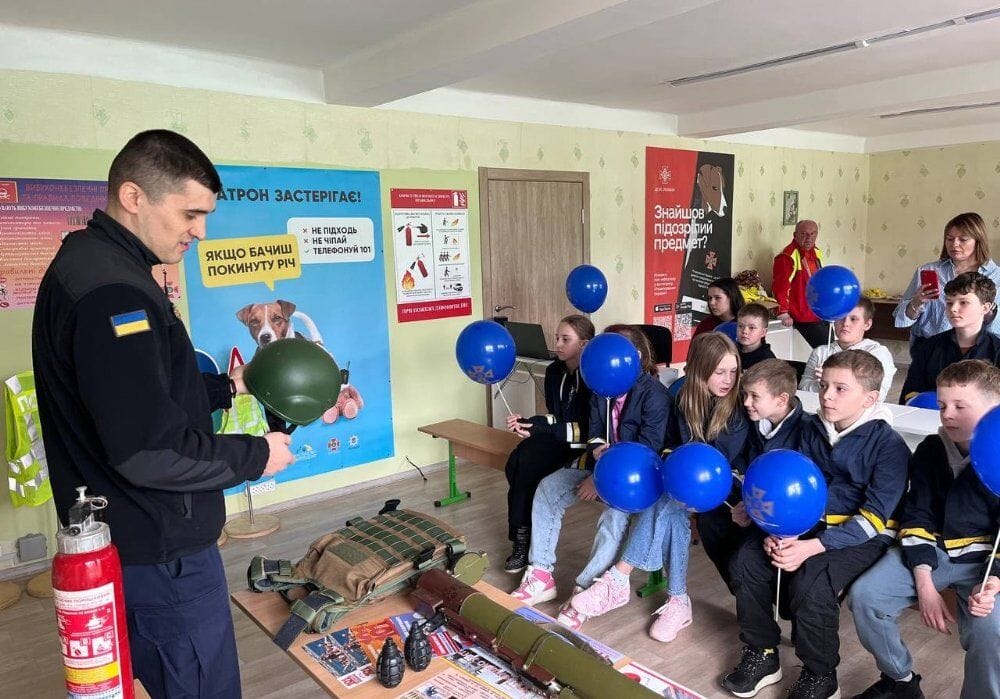
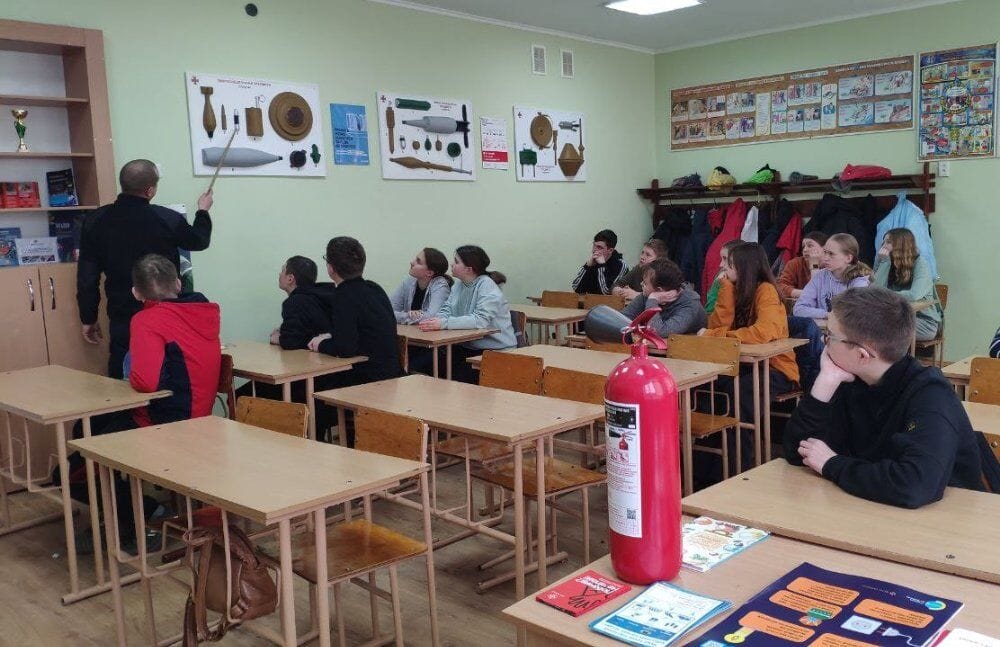
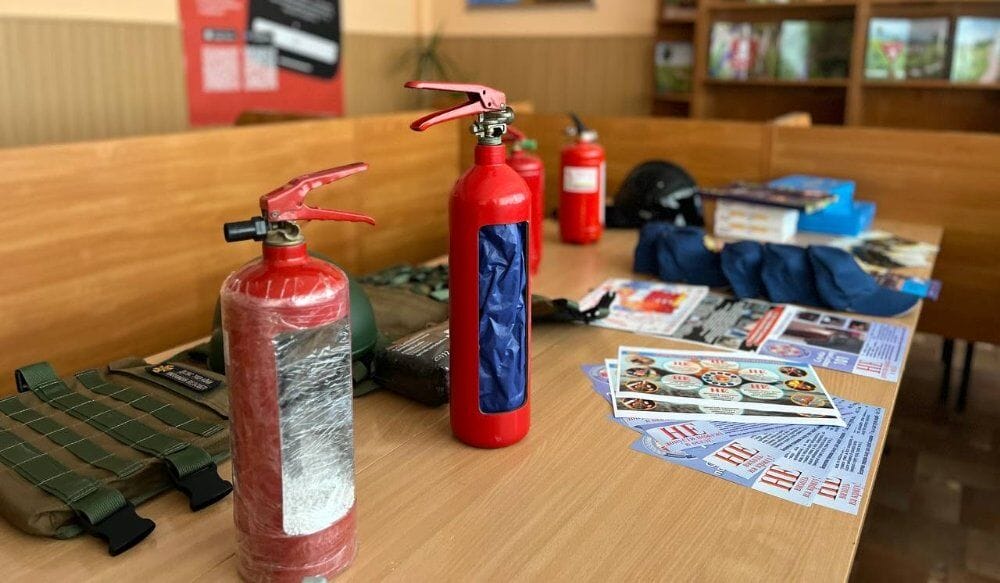
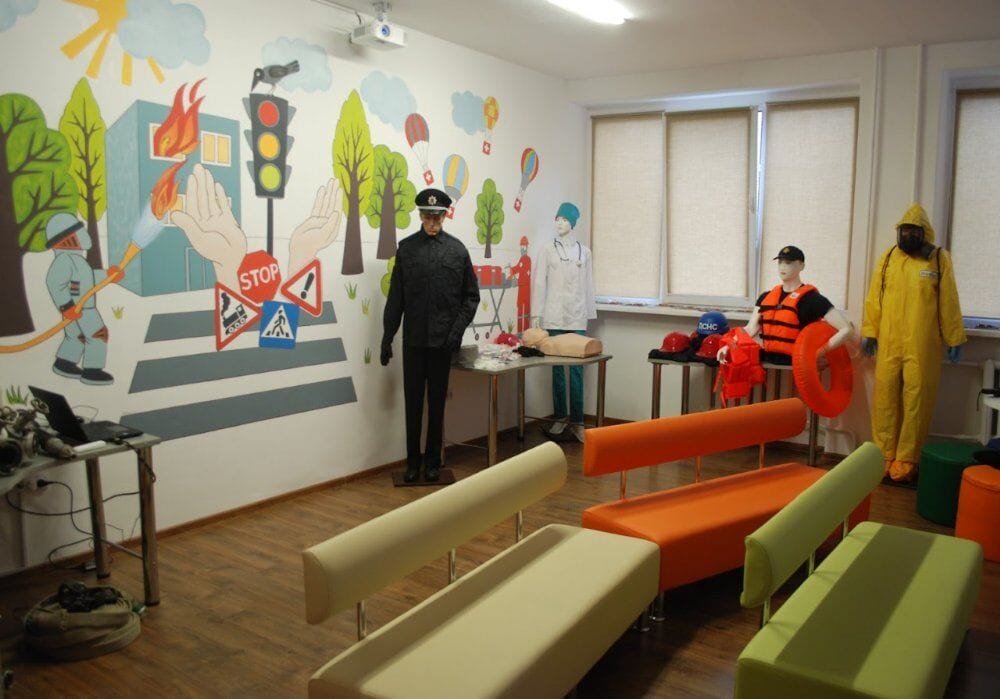
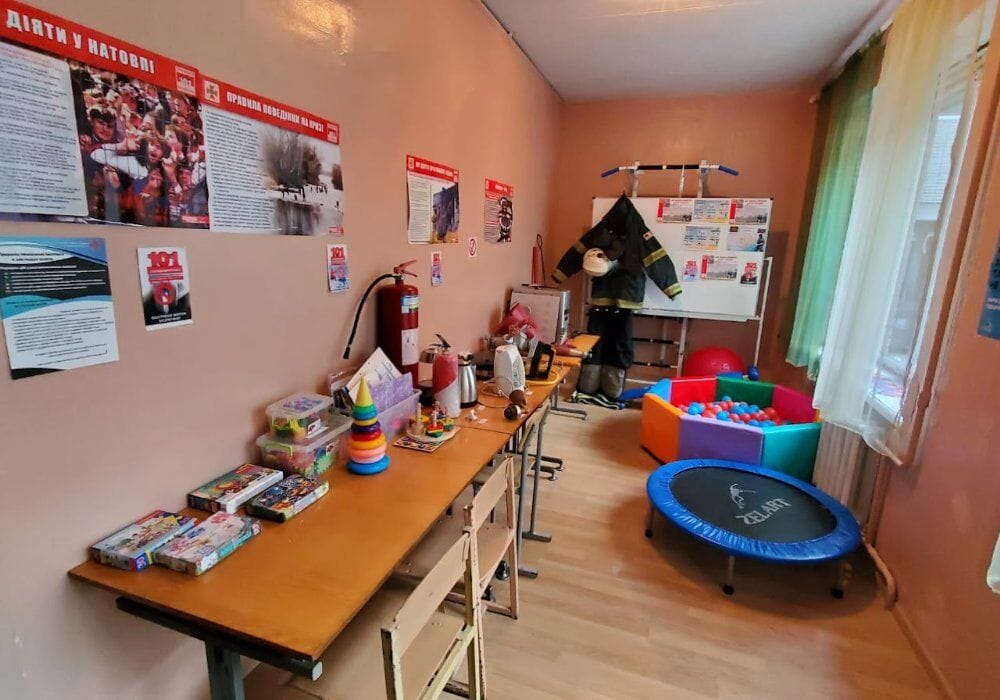
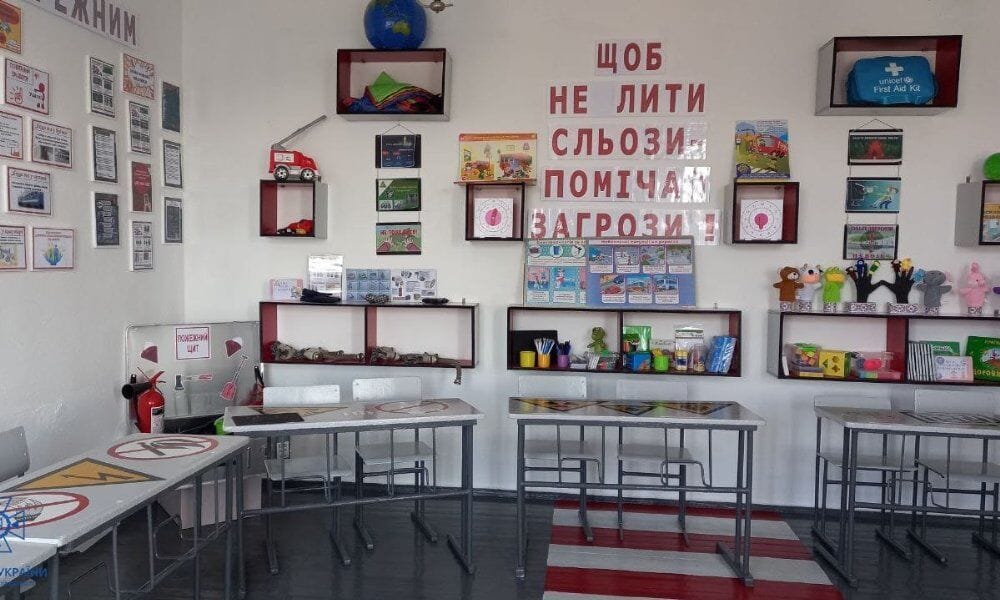
Most of the equipment and information materials seen in the photos relate to fire prevention, military threats (in particular mine awareness) and first aid. Separate photos show lifebuoys, life jackets and other water rescue equipment and traffic safety awareness equipment. The photos show that different classrooms are equipped in different ways, without following a unified standard.
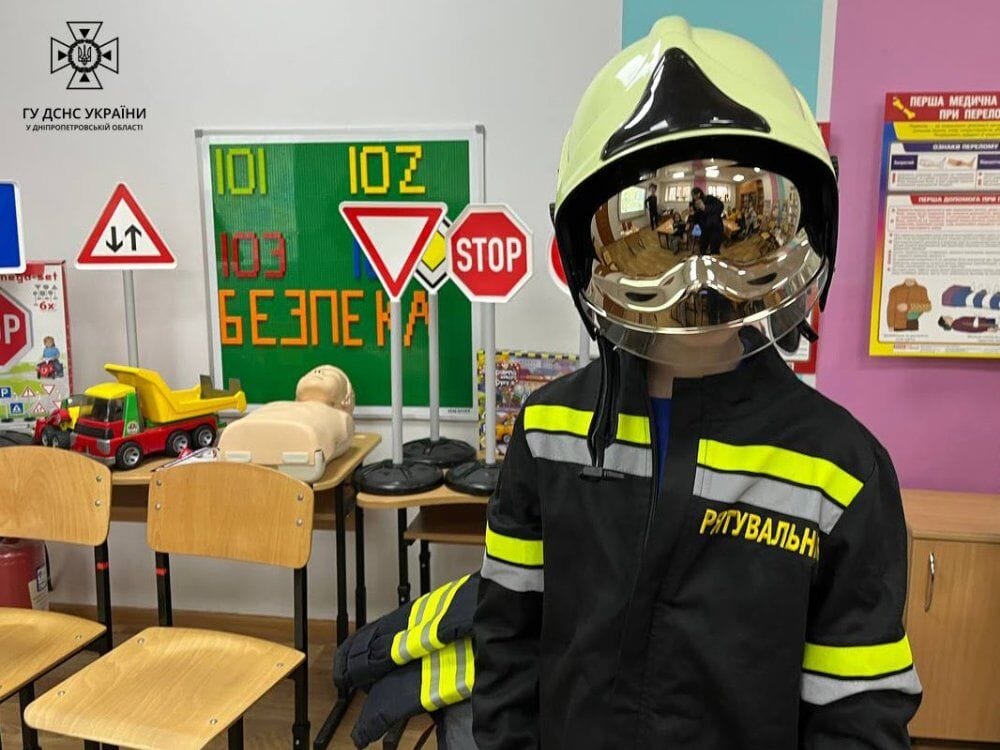

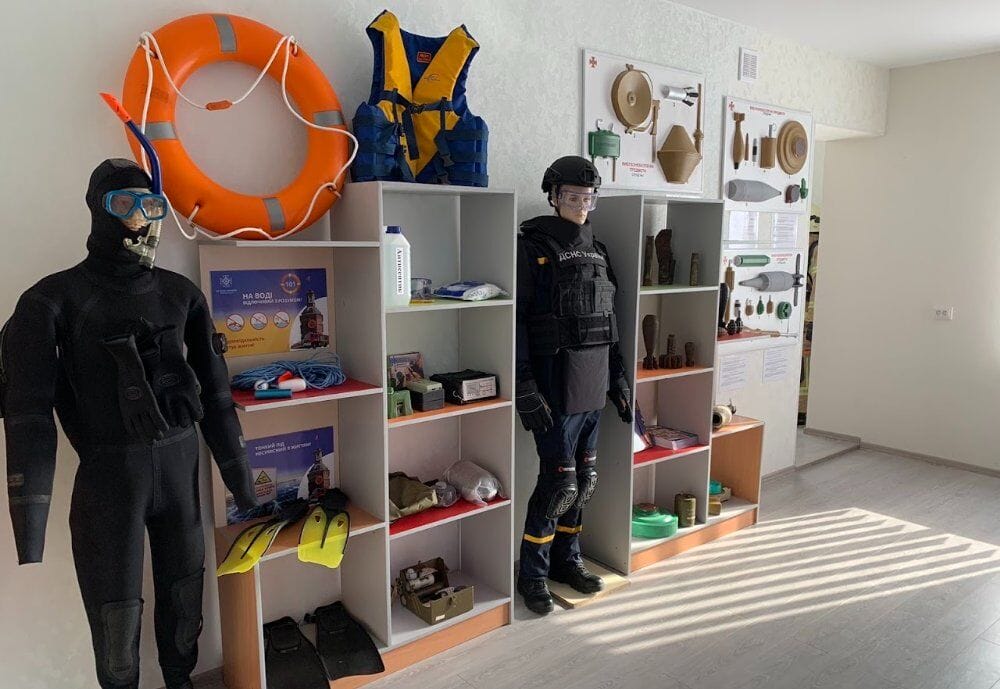


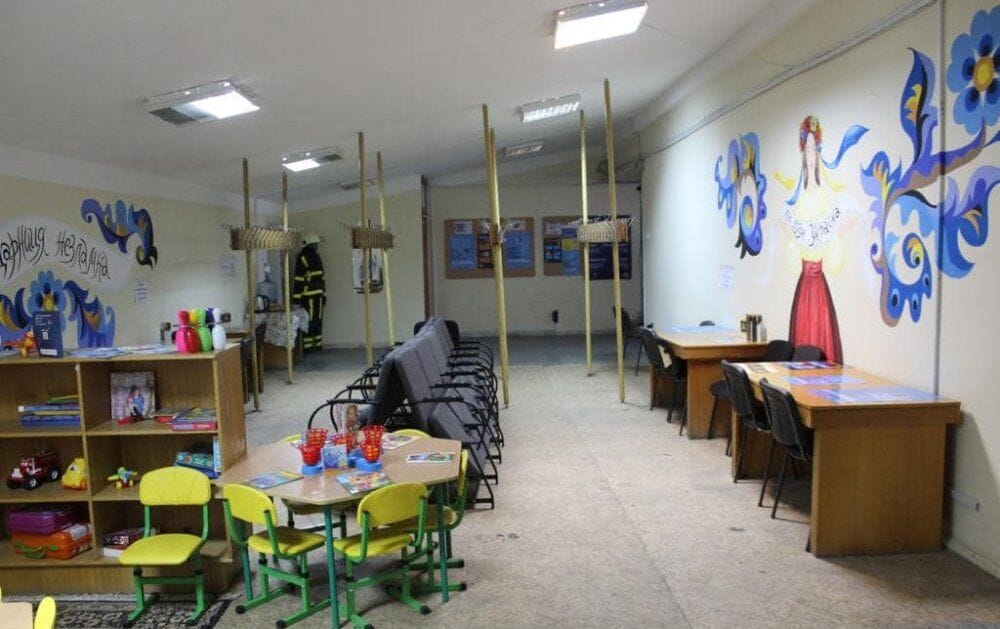
What is wrong with safety classes today
Already open safety classes are mainly focused on fire prevention and mostly do not take into account the main risks of injury and death of children," says Olga Drobysheva, a road safety specialist and head of the NGO "Traffic Challenge".
She initiated the creation of recommendations on the arrangement of safety classes, involving various specialists from the public sector. Recently, the recommendations were presented to the public and made publicly available so that teachers could use them in their work.
Olga notes that in creating the recommendations, they were guided by statistics that show the greatest dangers to children. According to the statistical data released by public organisations - most often Ukrainian children die not because of fires - the sad leader. statistics is the consequences of road accidents. And recently the statistics has only worsened.
By the way, representatives of the National Police, responsible for the prevention of traumatic incidents on the roads, appear in the recommendations to the Order of the Ministry of Education and Science on the creation of safety classes, but their involvement is recommended, not mandatory:
The territorial bodies of the State Emergency Situations Service and the National Police of Ukraine provide recommendations to educational institutions on the establishment and functioning of safety classes and joint lessons and activities in them, and are involved in their implementation. It is also recommended that medical personnel, representatives of the territorial defence and other units of the Armed Forces of Ukraine be involved in the safety classes.
Recommendations that have not become a standard
In order to take into account the greatest dangers for children (already mentioned road accidents, water fatalities, suicides and murders) and to reform the already open safety classes, a new national standard for safety classes is needed, - says Olga Drobysheva. Recommendations, which she published together with her co-authors, were proposed as a new standard. The development of such a standard together with the public sector was previously announced in the Ministry of Education and Science.
This, in particular, was announced by representatives of the public sector, relevant agencies - the Ministry of Education and Science, the Ministry of Internal Affairs, the Ministry of Health, the State Emergency Service of Ukraine and business on 11 May at the Ukrainian Crisis Media Centre.
The standard will be based on a detailed analysis of statistical data, including data on military aggression and road accidents, in order to identify the most relevant risks and take them into account when planning safety training," they stressed at the conference.
To date, the new standard has not yet been approved. The above-mentioned document, which was developed and made public by public organisations and offered to the State as a standard, will function at the level of recommendations, i.e. school administrations can use it at will.
The developers of the Recommendations themselves note that the document "precedes existing educational programmes on safety (in particular, for example, on traffic safety or sexual safety) - some requirements of the Recommendations are based on international protocols and algorithms, which have not yet been implemented in the Ukrainian school educational process, but the work to change the educational programmes on safety is already active.
Therefore, schools, according to the developers, can gradually implement these recommendations, thus, moving in parallel with changes in education and provide children with the best conditions for obtaining knowledge and skills, which today are received by children in countries with a high level of social development and child protection&rdquo ;.
And there is no Standard - that is, a list of mandatory measures, actions and materials that would be used in the work both in Kyiv and in other regions, regardless of the status and location of the locality - to date. Therefore, the question remains open.
What is the new standard and why it is important
There is no approved standard for teaching safety in schools, which would be based on the main challenges to the life and health of children and meet current practices, in Ukraine, because there is no mechanism for its creation. Leonid Fedorovskyi, a paramedic, head of UAEMT, co-founder of AVC international, which is engaged in professional training of servicemen and veterans in more than 15 areas, told Socialportal.
He emphasises that in order to improve the security situation, several agencies must cooperate at the legislative level.
If we talk, for example, about the safety of children, it should be a collaboration between the Ministry of Education as the main owner of the process, the Ministry of Social Policy, the Ministry of Youth and Sports, experts from, for example, the State Emergency Situations Service and the Ministry of Internal Affairs. That is, it should be such a big interdepartmental work. It is extremely difficult to gather them to develop a common policy. And in fact, now the public community is just trying to develop these policies on its own and put the state stakeholders in front of the fact that we have already done everything, you only need to coordinate it," the expert says.
He says that Ukraine still partially uses old "Soviet" standards.
The Soviet model, which existed earlier, was based on the notion that there was a standard of public safety, what used to be called GS, Civil Defence. There was a single centre that developed all these standards - the Civil Defence Centre. And all this was centrally submitted for work to schools, educational institutions, all other institutions. Now in Ukraine there is no such headquarters for civil security, civil safety, public safety. This function has been partially taken over by the State Emergency Service," says Leonid Fedorovsky.
According to the expert, Ukraine is now trying to introduce European safety standards at the state level, but the educational process still remains in a certain "grey zone".
The new Ukrainian standards are still in a "raw version". In order to change this, it is necessary, firstly, to find someone who will be responsible for this, and bear responsibility, and secondly, to develop these policies with a certain focus on the European level," Leonid Fedorovsky says.
>
Regarding the dangers that statistics means, namely road accidents, injuries of children on water, fires, suicides, domestic injuries - the expert notes that today there is a lack of a systematic approach, and the equipment of the new safety classes does not meet international standards.
In order to implement the European model of safety, to which Ukraine is orientated, according to the expert, it is necessary to radically change the approach, in particular, to work with statistics.
That is, there should be a system of feedback, analysis of situations. Analytical centres, for example, situation centres for emergency situations, collect and analyse information, and once in a certain period of time - usually one or two or three years - develop fresh policies with new data. In Ukraine, unfortunately, this has not happened for many years. Even if we collect some statistics, although it is no longer collected, unfortunately it is not analysed," the expert says.
He stresses that the state does not involve public organisations much to improve the work of the security sector. At the same time, there are processes that only the state can launch and lead.
We as a public cannot appeal, for example, to the UN Security Council, ask for security assistance in organising this process. Only a state institution can do that. The process must be led by the state," the expert says.
When drawing up state recommendations on the arrangement of safety classes - they do not take into account authoritative expert cells, which could improve the process, - says Denis Pikalov, head of the Ukrainian Federation of Lifesaving, coordinator of the programme "Beach Patrol".
The relevant recommendations on the arrangement and equipment of safety cabinets have been made public. Denis Pikalov notes that he expects the MES to involve the public sector more widely for effective co-operation.
For example, in the field of pre-medical care there are globally recognised institutions, such as the European Resuscitation Council - well-known in the field of recommendations and created programmes for medical training in all European countries. And now we, as a state, refer exclusively to one public institute, albeit an important one - the Red Cross Society of Ukraine. The same applies to the State Emergency Service, which, say, is responsible for fire safety, water safety, and civil protection, he says.
The specialist also draws attention to the fact that the order of the Ministry of Education and Science on the arrangement of safety classes does not specify in detail the danger of injury on the water, although it has been one of the biggest threats to children for several years in a row.
Year after year, the state does almost nothing to change the situation. For all the lifeguards available, funding for rescue emergency services - boats, diving teams - but that doesn't solve the problem. Often it is a question of skills and competence - what the target audience and risk groups - primarily school-age children - should receive in school and out-of-school education," says Denis Pikalov.
According to him, the new safety standard should not only include recommendations, but also detail measures based on successful international practices.
We say that most people die in water bodies that are not equipped for swimming. Therefore, a child should understand what is a bathing water body and what is not. When we talk about a standard, we are talking about a bigger document than two sheets of paper where there should be detail. The detail allows the educator to take more factors into account so that the lesson can be done better. Again, there is such a story as successful practices all over the world. In our country, I have not come across a single digest of successful practices in teaching water safety," says Denis Pikalov.
Statistics on road accidents and drownings in Ukraine
Recommendations for the arrangement and equipment of safety classrooms of educational institutions 1-3 c. from the public includes data from the State Statistics Committee. shows that in Ukraine for 2021 for external causes died 1100 people aged 0 to 19 years (of which 492 under 14 years) - the most children died precisely because of road accidents (about 37%).
At the same time, the open data platform "Opendatabot", citing data from the Patrol Police Department, reports that in 2023 in Ukraine the number of road accidents with casualties and fatalities increased, "almost back to the indicators for the full-scale invasion". In particular, this applies to accidents involving children.
Citing data for the first 3 months of 2023, patrol officers recorded 4,538 crashes - for the same period in 2021, they confirmed 4,457 crashes with casualties. In the 3 months of 2023, 571 children were injured in crashes and 26 were killed. These figures are consistent with the 2021 statistics. However, the statistics do not indicate whether the temporarily occupied territories are taken into comparison. If not, the relative indicator is even worse than before the full-scale invasion.
The most accidents were recorded in Dnipropetrovsk, Kyiv and Lviv regions.
The statistics for May this year indicates that for 5 months of 2023 almost doubled - 1.7 times - the number of road accidents caused by children: in 2021, 106 such accidents were recorded, and in 2023 - 177. Most of all such accidents occurred in Lviv region - 14%, Odesa region - 11%, Ivano-Frankivsk, Poltava and Rivne regions - 7% each. And this is despite the fact that the number of children in Ukraine has decreased - about 2 million are now refugees.
Along with road accidents in Ukraine, traumatisation and death of children on water increases every year.
Yes, since the beginning of 2023 more than 600 people have drowned on Ukrainian water bodies, of which more than 50 were children. While according to the same State Emergency Service, for 3 months of 2023, as a result of fires killed 565 people, including 15 children; 440 people were injured, including 41 children.
By the way, the MES order does not have a separate item "safety of children on water", which is apparently included in the block "other dangers". Although, according to the State Emergency Situations Service of Ukraine, every year there is an increase in injuries and deaths of children in water bodies.
What was reported in the Ministry of Education and Science
To clarify the situation, whether the newly created Safety Classes take into account the successful experience of European countries and whether they will be updated according to the greatest dangers for children in Ukraine, Socialportal asked the Ministry of Education and Science of Ukraine. In particular, we were interested in the terms of implementation of the new safety standard and equipping Safety Classes with equipment that meets international standards.
In response, we received a copy of the already mentioned Order of the Ministry of Education and Science of Ukraine on the creation of safety classes with annexes: recommendations and a tentative list of equipment for the classes. And a comment letter.
Safety classes are created in institutions of general secondary education for systematic training of children and youth on civil protection, personal safety, healthy lifestyles, familiarisation with the rules of fire and mine safety, formation of self-defence skills, medical assistance, etc., - replied the MES.
Adding that the responsibility for creating and ensuring the functioning of safety classes in educational institutions is assigned to the central executive authorities, which have educational institutions in their subordination, local executive authorities, local government (by agreement).
Representatives of territorial bodies of the State Emergency Situations Service, the National Police of Ukraine, medical workers, representatives of territorial defence and other units of the Armed Forces of Ukraine may be involved in the conduct of general classes and activities in safety classes, - wrote in the MES.
The MES did not tell us whether the new standard, developed with the involvement of specialists and the civilian sector, would be approved soon.
Hanna Shchokan creates long-form reports on social and medical issues for Sozportal.
Related news

Archaeologists have found children's fingerprints in 15,000-year-old clay


Scientists have discovered how a father's health affects his child before conception


100,000 net outings in the autumn: what happened after the borders opened up for 18-22 year old men


The Italian Prime Minister spoke about the prospects of peace negotiations: what has been achieved

Popular news
Orban announces "results" of Hungarian mission on Druzhba oil pipeline


Will maternity leave be shortened in Ukraine? Changes for workers with children

Zelensky said that Russia was preparing a new offensive and pointed out the direction of it

Kellogg named the ceasefire condition today and compared Putin to Nicholas II
News about war
Orban announces "results" of Hungarian mission on Druzhba oil pipeline
Kellogg named the ceasefire condition today and compared Putin to Nicholas II
Zelensky said that Russia was preparing a new offensive and pointed out the direction of it
Russia is destroying Ukraine twice as fast as at the start of the war - international report