


Negotiations on Donald Trump's peace plan for Ukraine start in Switzerland today
Europe joins talks on Trump's plan: EU and Britain travel to Switzerland with counter-proposals on Ukraine
Negotiations on Donald Trump's "peace plan" for Ukraine will start in Switzerland today, with the EU and Britain pushing for tough amendments and the US arguing whether the document has become Russia's "wish list".
The EU and Britain are getting a seat at the negotiating table on Donald Trump's peace plan for Ukraine after all: high-level consultations involving Kiev and its key allies will start today in Switzerland, POLITICO reports. This is an important breakthrough for Brussels and London: until then, they were effectively kept out of the latest American initiative.
Top representatives of France and Germany at the level of national security advisers will also come to the negotiating table. From the European Commission, according to the publication, Bjorn Seibert, the head of the cabinet of President Ursula von der Leyen, and from the European Council - a senior aide to its President António Costa, Pedro Lurti, are expected to attend.
What the EU is proposing
Ukraine and European allies fear that Trump's original plan overly accommodates only Moscow's interests, especially in terms of territorial concessions. According to The Washington Post, the EU has already prepared counter-proposals and brought to Geneva a document with three key points:
- No restrictions will be imposed on Ukraine's Armed Forces.
- Kiev should get control over the Zaporizhzhya nuclear power plant and the Kakhovka dam, as well as "unimpeded crossings" of the Dnieper River and regaining control over the Kinburn Spit.
- Other territorial issues should be discussed after the ceasefire, and Ukraine will not withdraw its troops from Donbas just for the sake of the very fact of starting negotiations.
Thus, the Europeans are trying to "dilute" the provisions that are too favourable to the Kremlin and fix the starting point as the current line of contact - solely as a temporary basis for negotiations, not as a final solution.
What the US thinks
Adding further intrigue around the "peace plan" is the disagreement within the US itself. According to NBC News, citing a group of senators, U.S. Secretary of State Marco Rubio allegedly said at a private meeting that the current version of the plan "resembles Russia's wish list rather than an official U.S. proposal."
Rubio himself later publicly rejected this interpretation, emphasising that the document was based on both Russian proposals and Ukraine's preliminary and current positions.
A 28-point plan and "almost the finish line"
Former White House national security adviser Keith Kellogg, who is actively involved in the work on the initiative, said that the "peace plan" includes 28 points and continues to be finalised, but "the basis of the agreement has already been formed".
"We're almost at the finish line to ending the war," he said, noting that there remain points in the document that are "better spelled out and explained."
Kellogg said the plan should also include security guarantees for Ukraine, of which the US should be the main guarantor - so as not to repeat the mistakes of the Budapest Memorandum and the Minsk agreements. He added that Ukrainians generally trust the US side and did not rule out that Volodymyr Zelensky might come to the US to publicly support the plan if Kiev finds it acceptable.
What do European leaders say?
The day before, more than a dozen leaders - among them German Chancellor Friedrich Merz, French President Emmanuel Macron, British Prime Minister Keir Starmer, European Commission chief Ursula von der Leyen, Finnish President Alexander Stubb and Canadian Prime Minister Mark Carney - held an emergency meeting on the margins of the G20 summit in Johannesburg with Ukrainian President Volodymyr Zelensky.
In a joint statement, they called the US draft "a framework that needs more work" and recalled the principle that borders cannot be changed by force. The leaders also expressed concern about proposed restrictions on Ukrainian military forces that could leave the country vulnerable to future aggression.
At the same time, the allies signalled to Zelensky that they intend to remain on his side even if the Trump administration insists on tougher terms. The statement separately emphasises that any provisions affecting the EU and NATO require the consent of these structures themselves.
Speaking in South Africa, Merz warned:
"If Ukraine loses this war and possibly collapses, it will have consequences for European politics in general, for the whole continent. That's why we are so emphatically supporting it."
According to Western media, Trump's White House is putting serious pressure on Kiev to agree to the terms of the plan by Thanksgiving. Europe fears that if it refuses, Washington could restrict Ukraine's access to US intelligence information that is critical to combat operations.
At the same time, Putin has already signalled his support for the U.S. initiative, which includes a number of his key demands, from Ukraine's refusal to join NATO to a radical reduction in its military capabilities.

Journalist and editor of informational and analytical programs.
Related news
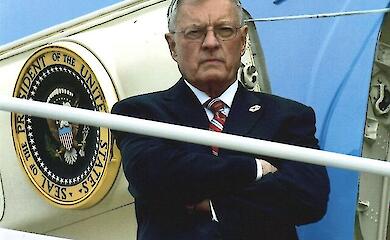
Kellogg named the ceasefire condition today and compared Putin to Nicholas II

Britain says under what circumstances Putin will start a war in Europe

Popular news
Orban announces "results" of Hungarian mission on Druzhba oil pipeline


Will maternity leave be shortened in Ukraine? Changes for workers with children


Zelensky said that Russia was preparing a new offensive and pointed out the direction of it
Kellogg named the ceasefire condition today and compared Putin to Nicholas II
News about war
Orban announces "results" of Hungarian mission on Druzhba oil pipeline
Kellogg named the ceasefire condition today and compared Putin to Nicholas II
Zelensky said that Russia was preparing a new offensive and pointed out the direction of it
Russia is destroying Ukraine twice as fast as at the start of the war - international report