


Mastodon and giant sloth remains up to 40,000 years old found in Costa Rica


Costa Rica discovers remains of mastodon and giant sloth: find could be up to 40,000 years old
In Costa Rica, archaeologists and paleontologists have recovered from the ground the remains of a mastodon and a giant sloth that could have lived in the country up to 40,000 years ago. Authorities and specialists reported the discovery on Friday, calling it the largest for the country in recent decades.
As specified in the National Museum of Costa Rica, the bones were discovered by accident - on private property in the province of Cartago, east of the capital San Jose. After an initial assessment, experts began excavating and fixing the material to determine the age and burial conditions of the remains.
According to the museum, preliminary conclusions are based on the geological analysis of the site and the study of soil layers: at the current stage, researchers estimate the age of the find in the range of 10 to 40 thousand years. This means that the animals could have lived in the region in the late Pleistocene - an era when representatives of the so-called megafauna were still found across the Americas.
So far, scientists have lifted 49 bone fragments, among which are mentioned femur, vertebrae and ribs. The museum emphasises that we are talking about two significant representatives of the ancient fauna: mastodon - a close relative of modern elephants, and a giant sloth - a distant ancestor of the current sloths, known for slowness and long curved claws.
The find is already being hailed as "one of the most significant" for the country in decades, both because of the rarity of such well-preserved remains and because of its scientific potential: further research could clarify what species lived in the region, how ecosystems changed and what natural conditions accompanied the life of large animals in Central America.
The Minister of Culture and Youth of Costa Rica, Jorge Rodriguez, said that the raised material is planned to be shown to the public - after processing and scientific work, the remains will be exhibited in the National Museum.
An independent researcher, interested in archaeology and sacred geography. He researches them and writes about them.
Related news

More than 50,000 seals killed by bird flu - scientists sound the alarm

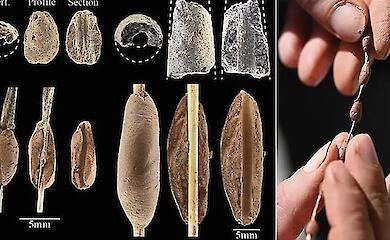
Archaeologists have found children's fingerprints in 15,000-year-old clay

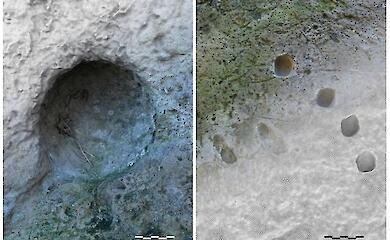
Traces of an "ancient machine gun" have been found in Pompeii

Popular news
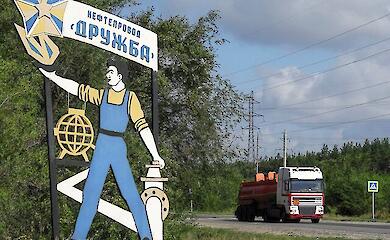
Orban announces "results" of Hungarian mission on Druzhba oil pipeline


Will maternity leave be shortened in Ukraine? Changes for workers with children


Zelensky said that Russia was preparing a new offensive and pointed out the direction of it


Kellogg named the ceasefire condition today and compared Putin to Nicholas II

News about war
Orban announces "results" of Hungarian mission on Druzhba oil pipeline
Kellogg named the ceasefire condition today and compared Putin to Nicholas II
Zelensky said that Russia was preparing a new offensive and pointed out the direction of it

Russia is destroying Ukraine twice as fast as at the start of the war - international report