

How not to lose people forever: what can bring back some Ukrainian refugees
- Home
- Overseas
- Refugees. How to survive
- How not to lose people forever: what can bring back some Ukrainian refugees


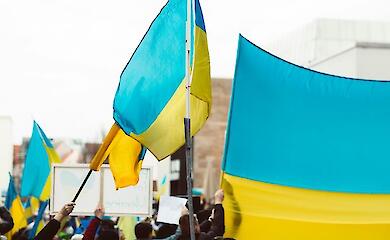
The war has forced millions of Ukrainians to seek safety abroad.
According to the estimates of the Centre for Economic Strategy, we are now talking about about 5.6 million war refugees: about 4 million are "net departures" across the south-western border (left minus returned), about 300 thousand more have reached Western countries through Russia and Belarus, and with regard to the people who found themselves in Russia and Belarus, the researchers rely on the UN estimate for 2022 - 1.3 million. The total figure has grown by about 400 thousand over the year.
This is not just statistics. The researchers estimate about 1.7 million workers among refugees in Western countries, and the total losses for the economy (due to labour force and consumption) can range from 2% to almost 10% of GDP per year - depending on the scenario.
At the same time, it is impossible to "order" people to return: security remains paramount to any decision to return.
Who exactly has left - and why this matters for decisions
The survey shows that a significant proportion of refugees are residents of large cities, often from the east and south or from Kiev.
They are predominantly highly educated people: 71 per cent have a bachelor's degree or higher, and 71 per cent have been employed in Ukraine.
And these are not the poorest: 43% could afford expensive purchases before moving; the researchers compare this with KMIS data (about 20% on average in Ukraine before the war and in 2023).
In other words, the war "took" abroad a noticeable part of the middle class - people who are difficult to replace in the labour market.
What is visible in integration - and where the risk appears
Data show that Ukrainians abroad are quickly "taking root": the share of those employed already reaches 60%.
But there is a downside: 54% of those who are employed are not employed in the speciality they had in Ukraine - this is a risk of dequalification.
Another marker of integration is language. Language proficiency in host countries is growing, especially among young people; researchers call language a strong "lever" because it helps them find better jobs and not fall below qualifications.
Financial backbone - and vulnerable groups
Financially, the majority are holding their own. Only 14 per cent of respondents can be classified as conditionally poor (saving on food or clothes), and social assistance averages 17 per cent of the family budget; pensioners have a higher share of assistance (about 30 per cent) and families with children about 20 per cent.
This suggests a solution: if Ukraine wants to return, we need to think not only about jobs, but also about a 'soft landing' for those at risk of losing their standard of living.
Return intentions: stabilisation, but no 'quick dates'
Intentions to return have stabilised this year, with 43% saying they plan to return to some extent and 36% saying they do not.
For most, it's not "tomorrow." 80% of those considering return tie it to the end of the war and the resumption of civilian flights over Ukraine.
When people talk about return, they imagine it very concretely: a significant share wants to return only to their region, and if they consider other options - most often Kiev and Kiev region; about half are ready to return only to large cities or regional centres, and few are ready to return to the countryside.
Decisions that can be made now (and that are data-driven)
The presentation outlines a practical set of steps: negotiate with EU partners on conditions for circular migration (so that people can travel without fear of losing their permit), develop opportunities for those living in Europe to work remotely with Ukraine, and remove barriers that "cut off" young people from Ukraine (in particular, the bureaucracy around diplomas and admission).
The limitations are obvious: no programme can replace security. But the data suggest a simple logic: where jobs, education and financial ties to Ukraine remain, it is easier to turn "return" into a realistic plan when the conditions are right.
Maria Grynevych, project manager, journalist, co-author of Guidebook Sacred Mountains of the Dnieper Region, Lecture Course: Cult Topography of the Middle Dnieper Region.
Related news
The loss of the middle class: what a new study on Ukrainian refugees showed

Berlin suggested that Ukraine reduce the number of men leaving the country for the EU

An EU country has announced its intention to stop accepting military conscripted men of conscription age
After temporary defences: how the EU and Ukraine can avoid chaos in 2027
Popular news
Orban announces "results" of Hungarian mission on Druzhba oil pipeline


Will maternity leave be shortened in Ukraine? Changes for workers with children

Zelensky said that Russia was preparing a new offensive and pointed out the direction of it

Kellogg named the ceasefire condition today and compared Putin to Nicholas II

News about war
Orban announces "results" of Hungarian mission on Druzhba oil pipeline
Kellogg named the ceasefire condition today and compared Putin to Nicholas II
Zelensky said that Russia was preparing a new offensive and pointed out the direction of it
Russia is destroying Ukraine twice as fast as at the start of the war - international report