

Economic pressure and a war of attrition: ISW explained what could force Putin to seek peace


Increased economic pressure on Russia, coupled with the subsequent support for Ukraine on the battlefield, may force Russian President Vladimir Putin to reconsider his military objectives and seek peace.
This is stated in a report by the Institute for the Study of War (ISW).
Analysts note that the Kremlin is increasingly shifting the financial burden of war onto the Russian population, while giving priority to financing the defence industry complex. According to Russian First Deputy Prime Minister Denis Manturov, in the first nine months of 2025 alone, investment in the defence industry grew by 23%.
In total, about RUB 5 trillion (approximately $64 billion) was invested in the development of the defence industry, which ensured a 3% growth in military production. Currently, Russia's defence industrial base employs about 3.8 million people, of which 800,000 jobs have already been created since the start of the full-scale invasion of Ukraine.
At the same time, ISW notes that the Kremlin is forced to seek non-standard sources of financing for the defence industry in the face of sanctions. The Russian Industrial Development Fund remains a key lender, and off-budget subsidies and administrative pressure on banks to provide favourable loans to military enterprises are being applied.
In addition, the Russian Central Bank has reduced the key rate four times over the course of 2025 in an attempt to ease the credit burden on the defence sector.
The price of war for Russians
Analysts note that the Russian population is paying the price for such "priorities" by the Kremlin. High salaries in the military-industrial complex contribute to inflation and rising prices, while civilian industries are unable to compete for labour.
In the second half of 2025, a number of large civilian enterprises in Russia switched to a four-day working week and announced staff cuts. The situation is exacerbated by the unaffordability of housing: mortgage rates in Russia exceed 20%.
An additional blow to households was the increase in value added tax from 20 to 22 per cent, which Putin signed into law in November 2025. This decision, ISW estimates, could have long-term negative consequences for the Russian economy.
The Institute for the Study of War emphasises that the further intensification of Western sanctions pressure, together with Ukraine's support on the frontline, are critical to changing the Kremlin's strategic calculations.
"Putin is forced to choose increasingly starkly between continuing the war and further deterioration in the quality of life of the Russian population," ISW analysts summarised.
Mykola Potyka has a wide range of knowledge and skills in several fields. Mykola writes interestingly about things that interest him.
Related news
The loss of the middle class: what a new study on Ukrainian refugees showed

Thousands of people will be able to receive assistance: how the law for Ukrainian critical infrastructure workers was changed

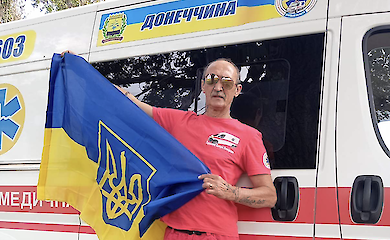
No ambulance near the front line: emergency substation being liquidated in Donetsk region
"War steals their childhood." Ukrainian teenagers forced to take on adult responsibilities
Popular news

Orban announces "results" of Hungarian mission on Druzhba oil pipeline


Will maternity leave be shortened in Ukraine? Changes for workers with children

Zelensky said that Russia was preparing a new offensive and pointed out the direction of it


Kellogg named the ceasefire condition today and compared Putin to Nicholas II

News about war
Orban announces "results" of Hungarian mission on Druzhba oil pipeline
Kellogg named the ceasefire condition today and compared Putin to Nicholas II
Zelensky said that Russia was preparing a new offensive and pointed out the direction of it

Russia is destroying Ukraine twice as fast as at the start of the war - international report