
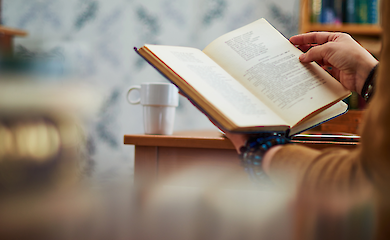

Do children need to learn on holiday - or is it better to forget about school altogether?
- Home
- Life
- Healthy lifestyle
- Do children need to learn on holiday - or is it better to forget about school altogether?


Why it is good for children not to study during holidays - experts' opinion
Every school holiday - autumn, winter, spring or summer - parents have the same question: whether their child will "lose" knowledge during the holiday and whether it is worth keeping up the learning load outside school.
Experts agree that a light, unobtrusive approach is much more effective than strictly scheduled classes.
The myth about "loss of knowledge" during holidays
The idea that children lose learning skills en masse during holidays has been around for more than a century. However, modern research shows that the so-called "loss of knowledge" does not manifest itself in everyone and is much weaker than is commonly believed.
The effect depends on age, family conditions and the emotional state of the child. Moreover, after returning to the school regime, most children quickly regain reading, numeracy and writing skills.
It is important to realise another thing: tests and assessments reflect only a narrow part of learning and hardly take into account the overall development of the child.
Holidays are just as necessary as learning
Like adults, children need periods of rest. Holidays help to reduce fatigue accumulated during school hours, restore sleep, emotional balance and interest in learning.
Regardless of the season, breaks between quarters give children a chance to be with family, slow down and do things that don't fit into the school curriculum.
Learning doesn't just happen at the desk
Holidays are a time for other forms of learning: social, physical, cultural and emotional.
For younger children, these may include walks, outdoor play, cooking, board games, trips, creativity and domestic skills. Research confirms: free play develops motor skills, creativity, stress tolerance and independence.
Teenagers gain valuable experience through part-time work, volunteering, sports, hobbies, community and creative projects. Such activities build self-confidence and real-life skills - as important as school grades.
A little structure - without the school regime
A little structure helps children feel calm and safe, even during holidays. But that doesn't mean repeating the school timetable.
Simple guidelines are enough: regular naps, reading before bed, screen-free time, and quiet family rituals. Such habits create stability without turning holidays into a continuation of the school year.
Learn - discreetly and without pressure
If a child has experienced difficulties in learning, parents can gently support him or her without strict lessons. Psychologists say that children learn better when they feel calm, accepted and emotionally protected.
Unobtrusive formats are suitable: board games, puzzles, reading discussions, everyday maths (shopping, cooking, planning), audio books and educational songs on the road.
Holidays as an investment in the future
The holidays of any season should not be seen as a threat to academic performance, but as an important developmental stage. Yes, some skills may temporarily falter - just as adults forget work details after a holiday.
But rest, recuperation, lively socialising and varied life experiences are often far more valuable to a child's long-term learning and mental health.
Maria Grynevych, project manager, journalist, co-author of Guidebook Sacred Mountains of the Dnieper Region, Lecture Course: Cult Topography of the Middle Dnieper Region.
Related news

Archaeologists have found children's fingerprints in 15,000-year-old clay


'If you have kidney stones, you need to drink more water'. Scientists have tested a well-known myth



Scientists have discovered how a father's health affects his child before conception
Popular news
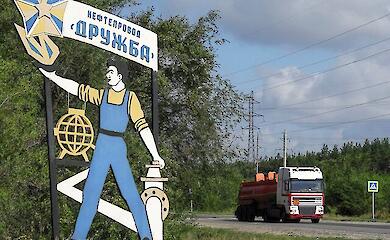
Orban announces "results" of Hungarian mission on Druzhba oil pipeline


Will maternity leave be shortened in Ukraine? Changes for workers with children

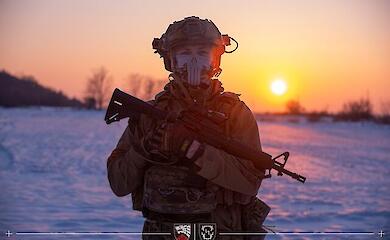
Zelensky said that Russia was preparing a new offensive and pointed out the direction of it
Kellogg named the ceasefire condition today and compared Putin to Nicholas II

News about war
Orban announces "results" of Hungarian mission on Druzhba oil pipeline
Kellogg named the ceasefire condition today and compared Putin to Nicholas II
Zelensky said that Russia was preparing a new offensive and pointed out the direction of it
Russia is destroying Ukraine twice as fast as at the start of the war - international report