


Czech Republic says most Ukrainian refugees are employed
- Home
- Overseas
- Refugees. How to survive
- Czech Republic says most Ukrainian refugees are employed


Prague believes it has chosen the right methodology towards refugees.
To date, the Czech Republic has officially employed about 60 per cent of Ukrainian refugees, who are between 18 and 65 years old. The country's authorities consider this fact to be their merit and point out that other countries can take an example from the Czech Republic in how to integrate foreigners into society. This was stated by Czech Labour Minister Marian Jurečko. He also pointed out that only 9 per cent of forced migrants from Ukraine work in Germany.
We are the country with the largest number of refugees from Ukraine per capita. We have very good processes of adaptation and integration, as well as inclusion in the labour market... This year, the amount they will pay in taxes will be higher than the amount the state will spend on their support," Yurechko said.
In turn, Ukrainians who have been in the Czech Republic since the war began say that they were forced to "integrate into society", as the Czech Republic cancelled general payments to refugees and severely limited the number of recipients, in addition to cancelling benefits for those Czechs who provided housing for Ukrainians.
Now less than 40 per cent of refugees receive assistance from the state. It is given to vulnerable people.
As UAMedia.eu writes , Ukrainians in the Czech Republic faced many problems when they had to urgently look for a job and solve the issue of housing. In particular, Ukrainians note that they have to face artificially high prices for housing.
About 20 per cent of Ukrainian refugees pay more for such housing than the average price in the area where they live. This is evidenced by the results of a survey conducted by the UN High Commissioner for Refugees and the SocioFactor agency," the journalists said.
As for work, many people living in the Czech Republic say that they were forced to take the "first job that came along", which has nothing to do with their speciality, just to have money to live on.
Eugenia Ruban writes about political and economic news. She looks at large-scale phenomena in Ukrainian politics and economics from the perspective of how they will affect ordinary Ukrainians.
Related news
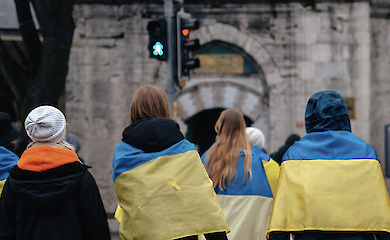
The loss of the middle class: what a new study on Ukrainian refugees showed


Berlin suggested that Ukraine reduce the number of men leaving the country for the EU

An EU country has announced its intention to stop accepting military conscripted men of conscription age
After temporary defences: how the EU and Ukraine can avoid chaos in 2027
Popular news

Orban announces "results" of Hungarian mission on Druzhba oil pipeline


Will maternity leave be shortened in Ukraine? Changes for workers with children


Zelensky said that Russia was preparing a new offensive and pointed out the direction of it

Kellogg named the ceasefire condition today and compared Putin to Nicholas II

News about war
Orban announces "results" of Hungarian mission on Druzhba oil pipeline
Kellogg named the ceasefire condition today and compared Putin to Nicholas II
Zelensky said that Russia was preparing a new offensive and pointed out the direction of it

Russia is destroying Ukraine twice as fast as at the start of the war - international report