

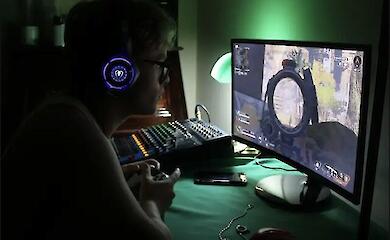
Caring for grandchildren may slow cognitive decline in the elderly - study
- Home
- Life
- Healthy lifestyle
- Caring for grandchildren may slow cognitive decline in the elderly - study


Grandchildren as a brain exerciser?
Regular help with grandchildren may be linked to slower cognitive decline in older adults, suggests a study published in the American Psychological Association's journal Psychology and Aging. The work was led by researchers from Tilburg University in the Netherlands.
The authors analysed data from the English Longitudinal Study of Ageing (ELSA) from 2,887 grandparents over 50 (average age 67). Participants completed questionnaires and cognitive tests three times between 2016 and 2022.
The questionnaires asked whether participants had helped to care for their grandchildren in the last year, how often this had happened and what exactly they had done - from playing and sharing leisure time together to helping with homework, cooking, accompanying them to school and even sleepovers.
The results showed that grandparents who participated in caring for their grandchildren scored higher on average on tests of memory and verbal fluency than those who did not - even after accounting for age, health and other factors. The authors found that it was the fact of being involved in caring for grandchildren, rather than the specific frequency or mix of activities, that was more important.
Separately, the researchers note that among women (grandmothers), involvement in grandchild care was associated with a smaller decline in cognitive test scores over the follow-up period. The authors emphasise that further research is needed to confirm the results and to understand the role of context - for example, whether help is voluntary, whether the family is supportive of the grandparent, or whether caregiving is perceived as stressful and an 'obligation'.
Importantly, such findings show a link but do not prove direct causality: perhaps people with more preserved cognitive function are more likely and willing to be involved in socialising and caring for grandchildren. This is also an issue the authors suggest exploring further.
Elena Rasenko writes about science, healthy living and psychology news, and shares her work-life balance tips and tricks.
Related news
Archaeologists have found children's fingerprints in 15,000-year-old clay


Scientists have discovered how a father's health affects his child before conception


100,000 net outings in the autumn: what happened after the borders opened up for 18-22 year old men

Why some people live to 100: the Swiss have found the answer in blood
Popular news
Orban announces "results" of Hungarian mission on Druzhba oil pipeline


Will maternity leave be shortened in Ukraine? Changes for workers with children


Zelensky said that Russia was preparing a new offensive and pointed out the direction of it

Kellogg named the ceasefire condition today and compared Putin to Nicholas II

News about war
Orban announces "results" of Hungarian mission on Druzhba oil pipeline
Kellogg named the ceasefire condition today and compared Putin to Nicholas II
Zelensky said that Russia was preparing a new offensive and pointed out the direction of it

Russia is destroying Ukraine twice as fast as at the start of the war - international report