


A happy marriage has been linked to a lower risk of obesity
- Home
- Life
- Healthy lifestyle
- A happy marriage has been linked to a lower risk of obesity


This is the conclusion reached by researchers at UCLA Health.
The study, published in the journal Gut Microbes, was the first to show how social relationships influence weight and eating behaviour through the brain-metabolism-hormone oxytocin system. The authors note: the quality of close relationships may be as important for physical health as the usual risk factors of diet and physical activity.
"We have long known that social ties influence health: supportive relationships increase survival rates by up to 50%. But the biological mechanisms have remained unclear," says lead author, neuroscientist Arpana Church. - "Our study shows a new way in which marriage and emotional support literally 'get under the skin' and are reflected in obesity risk."
How the study was conducted
Approximately 100 Los Angeles residents participated. Participants provided data on:
marital status,
body mass index (BMI),
age, gender, race,
dietary style and quality,
socioeconomic status.
Also performed were:
Brain MRI with food imaging;
stool analysis for gut microbiota metabolites;
blood tests to measure oxytocin levels;
clinical-behavioural questionnaires, including an assessment of emotional support.
What the results showed
Married/married participants with high levels of subjective emotional support:
had lower BMI,
were less likely to show signs of "food addiction",
mRI scans showed greater activity in the dorsolateral prefrontal cortex at the sight of food, an area associated with impulse control, appetite and desire control.
In unmarried/unmarried people, even in the presence of good social support, such pronounced patterns of brain activity were not observed - possibly due to a more dispersed and less stable network of social contacts.
Social support has also been linked to changes in gut metabolism. In people with stronger support:
- found favourable changes in levels of tryptophan metabolites,
these substances produced by gut bacteria are linked to inflammation, immunity, energy balance and brain function,
are involved in the formation of serotonin and other compounds that affect mood, social behaviour and metabolism.
Role of oxytocin
The hormone oxytocin, often referred to as the 'love hormone', has been shown to be central to this system.
Married/married participants with high emotional support had higher levels of oxytocin than single participants. According to Church, the data suggest that oxytocin may be a biological "messenger" that:
enhances the areas of the brain responsible for self-control and resistance to food temptation,
while promoting a healthy gut metabolic profile.
"Think of oxytocin as the conductor who runs the brain-gut orchestra," explains Church. - "It strengthens the brain's ability to resist food cravings while triggering beneficial gut processes that help maintain a healthy weight.
Marriage as a "self-control trainer."
The authors emphasise: this is not to say that all marriage is automatically beneficial. The effects were most pronounced in those who reported high emotional support in the partnership.
"Marriage can act as a 'training ground' for self-control," says Church. - Long-term relationships require constant suppression of destructive impulses and a focus on long-term goals. The same brain circuits may also be involved in controlling eating behaviour."
The study, the authors say, offers the prospect of considering the quality of social connections in the prevention and treatment of obesity - along with diet and physical activity.
Limitations
The researchers note that:
the data were collected once, so it is not possible to speak definitively about cause and effect;
most participants were already overweight or obese;
married/married participants were on average older.
Larger, more diverse and longer-term studies are needed to confirm the findings.
Maria Grynevych, project manager, journalist, co-author of Guidebook Sacred Mountains of the Dnieper Region, Lecture Course: Cult Topography of the Middle Dnieper Region.
Related news

'If you have kidney stones, you need to drink more water'. Scientists have tested a well-known myth




Scientists have discovered how a father's health affects his child before conception
Popular news
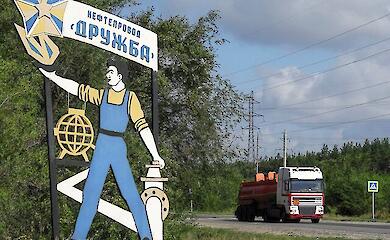
Orban announces "results" of Hungarian mission on Druzhba oil pipeline

Will maternity leave be shortened in Ukraine? Changes for workers with children


Zelensky said that Russia was preparing a new offensive and pointed out the direction of it

Kellogg named the ceasefire condition today and compared Putin to Nicholas II

News about war
Orban announces "results" of Hungarian mission on Druzhba oil pipeline
Kellogg named the ceasefire condition today and compared Putin to Nicholas II
Zelensky said that Russia was preparing a new offensive and pointed out the direction of it

Russia is destroying Ukraine twice as fast as at the start of the war - international report