

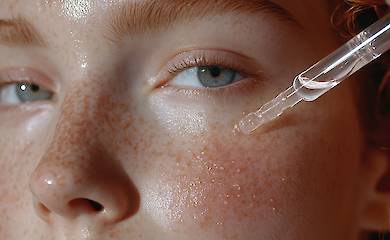
8 facts about Chanel No. 5 that few people know


How Chanel No. 5 and why it has become the world's most famous fragrance
Chanel No. 5 is almost 104 years old, but it is still one of the most recognisable and best-selling perfumes in the world - a bottle is bought about every 30 seconds. It inspired Andy Warhol, was the favourite fragrance of Marilyn Monroe and Catherine Deneuve and became a symbol of an entire era.
Despite its worldwide fame, there are still many myths surrounding the iconic fragrance. Olivier Polge, perfumer of Chanel, told Elle about the details that are rarely seen by fans of the legendary scent.
Chanel No. 5 was not meant to smell like "something specific"
It is believed that the fragrance was intended to be an expression of rose or jasmine notes, but this was not the case. In the early 20th century, most perfumes were mono fragrances built around a single flower. Gabrielle Chanel wanted something different - an abstract fragrance that didn't copy nature.
According to Polge, Chanel No. 5 was originally created as a composition that conveys the feeling of a woman, not the scent of a particular ingredient.
The number 5 was not chosen by chance
Legend has it that it was the fifth sample proposed by perfumer Ernest Beaux that Chanel liked the most. But the number 5 also had a personal meaning: the designer considered it lucky.
Chanel often presented collections on the fifth day of the month, especially in May, the fifth month of the year. This tradition continues today.
This is the first perfume named after the designer
Although other fashion designers had already released fragrances before Chanel, Chanel No. 5 was the first perfume to be named after the designer himself. Gabrielle Chanel called it "the fragrance of a woman for a woman" and considered herself his muse.
The flacon hides an architectural reference to Paris
The design of the flacon is inspired by the Place Vendôme in Paris. It was its octagonal shape that formed the basis of the bottle cap. The view of the square opened from the windows of the Ritz Hotel, where Chanel lived.
There are notes in the fragrance that are not related to flowers
Chanel No. 5 was one of the first fragrances to use aldehydes, synthetic molecules that create a sense of purity, freshness and "sparkle". Today, aldehydes are found in many modern perfumes, but in the 1920s it was a revolution.
Now aldehydes can also be derived from natural sources, such as citrus oils.
The jasmine for Chanel No. 5 is hand-picked once a year
One of the key ingredients of the fragrance is jasmine from Grasse, the perfume capital of France. It is grown by a family farm that has been in operation for six generations.
It is harvested in autumn, early in the morning when the flowers are just opening. By midday, the fields are already green - the whole crop is harvested and sent for processing to preserve the fragrance of the autumn jasmine field.
Why the fragrance has been compared to baby powder
Some people have noted the similarity of Chanel No. 5 to the smell of baby powder. According to experts, this is due to the feeling of purity and the fact that the fragrance is often "fixed" in early olfactory memories.
At the same time, perfumers emphasise that the similarity is subjective and was not intentionally laid down.
Chanel No. 5 is even in shoe boxes
After the jasmine extract is extracted, the spent flowers are not thrown away. A small portion is recycled and used in the production of Chanel shoe boxes, making the No. 5 fragrance literally part of the brand's DNA.
Maria Grynevych, project manager, journalist, co-author of Guidebook Sacred Mountains of the Dnieper Region, Lecture Course: Cult Topography of the Middle Dnieper Region.
Related news
Archaeologists have found children's fingerprints in 15,000-year-old clay


Traces of an "ancient machine gun" have been found in Pompeii



Popular news
Orban announces "results" of Hungarian mission on Druzhba oil pipeline


Will maternity leave be shortened in Ukraine? Changes for workers with children


Zelensky said that Russia was preparing a new offensive and pointed out the direction of it


Kellogg named the ceasefire condition today and compared Putin to Nicholas II

News about war
Orban announces "results" of Hungarian mission on Druzhba oil pipeline
Kellogg named the ceasefire condition today and compared Putin to Nicholas II
Zelensky said that Russia was preparing a new offensive and pointed out the direction of it
Russia is destroying Ukraine twice as fast as at the start of the war - international report