

100 years ago, the first rocket was launched - this was the beginning of the space age


Exactly 100 years ago, the first liquid-propellant rocket was launched. It stayed in the air for less than a minute, but it was with it that the space age began, which led mankind to the Moon and into space.
Robert Goddard's first rocket was very far from modern rockets.
It was powered by a mixture of liquid oxygen and petrol - this was a major breakthrough, because such engines give much more thrust than solid fuel.
The launch took place on 16 March 1926 in Massachusetts.
The results were modest:
- the flight lasted just 42 seconds
- the rocket climbed about 56 metres
- and landed a few dozen metres from the launch
At the same time, the design looked rather unusual: the fuel tanks and engine were located on top, and the rocket itself looked more like a metal truss than the usual "space" body.
Nevertheless, this launch was the first proof that liquid-propellant rockets work - and in the future, it will be this technology that will send people into space.
Details
A few decades later, rockets became a key technology:
- during World War II, the first high-powered rockets appeared
- in 1957, the first satellite was launched
- in 1969, man was on the moon for the first time
Today, space is once again at a turning point.
Where once it was controlled by governments, now private companies play a key role:
- SpaceX launches rockets regularly
- Blue Origin is developing its own projects
- China is actively building up its space programme
Why it matters
In 100 years, technology has gone from failed experiment to regular launches.
But the future of space has become less clear:
- programmes are delayed
- budgets are rising
- leadership is shifting to the private sector
Background
The first rocket looked modest, but it was the rocket that launched an entire era.
And now humanity stands at a new stage - where space is changing again, but by different rules.
Source
NASAmaterial to mark the 100th anniversary of the launch of Robert Goddard's first liquid-propellant rocket (1926).
Maria Grynevych, project manager, journalist, co-author of Guidebook Sacred Mountains of the Dnieper Region, Lecture Course: Cult Topography of the Middle Dnieper Region.
Related news
Archaeologists have found children's fingerprints in 15,000-year-old clay

Traces of an "ancient machine gun" have been found in Pompeii
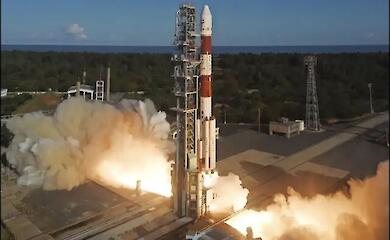
Lost satellite 'brought back to life' after a month - scientists talk of a miracle

Popular news

Orban announces "results" of Hungarian mission on Druzhba oil pipeline

Will maternity leave be shortened in Ukraine? Changes for workers with children


Zelensky said that Russia was preparing a new offensive and pointed out the direction of it


Kellogg named the ceasefire condition today and compared Putin to Nicholas II

News about war
Orban announces "results" of Hungarian mission on Druzhba oil pipeline
Kellogg named the ceasefire condition today and compared Putin to Nicholas II
Zelensky said that Russia was preparing a new offensive and pointed out the direction of it

Russia is destroying Ukraine twice as fast as at the start of the war - international report